A hallway console table can give you a place for keys and everyday essentials, but in a narrow hall it can also obstruct the walking route or a door. Before choosing one, measure the available space and check the table’s projection with the door open. The 13 setups below vary in shape, storage, placement, and style. Use them to find an option that fits your hall and what you need to store.
1. The taped-out slim console
Choose a shallow, open-leg console with a small key tray. Before shopping, use painter’s tape to mark its full footprint, including the legs, then walk through the hall with the door open. This lets you test the drop zone and walking route before committing to a table.
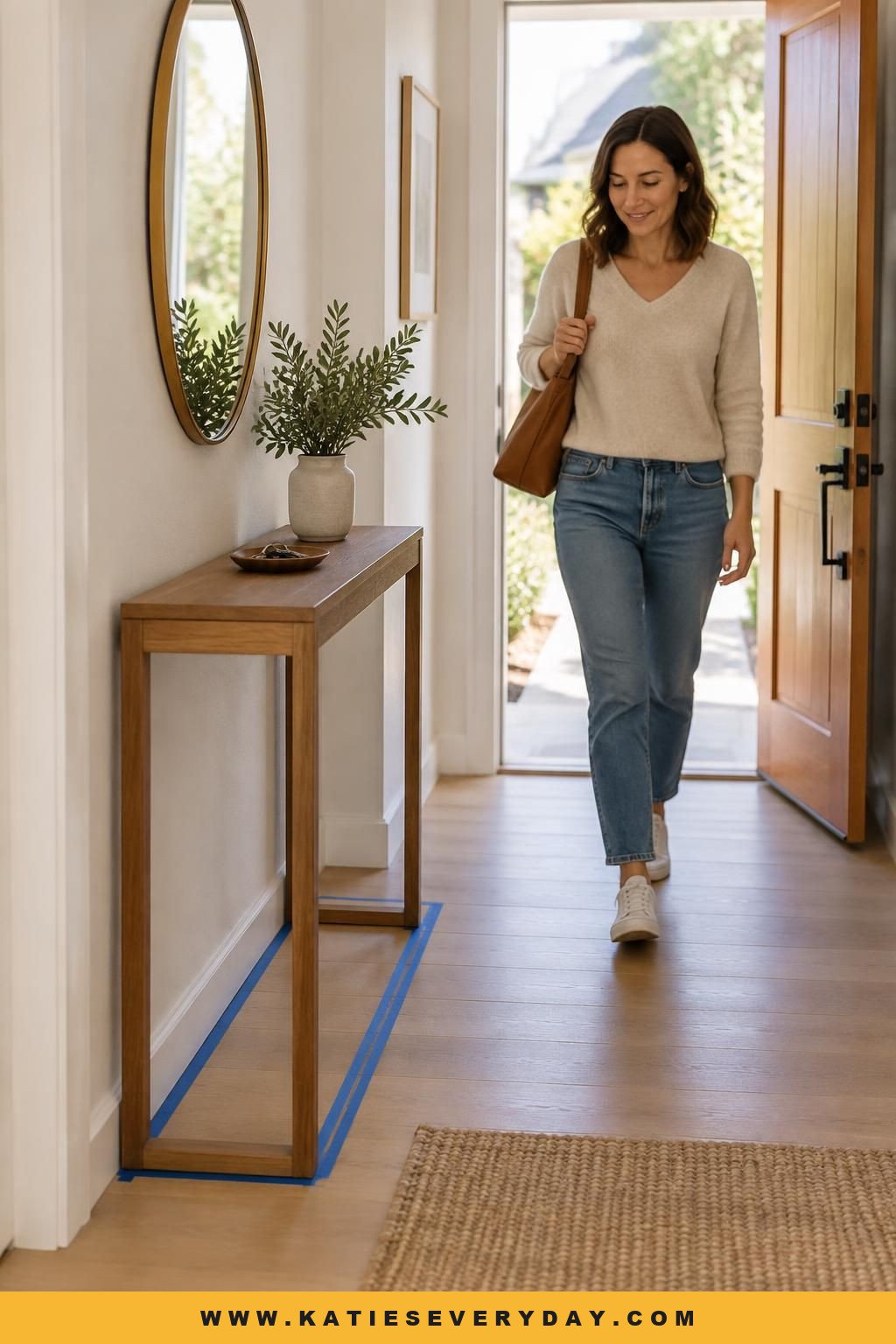
This setup suits a short entry with no existing place for keys. If the taped outline makes the route uncomfortable or interferes with the door, skip a freestanding console.
2. The floating shelf-console
Mount a sturdy, narrow shelf or floating cabinet, then add a catchall for keys. With no table legs on the floor, the area beneath stays open—useful if even a slim console feels intrusive. Position the shelf where you can reach it easily and where it fits the usable wall space.
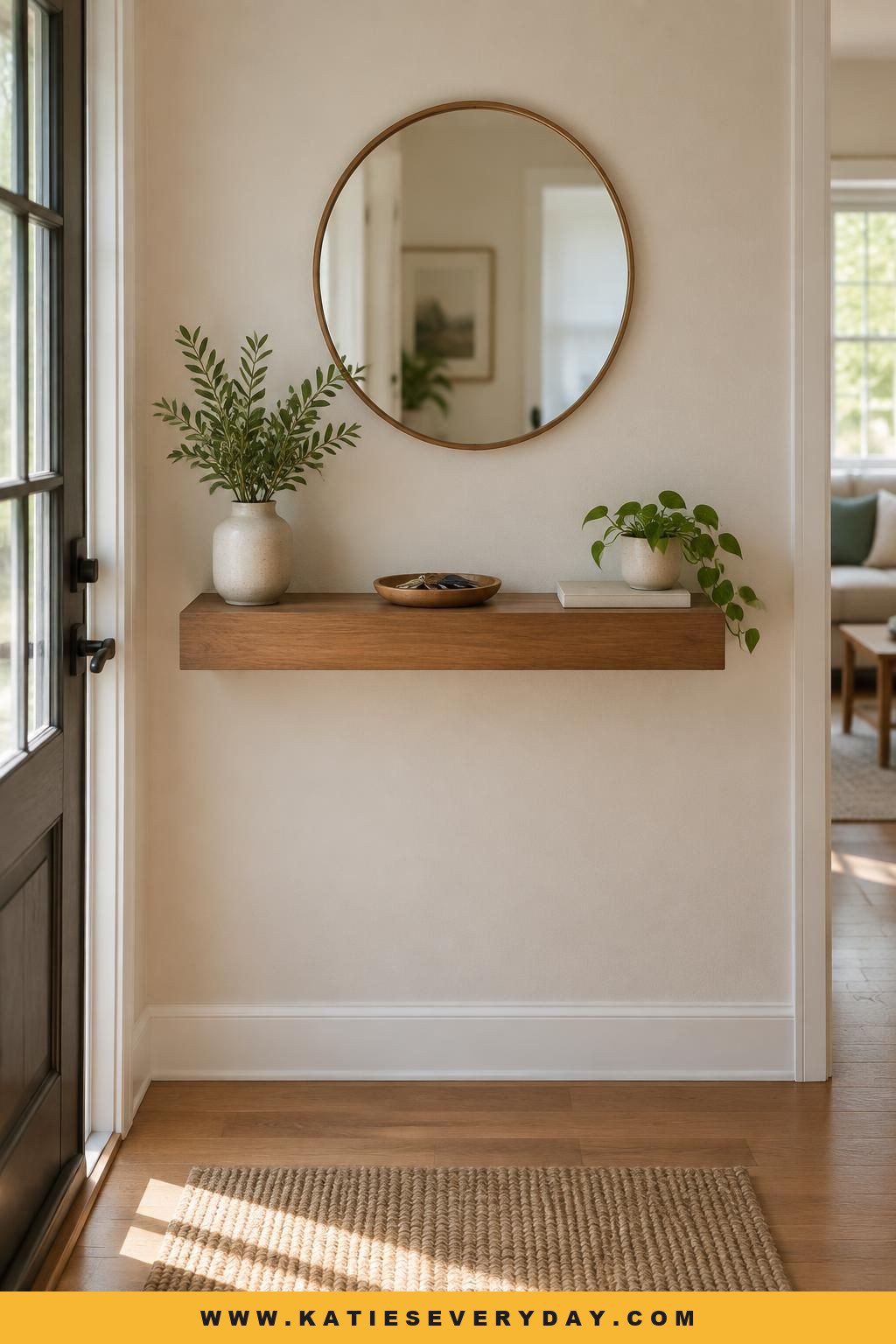
Check the wall and mounting requirements before installation. A shelf offers less surface than a full console, so it may not suit you if you need to store several everyday items.
3. The see-through glass top
Pair a glass top with a slim metal base, and keep the styling to a small tray and one low object. A transparent surface can look lighter than a solid cabinet, which may suit a dim or visually busy hall.
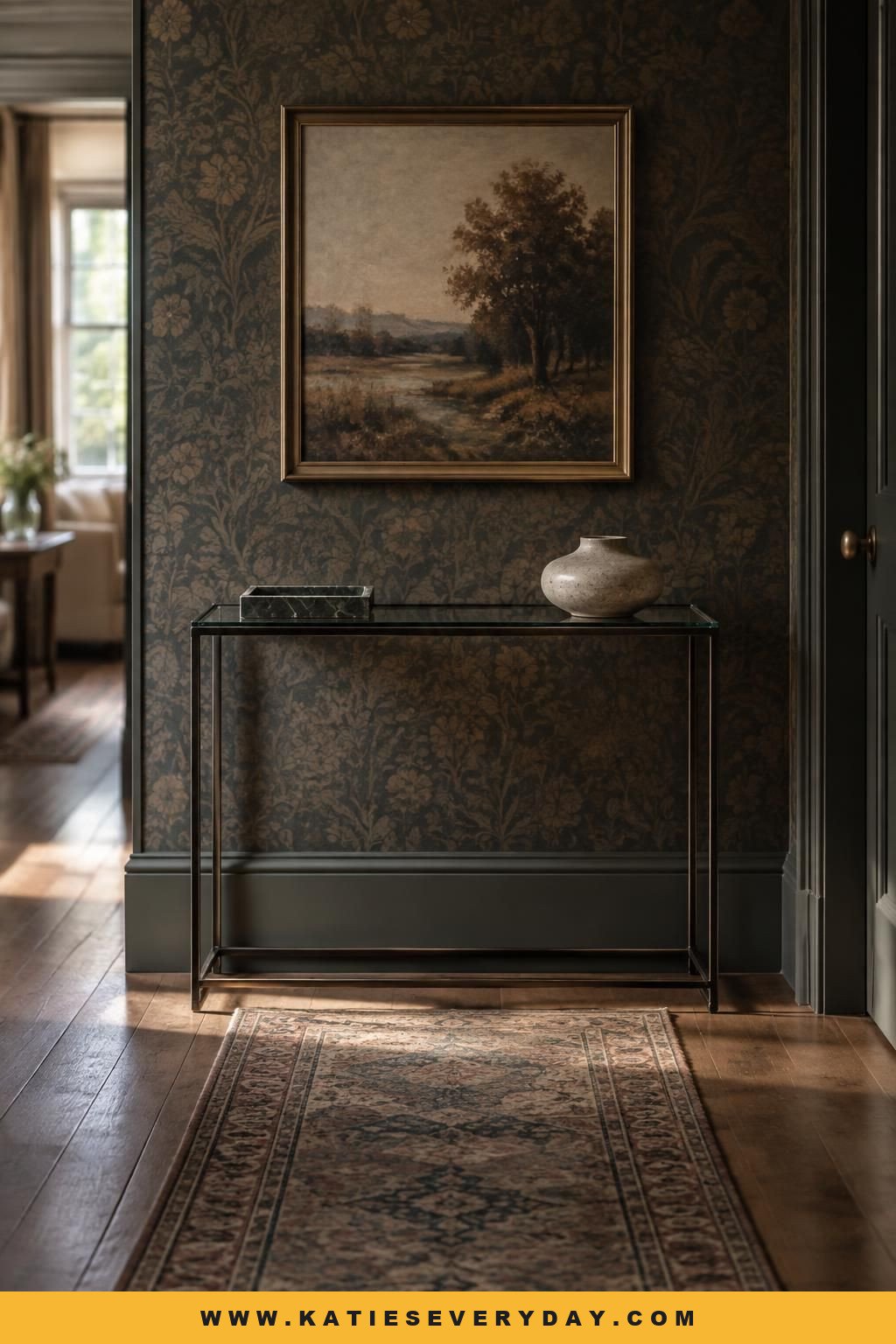
Glass can show fingerprints, and it won’t conceal belongings. In a high-traffic route, consider whether bags or coats might brush against its edges. Choose this setup if you want a visually light table and don’t need closed storage.
4. The wall-blending console
Choose or paint a simple console close to the wall color, then add one contrasting bowl or piece of artwork. Matching the table and wall can make the furniture less visually prominent. Compare undertones, not just broad color labels such as “white” or “gray.”
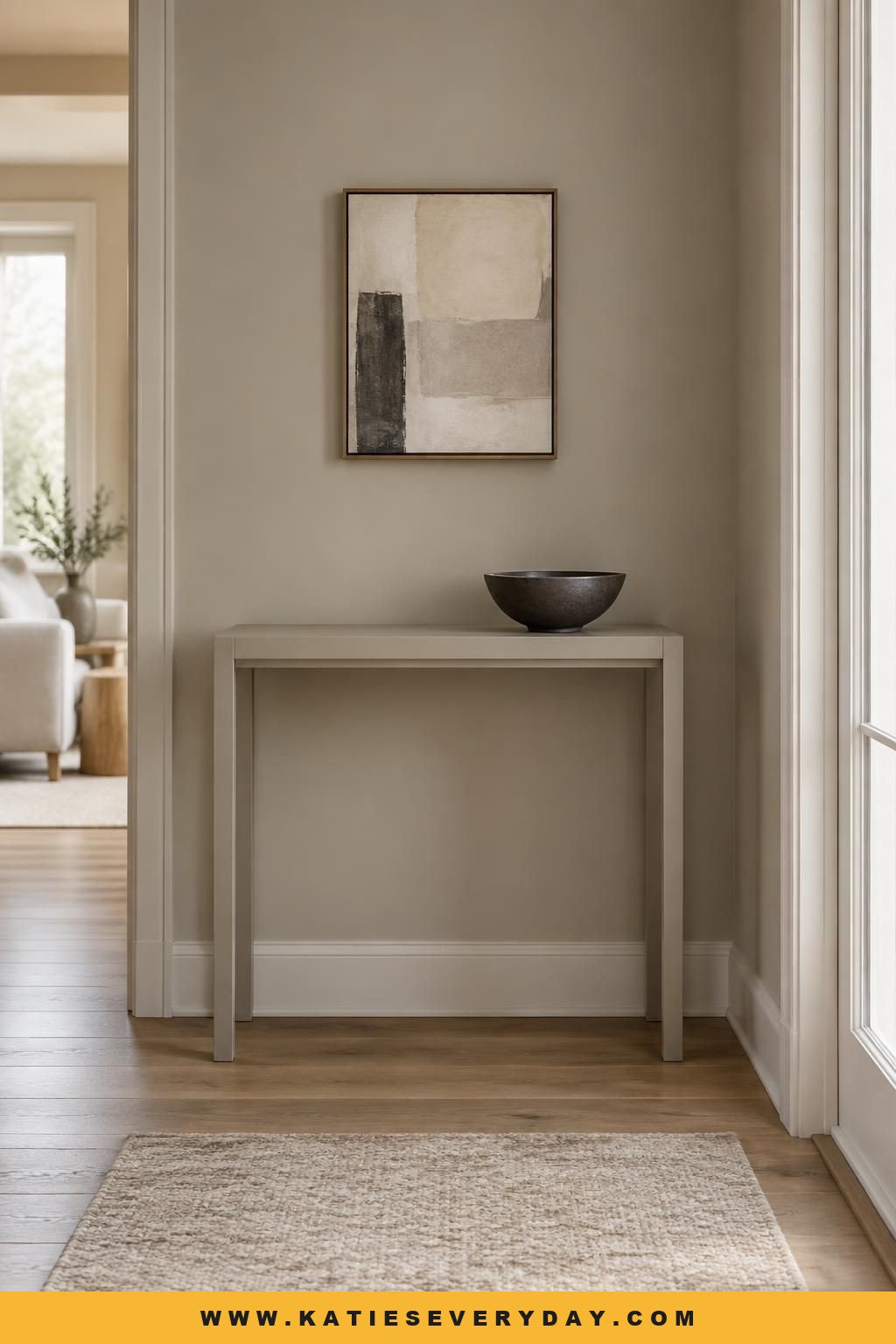
A matching finish won’t make the table physically less deep. Measure its footprint and check the door swing as you would with any other console.
5. The curved demilune
Try a half-moon or softly curved console with a small bowl. Its rounded front gives you a different silhouette from a rectangular table and can suit an alcove or wider landing.
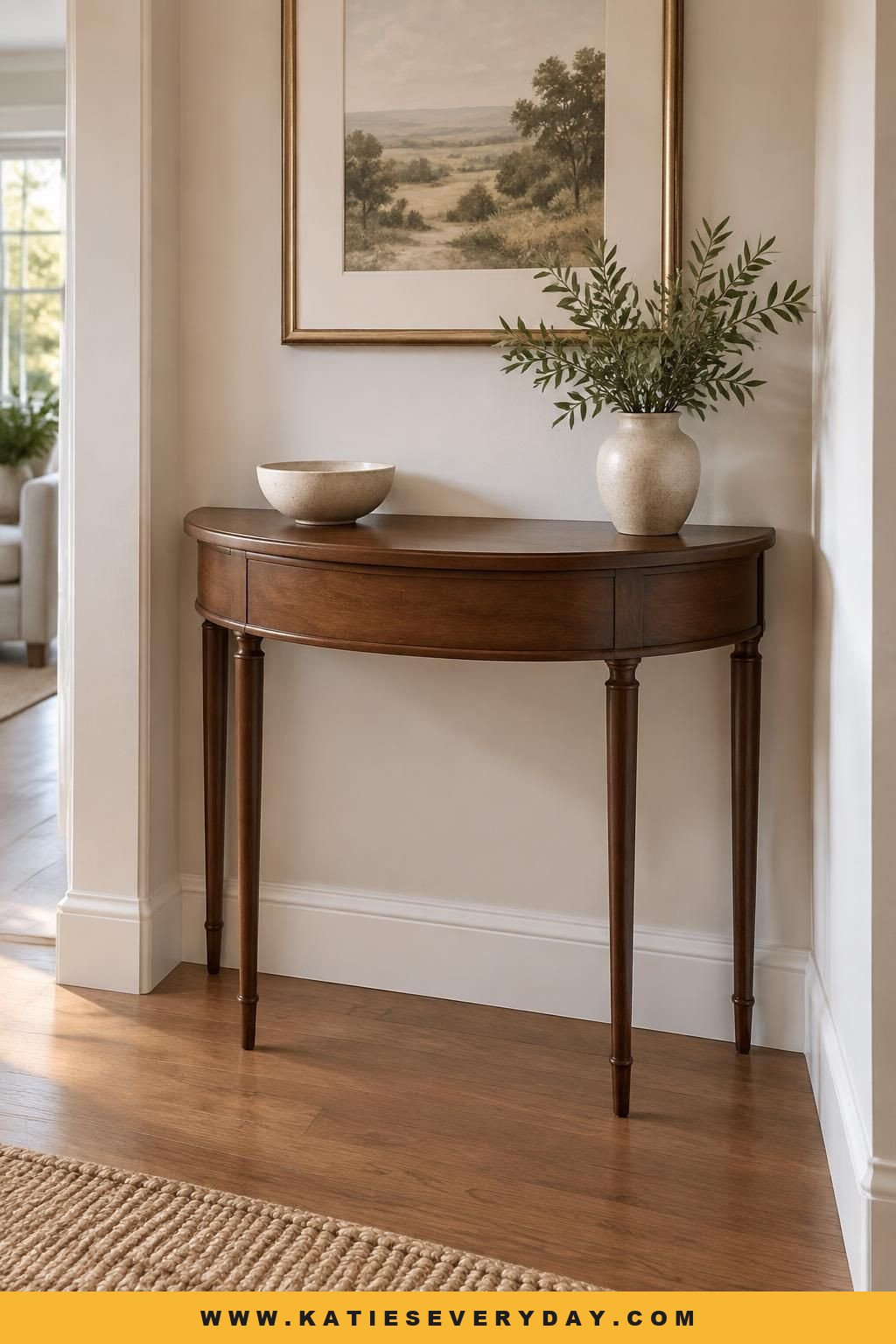
Measure the table at its widest point. A curved shape isn’t automatically more space-efficient, and it can still project too far into a narrow route. Choose it only if the full footprint fits.
6. The shoe-storage console
Choose a narrow unit with enclosed shoe storage, a usable top, and a tray for keys. Combining shoe storage and a drop zone can help if shoes are the main source of entryway clutter.
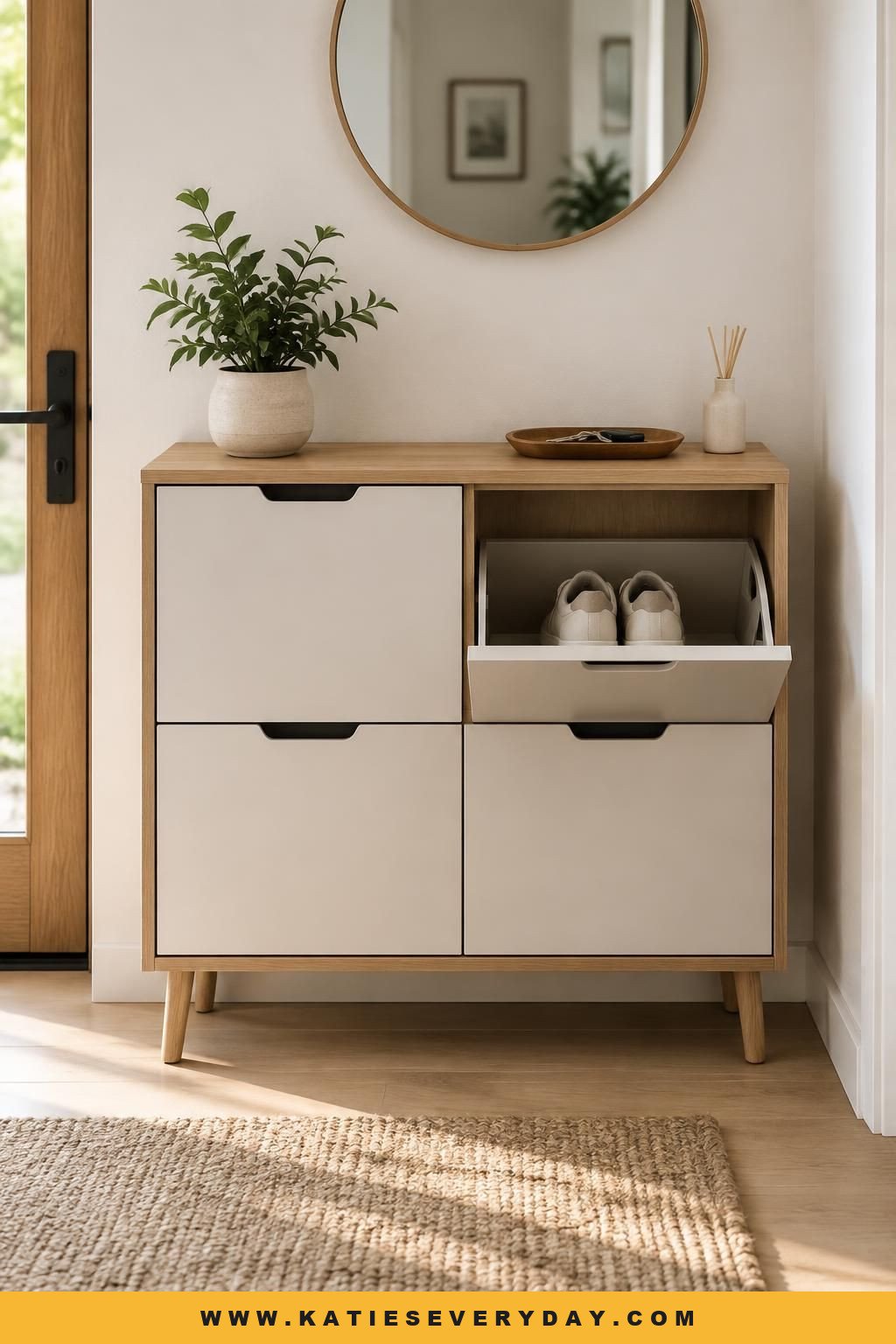
Check that the compartments fit the shoes you actually wear. Closed storage may be inconvenient for wet or muddy shoes if you don’t have a suitable place to dry them.
7. The basket-shelf console
Use an open console with a lower shelf and assign one or two baskets to specific items, such as gloves or leashes. The top stays available for keys while smaller essentials have a place underneath.
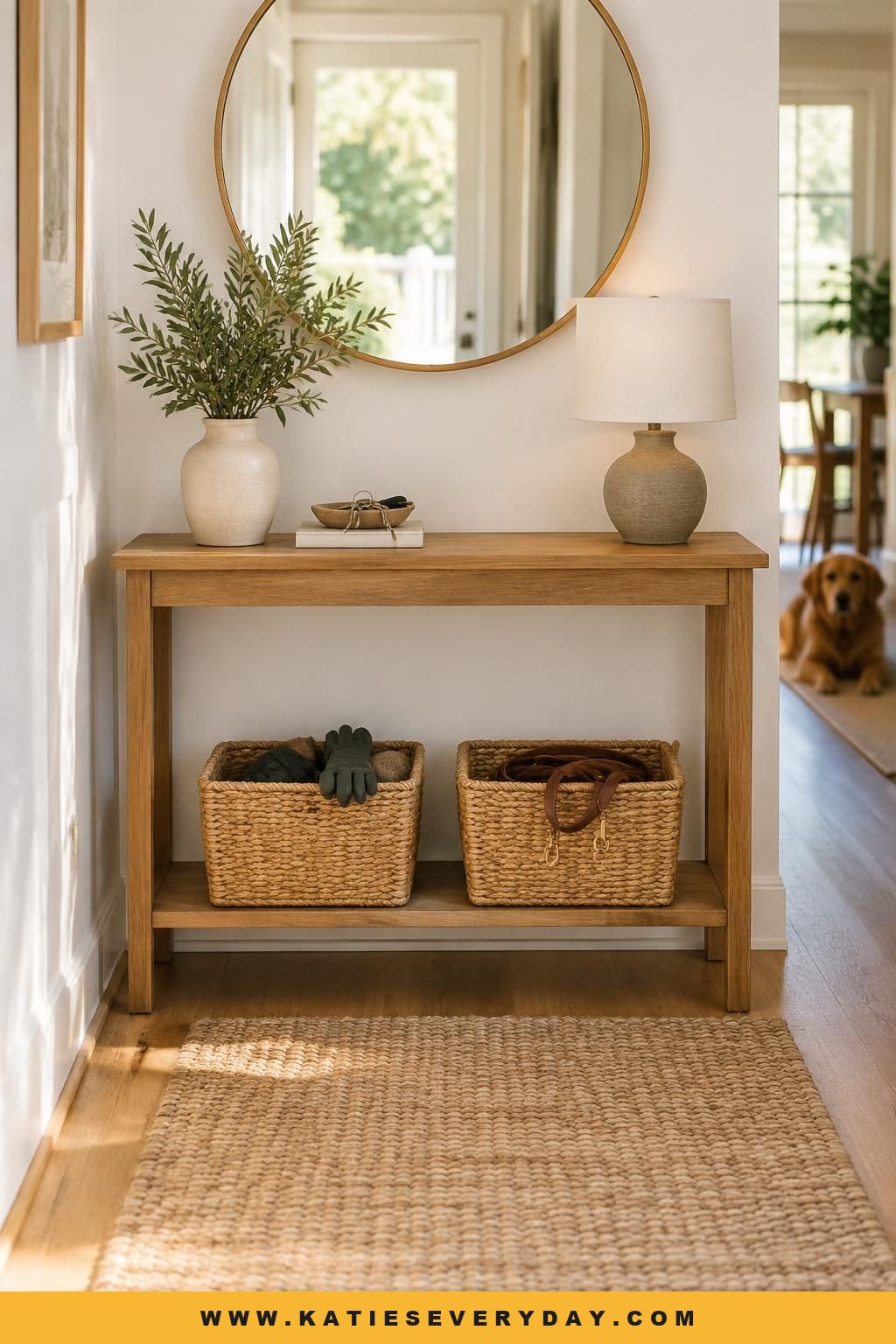
Keep each basket to one category. The contents remain visible, and overfilled or mixed baskets can make the area look cluttered.
8. The radiator-recess fit
If your hall has a radiator recess, consider using the available wall space for a narrow table. Keep decor away from the heat source, and check the radiator manufacturer’s guidance before placing anything nearby.
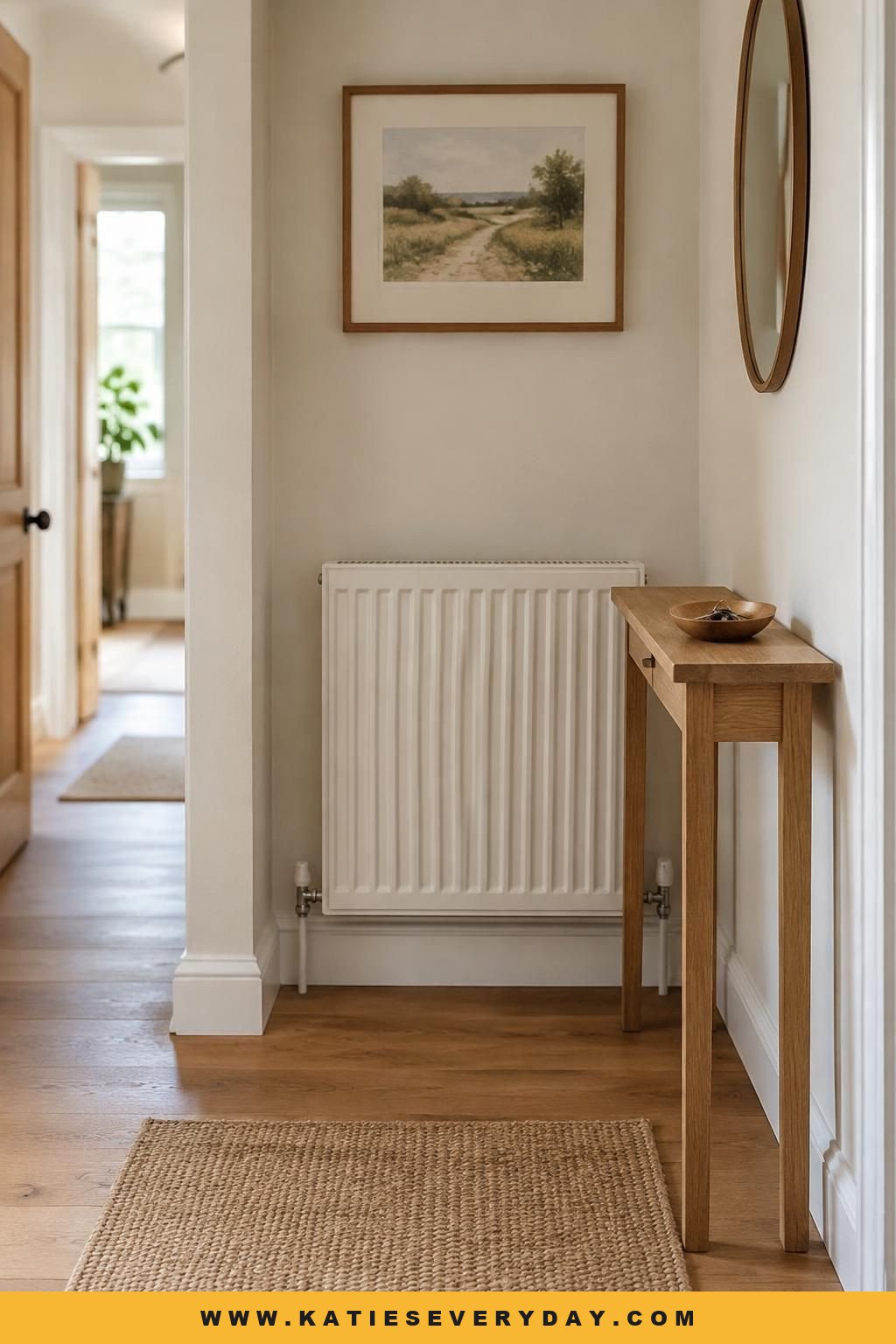
Don’t bridge, cover, or crowd a radiator unless its requirements allow it. No universally safe clearance distance is established here, so use this setup only if the recess leaves the heat source unobstructed.
9. The under-window table
In an entryway with a window, place a low console beneath it and add a shallow tray or small plant. This makes use of a wall that might otherwise be empty.
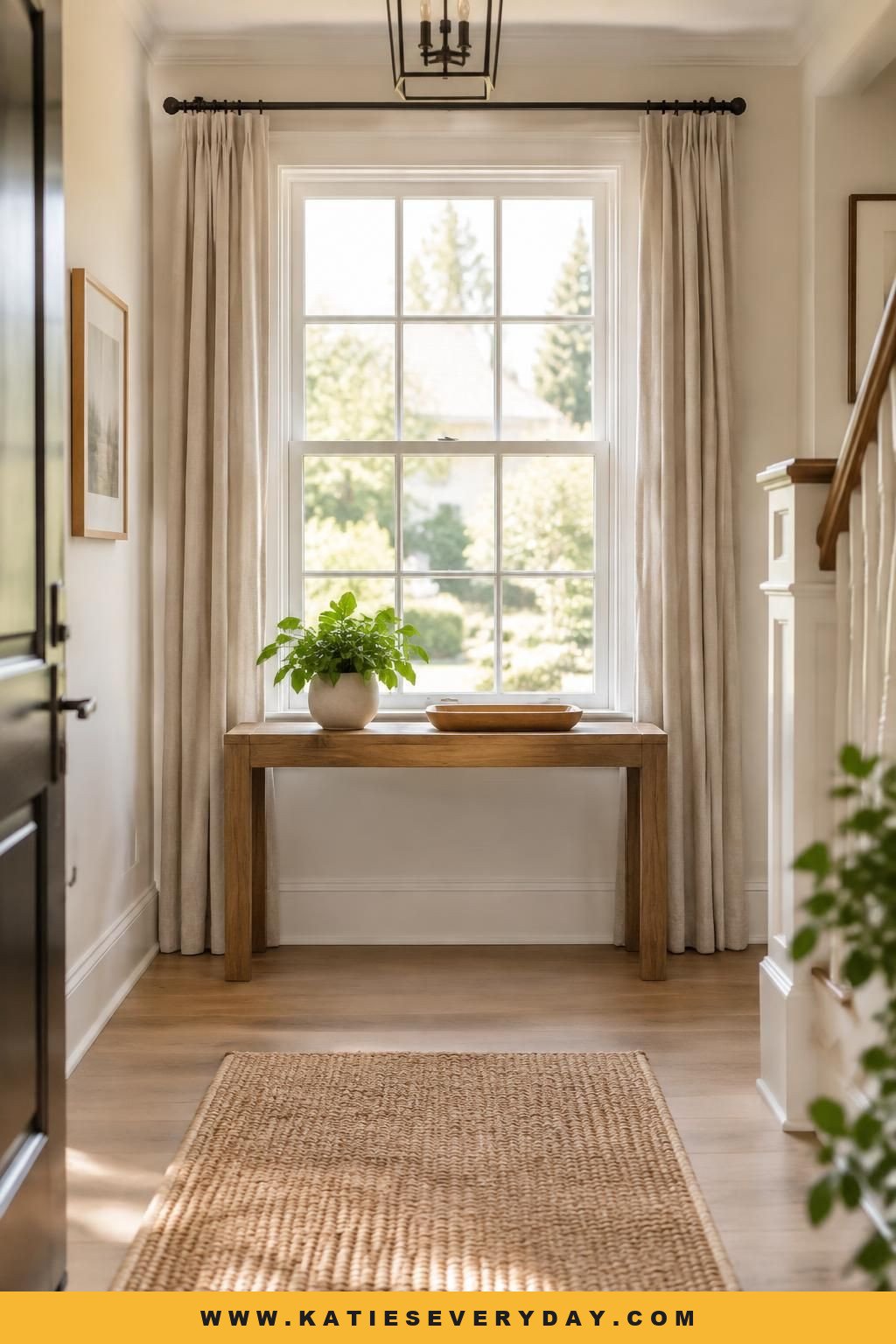
Check that the table won’t block window access, curtains, blinds, or a heater below the window. This setup may not work if the sill is low or the window opens inward.
10. The stair-side console
If the wall near the front door is occupied, look for a suitable spot beside the stairs. Add a compact table, then keep the styling simple with a framed print or small lamp.
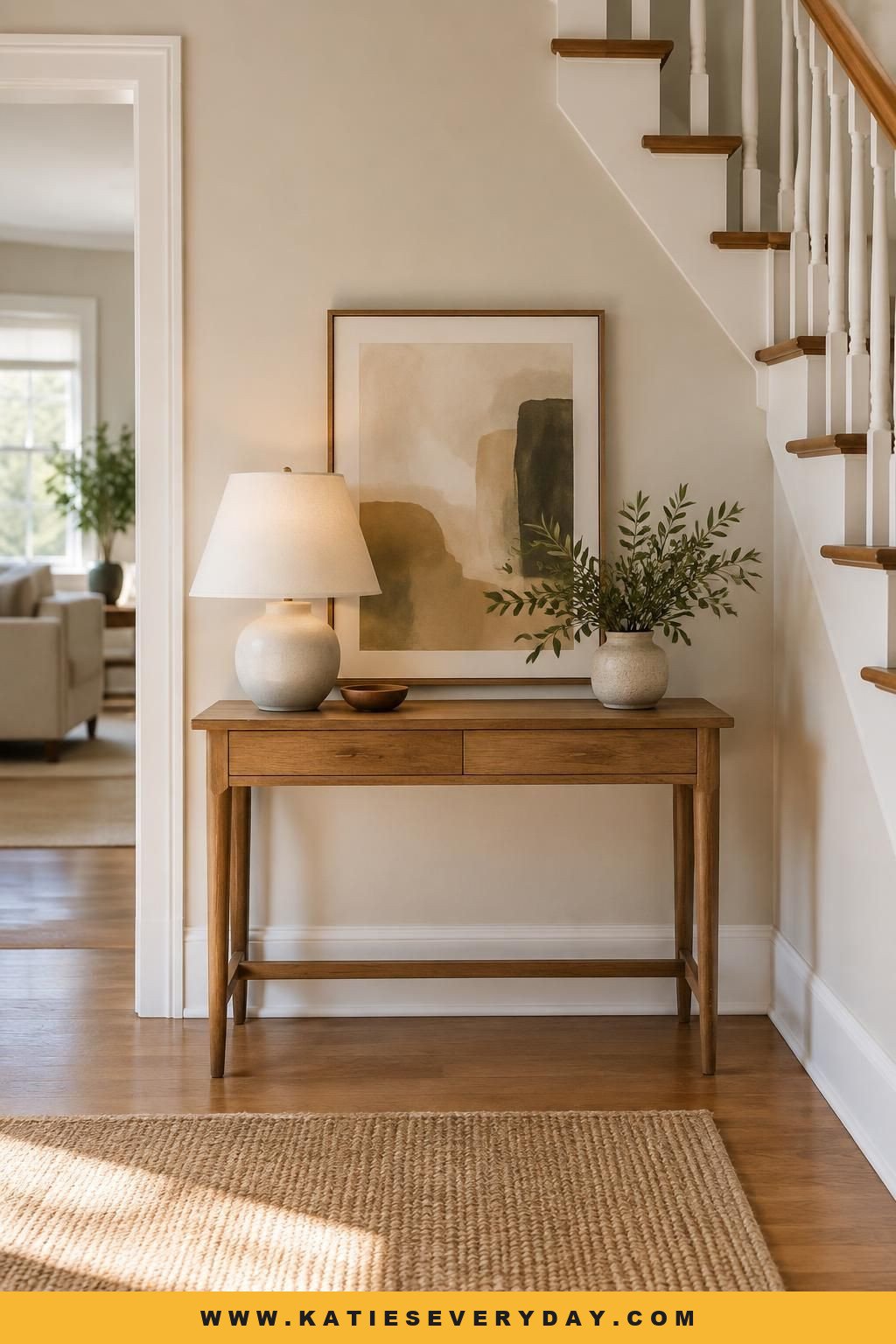
Check that the table won’t interfere with stair access, a handrail, or nearby doors. Avoid a spot where you could bump into it while using the stairs.
11. The console-as-art-plinth
Place a simple console beneath one oversized artwork and leave most of the tabletop clear. A single small bowl can keep the surface useful without turning it into a crowded display.
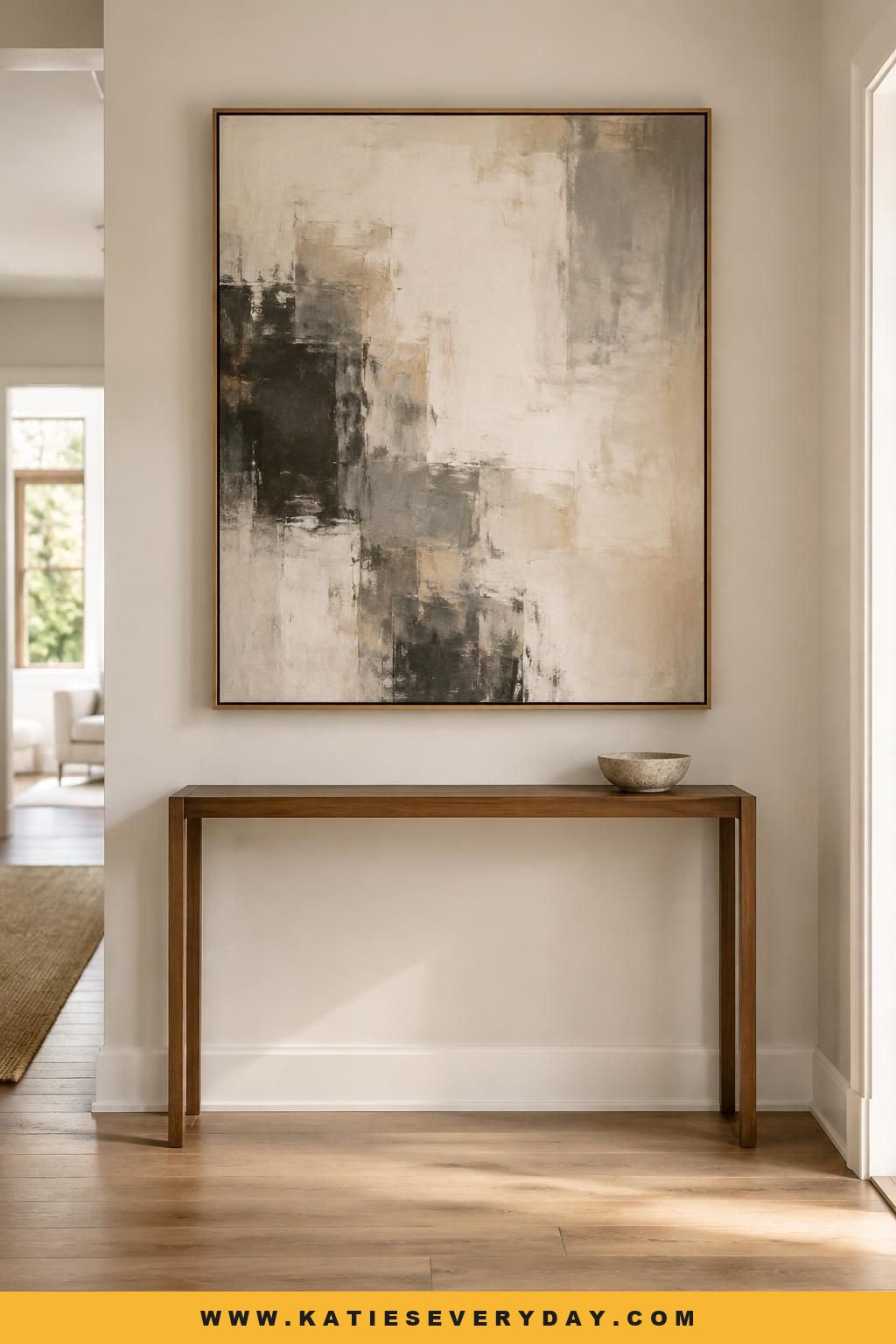
Choose the artwork first, then check its width against the table before hanging it. This is a display-focused setup, not a solution for shoe or coat storage.
12. The mirror-and-light landing
Pair a slim console with a mirror above it and a compact lamp. The mirror gives you a last-check spot, while the lamp can add light if you have a suitable outlet and safe placement.
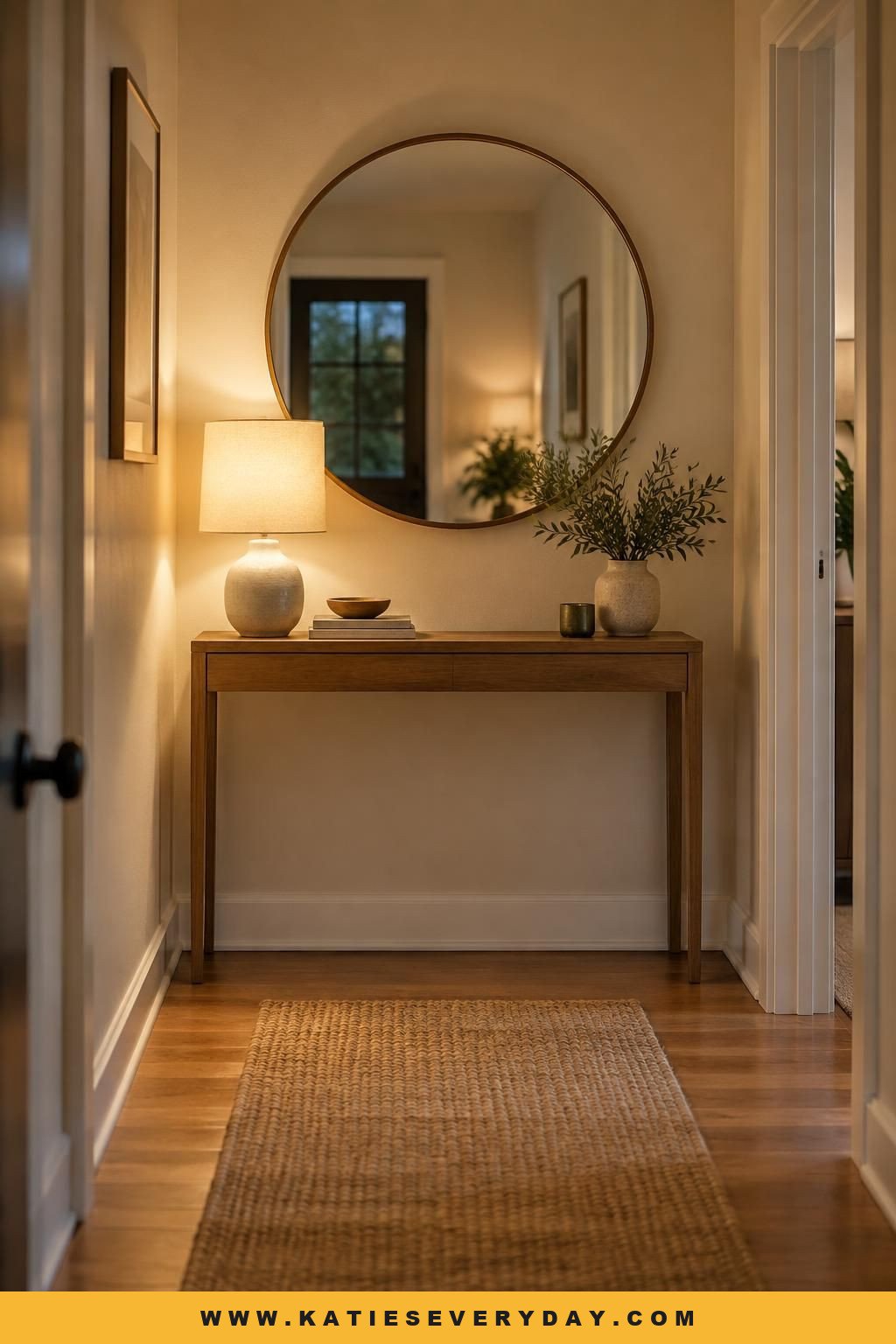
Check what the mirror reflects from the entrance. Keep the lamp, cord, and table clear of the walking route and door movement. This setup suits you if you want a mirror and a landing spot more than extensive storage.
13. The secondhand statement table
Repurpose a vintage or unexpected narrow table, and use one simple accessory so the table remains the focus. A distinctive piece can give the entrance character without relying on a matching furniture set.
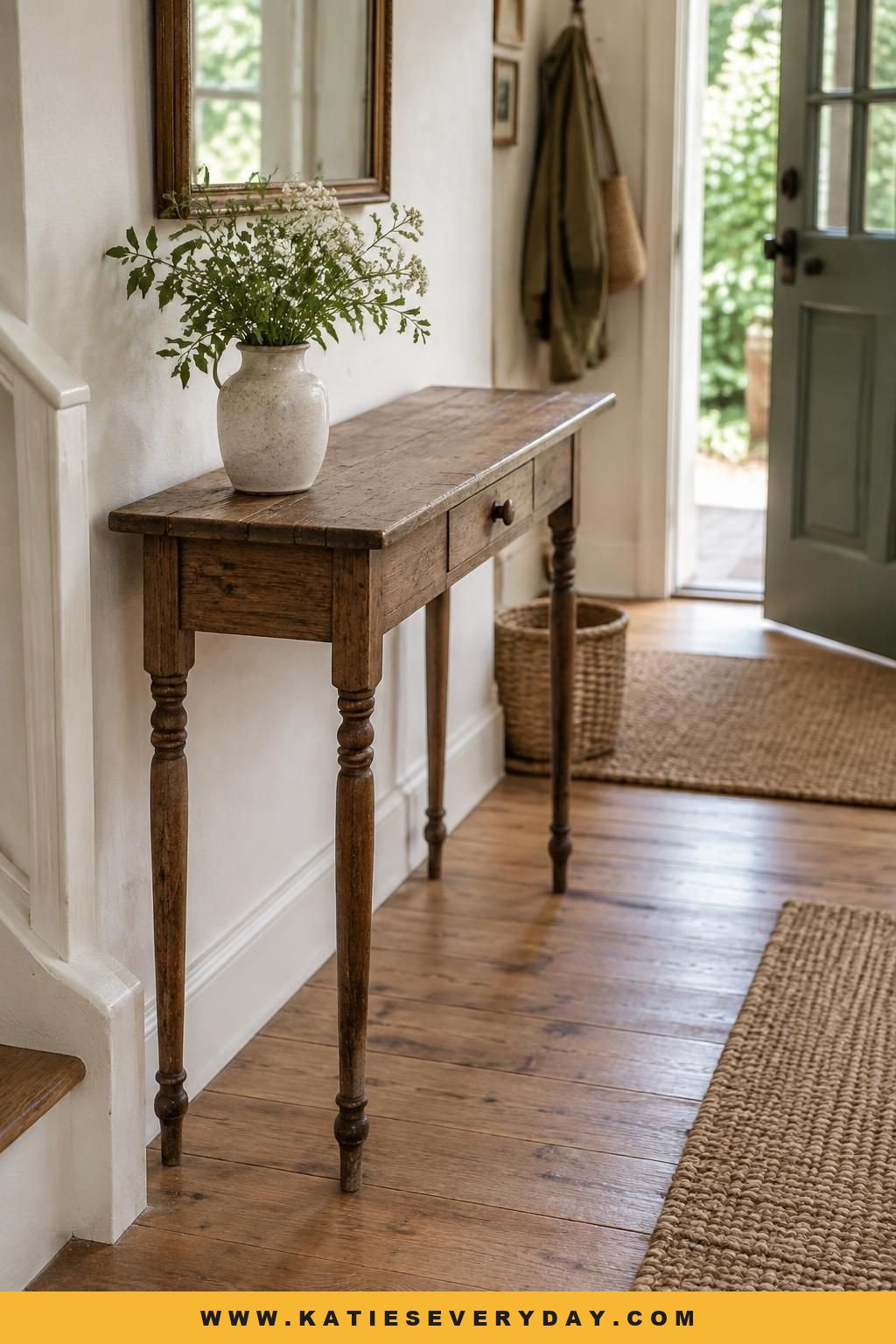
Measure the legs, feet, and any overhanging top—not just the tabletop depth. Check the table’s condition and stability, and pass on a piece that wobbles or projects too far into the route.
Keep Exploring More Ideas
 5 Modern Console Table Ideas for a Sleek, Updated Look
 9 Fall Table and Console Decor Ideas for a Cozy Home
 20 Console Table Decorating Ideas for a Pulled-Together Look
 25 Entryway Table Ideas for a Welcoming First Impression
 18 Console Table Ideas for Behind the Couch
 8 Coastal Console and Entryway Ideas for a Breezy Home
 10 Console Table and Mirror Ideas for a Finished Entryway
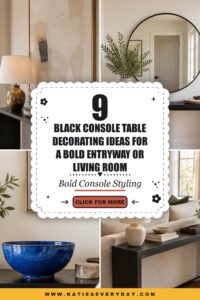 9 Black Console Table Decorating Ideas for a Bold Entryway or Living Room
 13 Small and Narrow Entryway Table Ideas for Tight Spaces
 19 Small Living Room Ideas That Make Every Inch Work
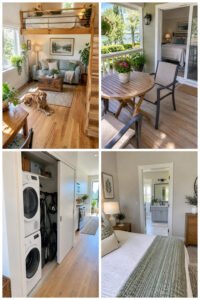 13 Compact One- and Two-Bedroom House Plans to Compare
 19 Simple and Modern Bedroom Ceiling Designs to Consider
See more Console Table →