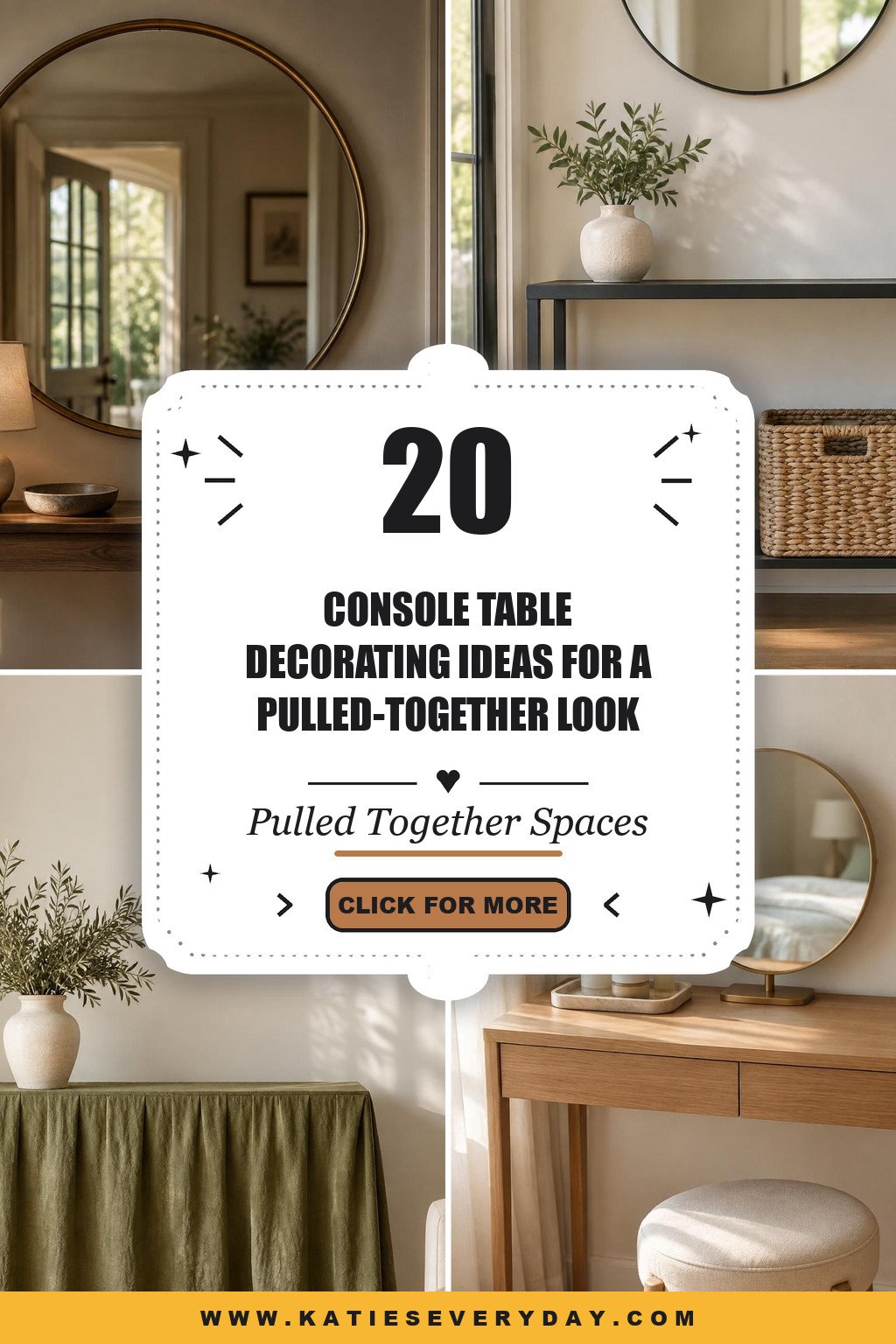
A console table can look bare when the wall above it is empty, or cluttered when too many small objects compete for attention. The right setup depends on where the table sits and what you need it to do. These 20 console table decor ideas offer distinct ways to style the top, use the space below, and adapt the display for an entryway, living room, or bedroom.
1. Oversized mirror, edited tabletop
Pair a substantial mirror with one lamp or vase and a small catchall. The mirror gives the wall a clear focal point and can reflect light. Keep the tabletop sparse so the mirror remains the main feature.
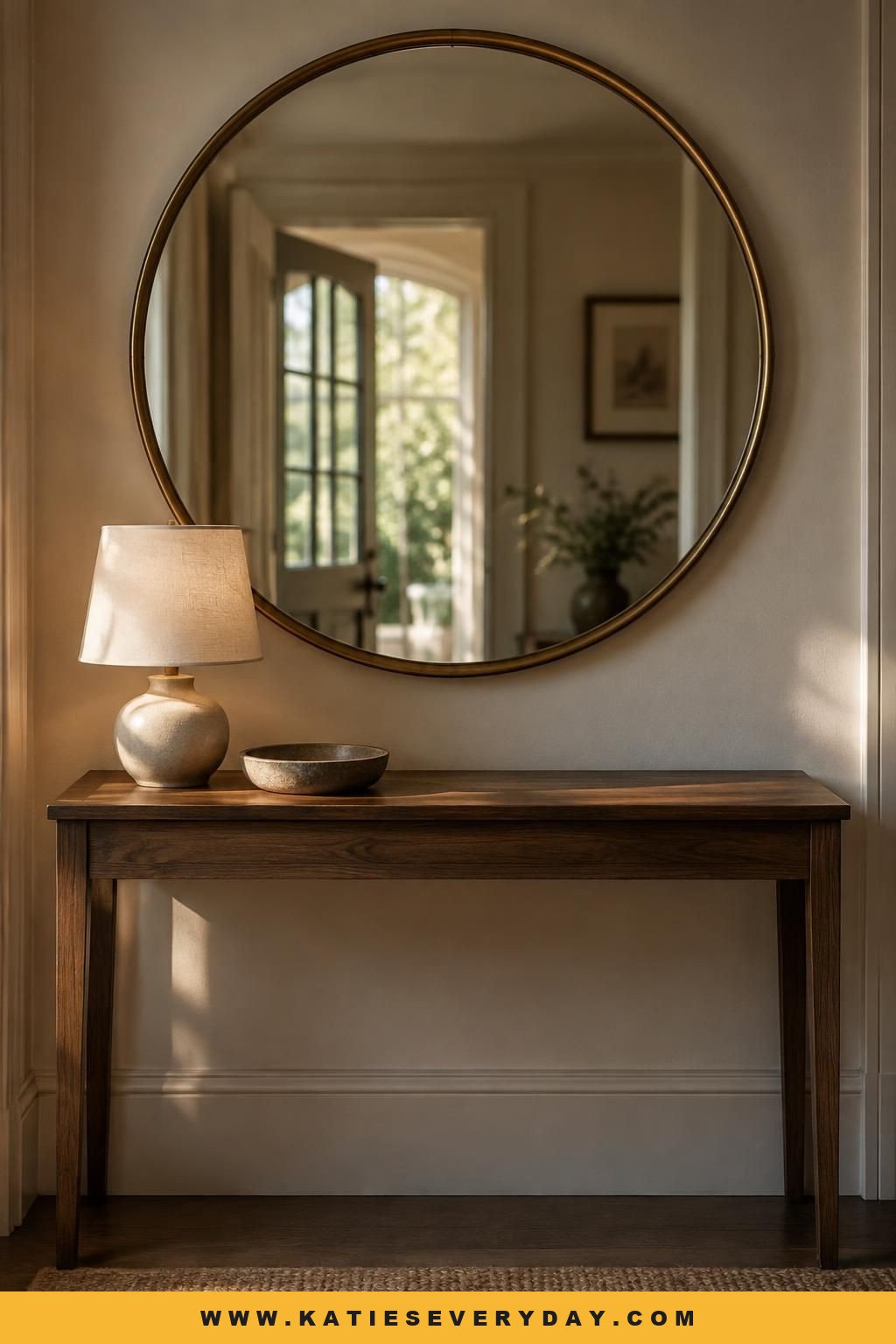
This arrangement suits an entry or a hall that feels dim. A mirror isn’t a substitute for storage, so add a separate storage solution if you need a place for more than a few essentials.
2. One large artwork, one grounded object
Hang or lean a bold print above the console, then echo one of its colors in a low object below. A bowl or short book stack can connect the artwork to the tabletop without adding another tall focal point.

Try this in a hallway or living room. A small print may feel lost above a long table, so avoid filling the gap with extra objects just to compensate.
3. Gallery wall instead of a single anchor
Make framed photographs or prints the main feature above the console, and keep the tabletop restrained. Vary the frame sizes while repeating a finish or color to tie the group together.

A gallery wall can suit a stair landing or family entry. If the frames already draw attention, let them do most of the decorating; a busy tabletop can make the whole arrangement feel crowded.
4. Matched lamps for a symmetrical look
Place a lamp at each end of a broad console, with one low object in the center. The matching shapes create a balanced arrangement. Keep the central area simple enough that the lamps still read as a pair.
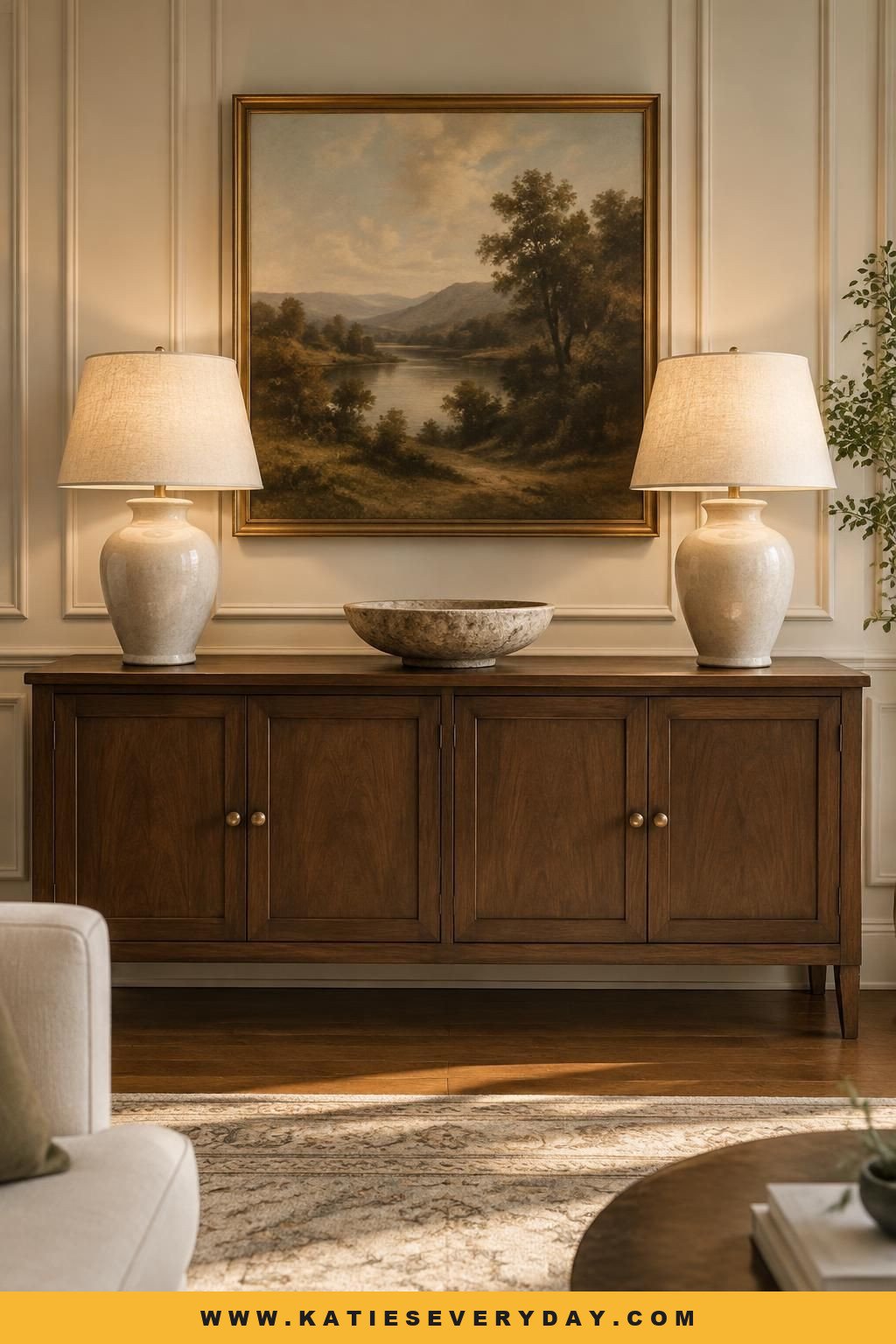
This can work in a formal entry or living room. Two lamps take up more surface space and need suitable outlets, so they may not suit a narrow table or a spot where cords cross a walkway.
5. Asymmetrical lamp-and-vase pairing
Set a lamp on one side and a taller vase or branch arrangement on the other, with a low book stack between them. Before adding anything else, try swapping the lamp and vase sides to see which layout feels more balanced.

This pairing suits a casual entry or hall. Unequal objects can look accidental if they have similar height and visual weight, so give the lamp and vase distinct roles.
6. Flowers that echo the artwork
Choose flowers that pick up a color or shape from the artwork above the table, then select a vase that suits the room. You don’t need to match every flower; repeating one detail is enough to connect the two.

Try this in an entry or dining-room area. Fresh flowers need upkeep, and a detailed print paired with a busy bouquet may feel like too much. Keep one of the two simpler.
7. Books topped with a sculptural object
Stack a few books horizontally and place one small bowl, box, or sculpture on top. The books create a low layer, while the object adds color, shape, or texture.

This works well in a living room or study. Treat the object on top as the grouping’s main accent; several small pieces around the stack can make the arrangement feel cluttered.
8. A catchall tray for daily essentials
Give a tray one clear job: hold keys, sunglasses, or other small items you reach for as you leave. Add one decorative piece nearby, such as a small vase, rather than filling the rest of the surface with unrelated objects.
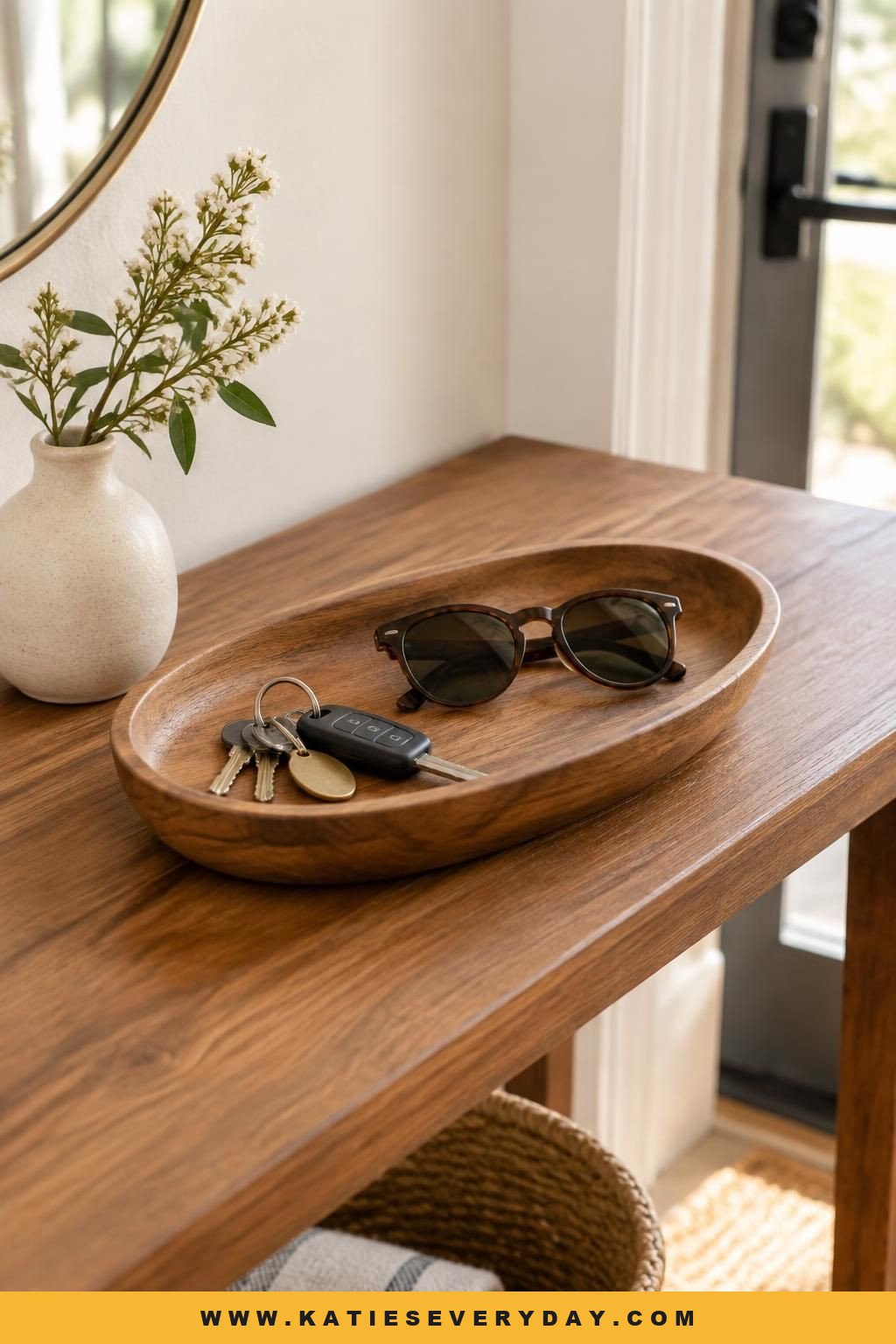
A tray suits a front entry, but it can still become a dumping ground. Set a limit on what belongs there and clear out anything that doesn’t.
9. Woven baskets under an open console
Use the space beneath an open console for baskets that fit between its legs. They fill the lower area and bring woven texture into the arrangement.

Check that you can pull each basket out easily and that it doesn’t narrow the walkway. A basket wedged beneath the table is awkward to use, not useful storage.
10. A bench that tucks underneath
Slide a bench beneath the console so you can pull it out when you need a place to sit. Keep the tabletop display modest so the bench remains easy to reach.
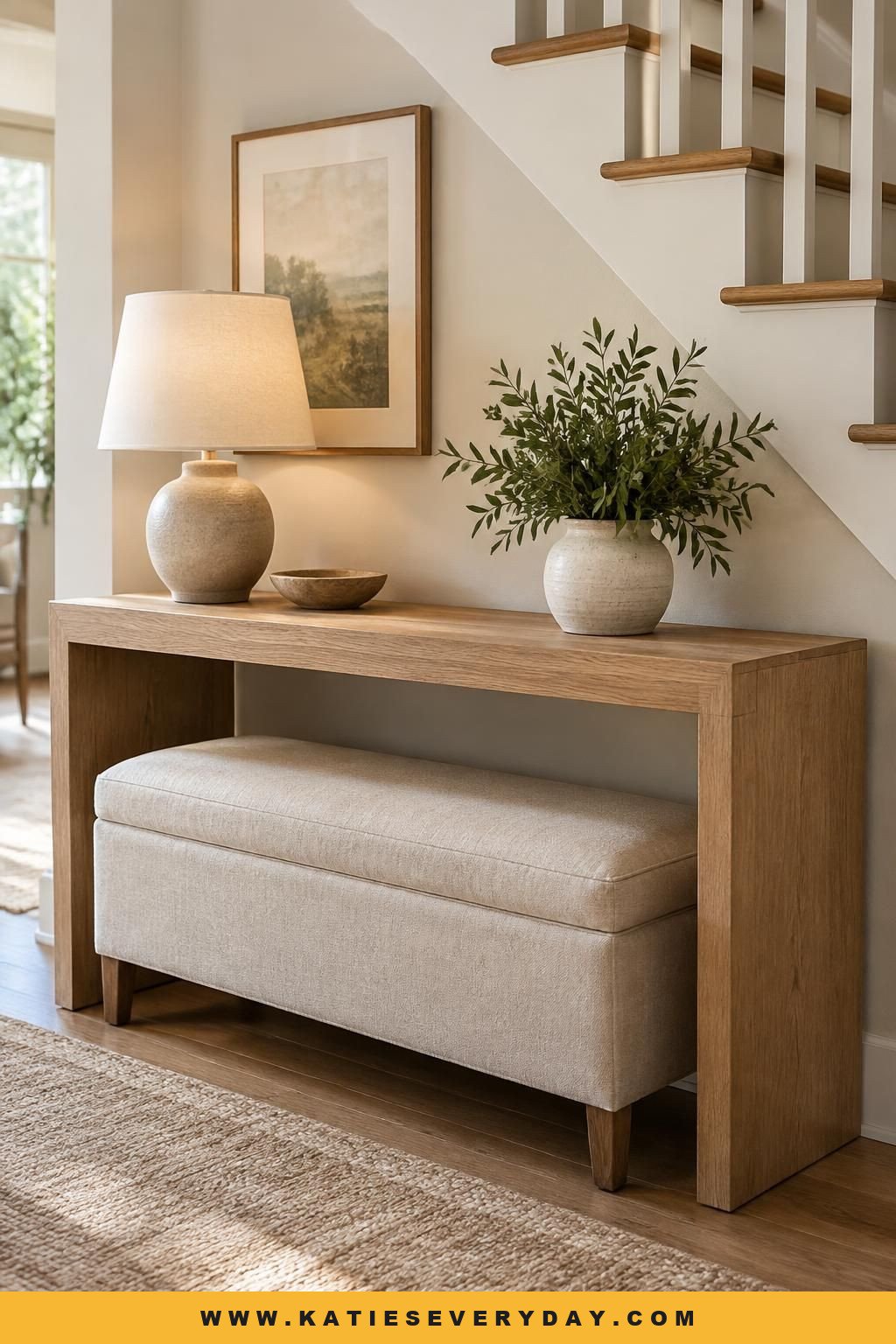
This setup can work in an entry or under-stair area. Check that the bench clears the table legs and can slide out without disrupting the walking path.
11. A stool as occasional seating
Place a compact stool beneath or beside the console, where you can pull it out when needed. When it’s not in use, the seat can hold a book or small object.

A stool can suit a living area or an entry where occasional seating is useful. Skip the decorative display if it makes the stool awkward to move or blocks access to the table.
12. Two tiers: essentials above, display below
Give each shelf a different job: keep a lamp and daily-use item on top, then use the lower shelf for a few books or a basket. Separating the roles makes it easier to keep the two levels from becoming one crowded display.
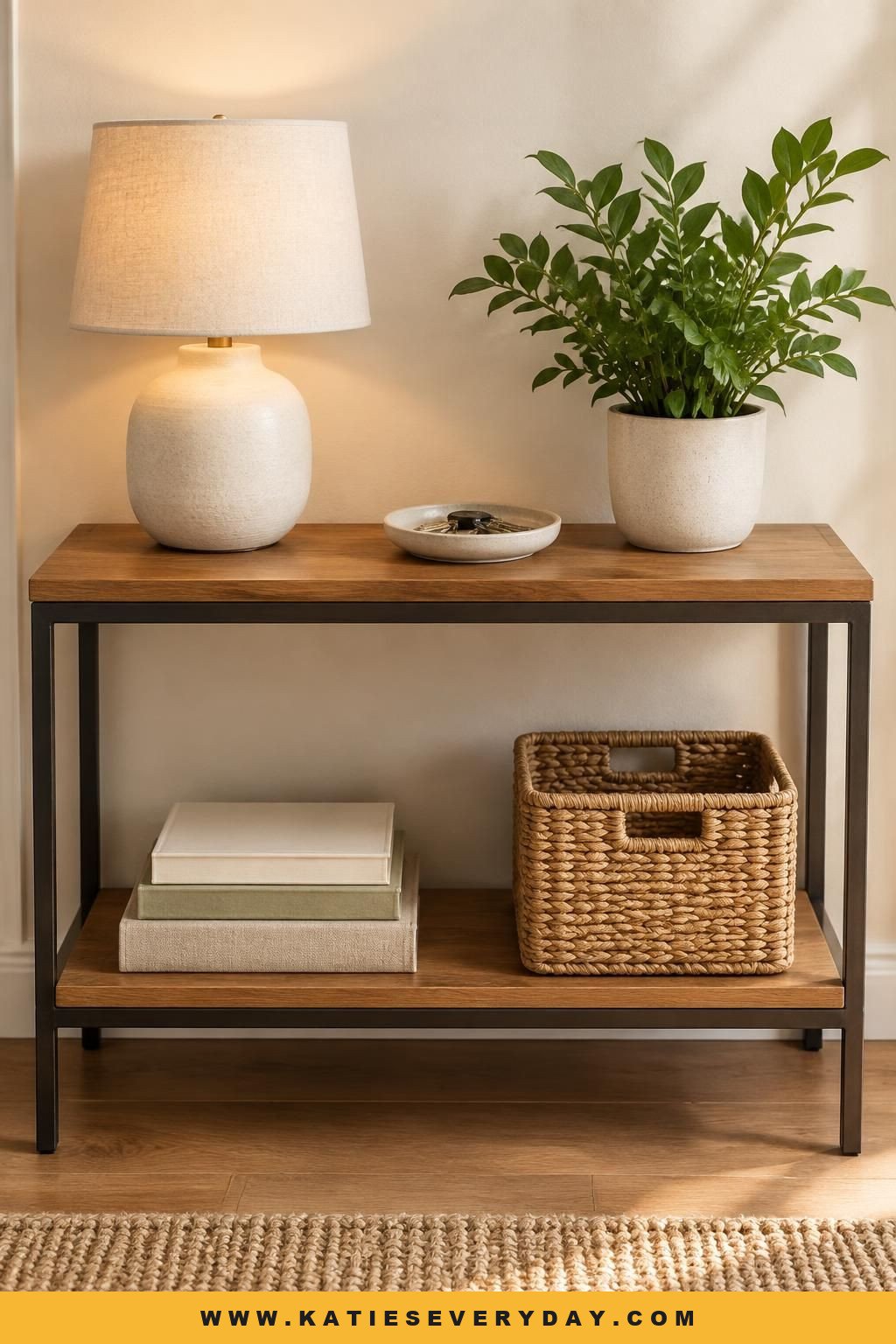
This can work in an entry with regular key or mail traffic. Two shelves can invite overfilling, so clear the lower one or give it a single purpose if clutter starts to collect.
13. A floor vase for vertical emphasis
Set a tall vase or branch arrangement beside the console, and leave more open space on the tabletop. The floor arrangement adds height without taking over the whole surface.

Try this in a roomy entry or stair landing. Keep the vase out of doorways and walking routes, and avoid adding other tall pieces that compete with it.
14. A fabric-covered console for a quick style shift
Drape or skirt a plain table with fabric that relates to the room, then add one contrasting vase or lamp. The textile becomes the main visual change, so you don’t need to add a full set of accessories.

This can suit an eclectic room or a rental-friendly refresh. Secure the fabric so it won’t slip, and keep it away from heat sources and anything that could snag it.
15. A small bar tray for entertaining
Group a few bar essentials on a tray and leave the rest of the console clear. The tray creates a defined serving area instead of spreading items across the table.

This setup can work in a living room or study when you’re entertaining. Keep drinks and breakables away from the table’s edges and household traffic.
16. A white console with warm contrast
Pair a white table with natural wood, woven material, greenery, or a dark accent. Repeat one warm material in two places—for example, use a small wood object on top and a woven basket below—to connect the two levels.
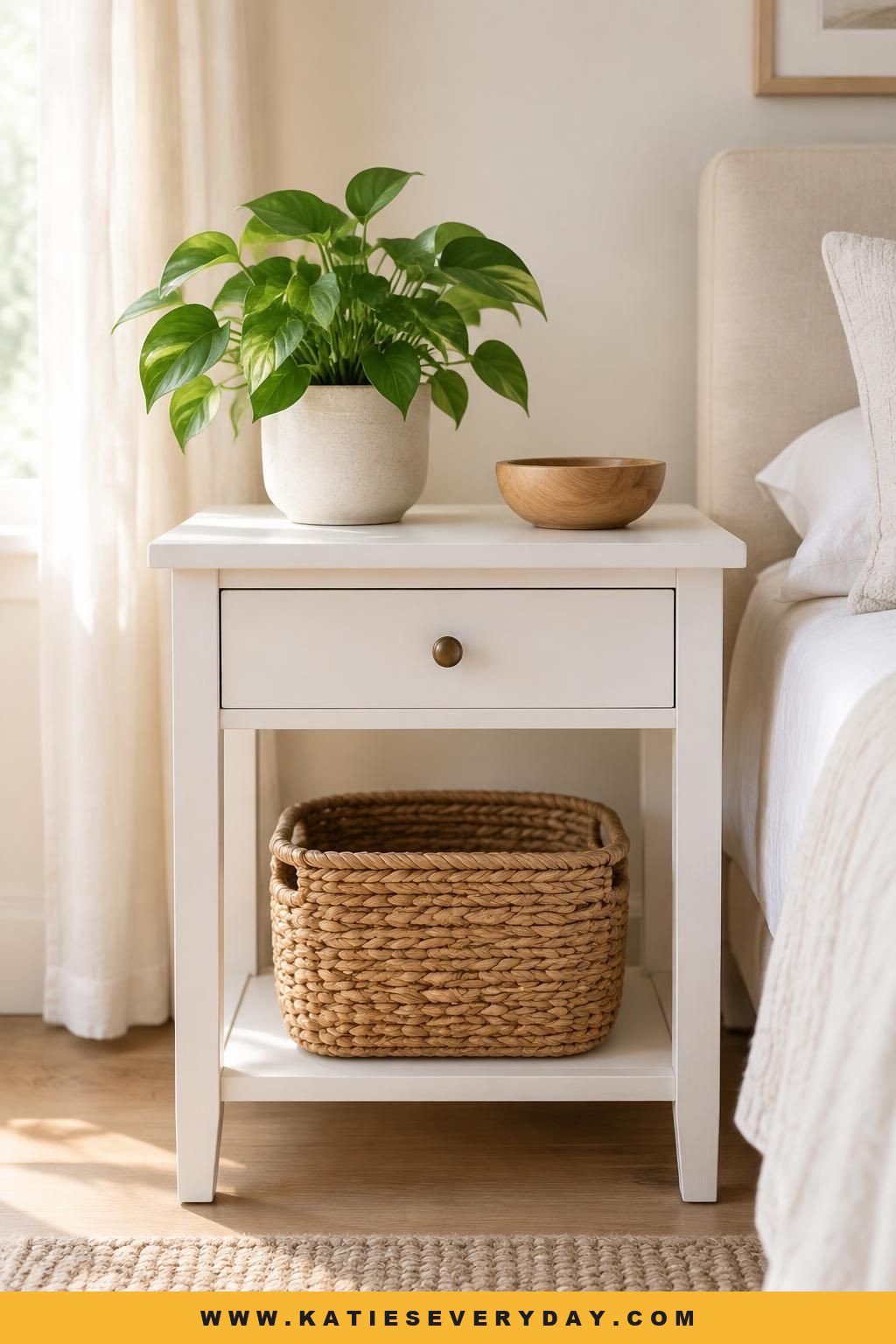
Try this in a light-toned entry or bedroom. Contrast is one option, not a requirement; a pale-on-pale display may suit your room better.
17. A boho mix of woven texture and greenery
Combine a woven basket, textured ceramic, and a plant or branch arrangement for a relaxed look. Vary the materials rather than adding lots of different colors, and include one smooth or simple piece to offset the texture.
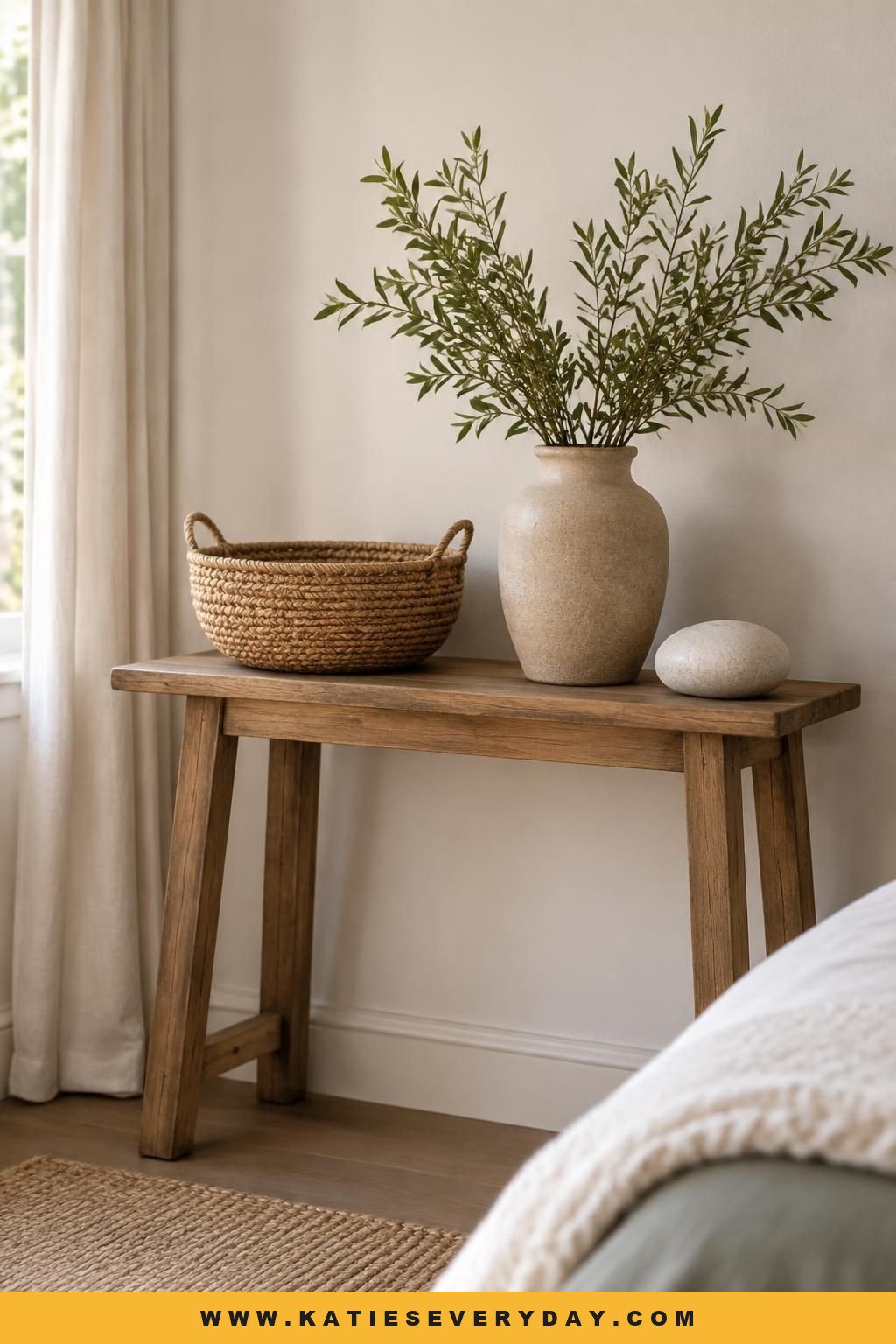
This can suit a relaxed living room or bedroom. Too many textured items can crowd a small table, so skip extra accessories if the basket and vase already have strong texture.
18. A bedroom console as a vanity
Use a bedroom console as a simple vanity with a mirror, a small tray, and a vase or candle. Keep daily-use products together in the tray and leave room for the items you need while getting ready.

This works if the table’s height and available space suit your routine. A decorative console may not provide the storage or seating of a dedicated vanity, so consider whether you need a separate stool or somewhere to keep extra products.
19. A behind-the-sofa lamp-and-book setup
Place a lamp, a book stack, and a contained spot for living-room essentials on the console behind your sofa. Let the objects serve the seating area; you don’t need to treat the table as a wall display.

Check that the objects don’t interfere with the sofa or feel exposed to people sitting down. If the lamp is awkward to reach, move it to a more useful position.
20. A TV-console display that leaves breathing room
Keep decor beneath a TV simple and low. Use one tray or one larger accent rather than several small pieces, and decide whether the screen or the display should be the focal point.
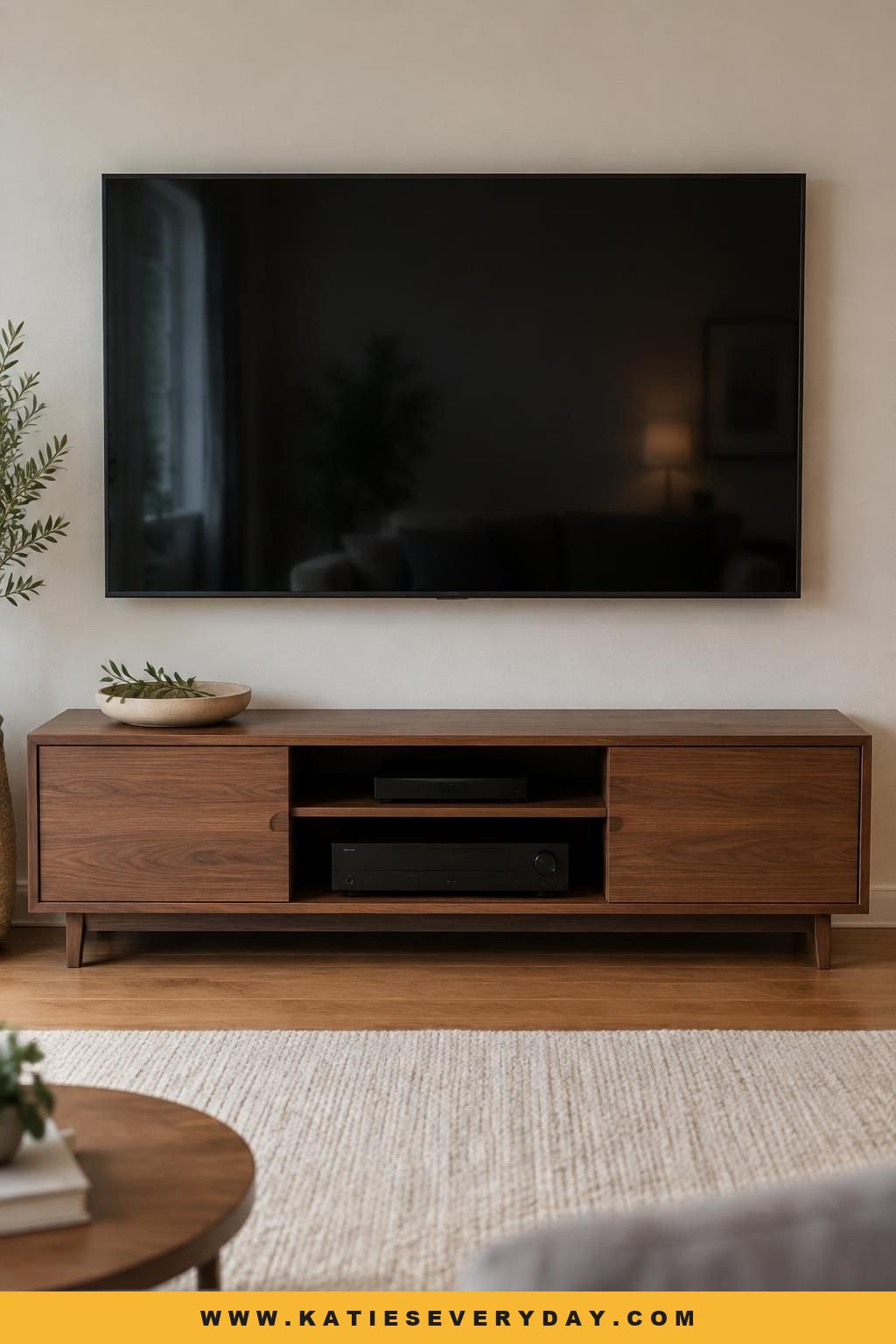
A TV console needs to stay practical. Don’t block the screen or equipment ventilation, and leave more of the surface open if the table already holds devices.
Keep Exploring More Ideas
 9 Black Console Table Decorating Ideas for a Bold Entryway or Living Room
 13 Hallway Console Table Ideas to Make the Most of a Narrow Space
 9 Fall Table and Console Decor Ideas for a Cozy Home
 25 Entryway Table Ideas for a Welcoming First Impression
 8 Coastal Console and Entryway Ideas for a Breezy Home
 10 Console Table and Mirror Ideas for a Finished Entryway
 5 Modern Console Table Ideas for a Sleek, Updated Look
 13 Small and Narrow Entryway Table Ideas for Tight Spaces
 18 Console Table Ideas for Behind the Couch
 19 Small Living Room Ideas That Make Every Inch Work
 13 Compact One- and Two-Bedroom House Plans to Compare
 19 Simple and Modern Bedroom Ceiling Designs to Consider
See more Console Table →