
Choosing a console table means weighing its materials and visual weight against the finishes already in your room. These 14 ideas make that comparison easier, from veined marble and warm metal to woven textures and colorful lacquer. Each pairs a distinct look with a styling detail, a possible drawback, and a setting to consider.
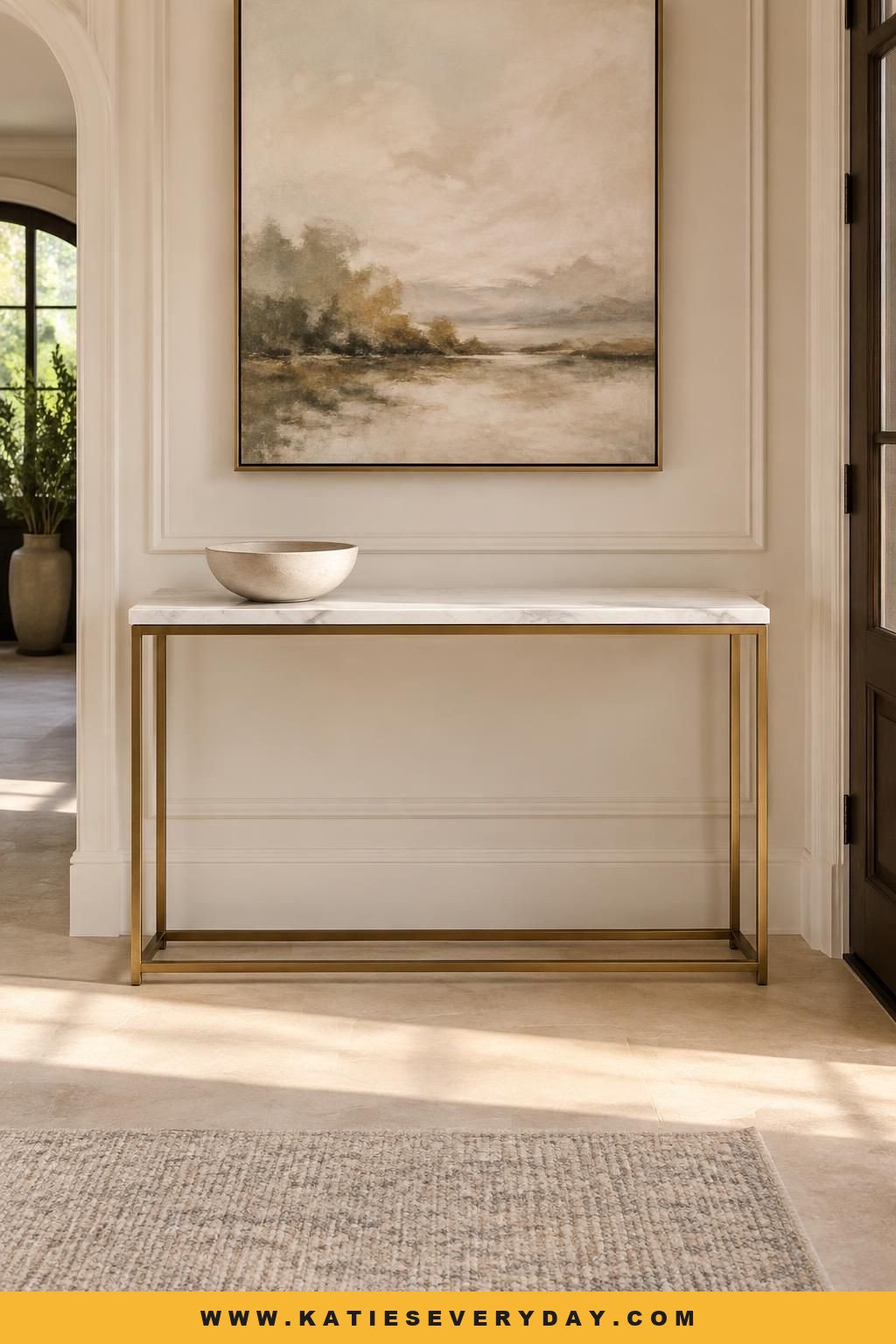
1. White marble with a brushed-brass frame
Pair a pale, veined marble top with a fine brushed-brass frame for a crisp contrast of cool stone and warm metal. In a bright entry or formal sitting room, let the veining show with one low bowl instead of a cluster of accessories. If the veining is dramatic, skip an ornate frame so the two details don’t compete.
2. Black marble on a slim iron base
Set a dark marble top on thin black iron legs for a graphic look against light walls. Repeat the black once nearby, perhaps in a picture frame or lamp stem, to connect the base to the room. A dark top can feel visually heavy in a narrow, dim hallway, so consider this pairing for a modern entry with good light.

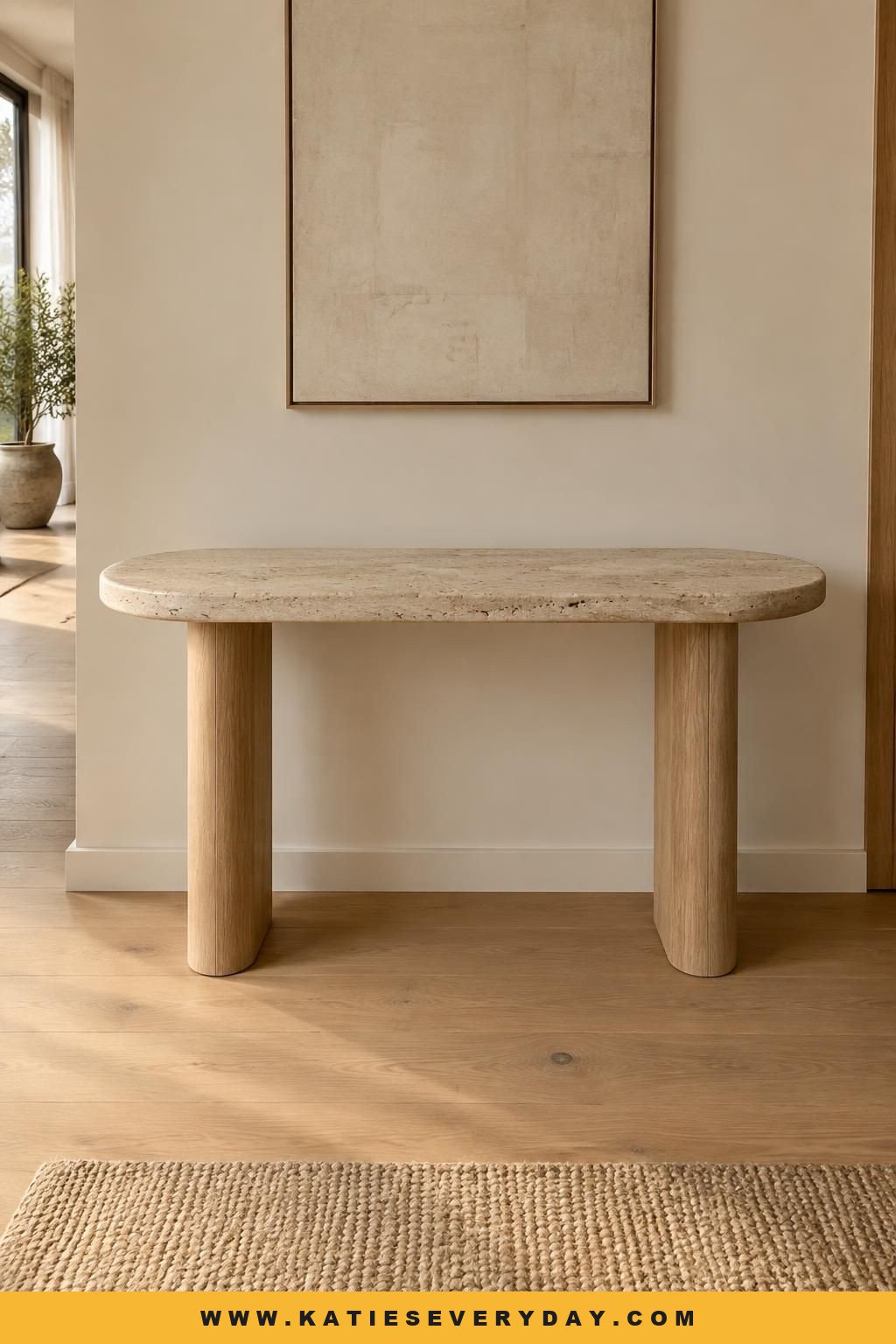
3. Cream travertine with rounded edges
Choose a cream or sand-colored travertine top with rounded edges and a restrained base for a warmer take on pale stone. Let the surface show rather than covering it with a runner; a warm-neutral foyer or relaxed living room suits the quiet palette. Confirm the tabletop is travertine before naming it that way; otherwise, describe it as travertine-look.
4. A sculptural, all-stone console
Use a thick stone slab with substantial, block-like stone supports for a strong, architectural silhouette. Keep the tabletop nearly clear in a spacious entry or along a large wall in an open-plan room, letting the material and shape carry the look. This is a deliberately weighty design and may overwhelm a small space.

5. Clear glass with a brass frame
Set a clear glass top on a slim brass frame for a glass console table with an open outline. The visible wall and floor can help the arrangement feel less dominant in a small entry or a layered room. For glass console table decorating, try one dark object to make the top’s edge easier to see. Fingerprints and surface clutter may also be more noticeable on clear glass.

6. Smoked glass on black steel
Combine a tinted glass top with a straight-edged black steel frame for a moodier, more graphic look. In a contemporary living room or well-lit hallway, one warm-colored object, such as an amber vase, can break up the dark palette. The tint may feel heavy in a room with little light, so keep the surrounding finishes and accessories in view when considering this pairing.

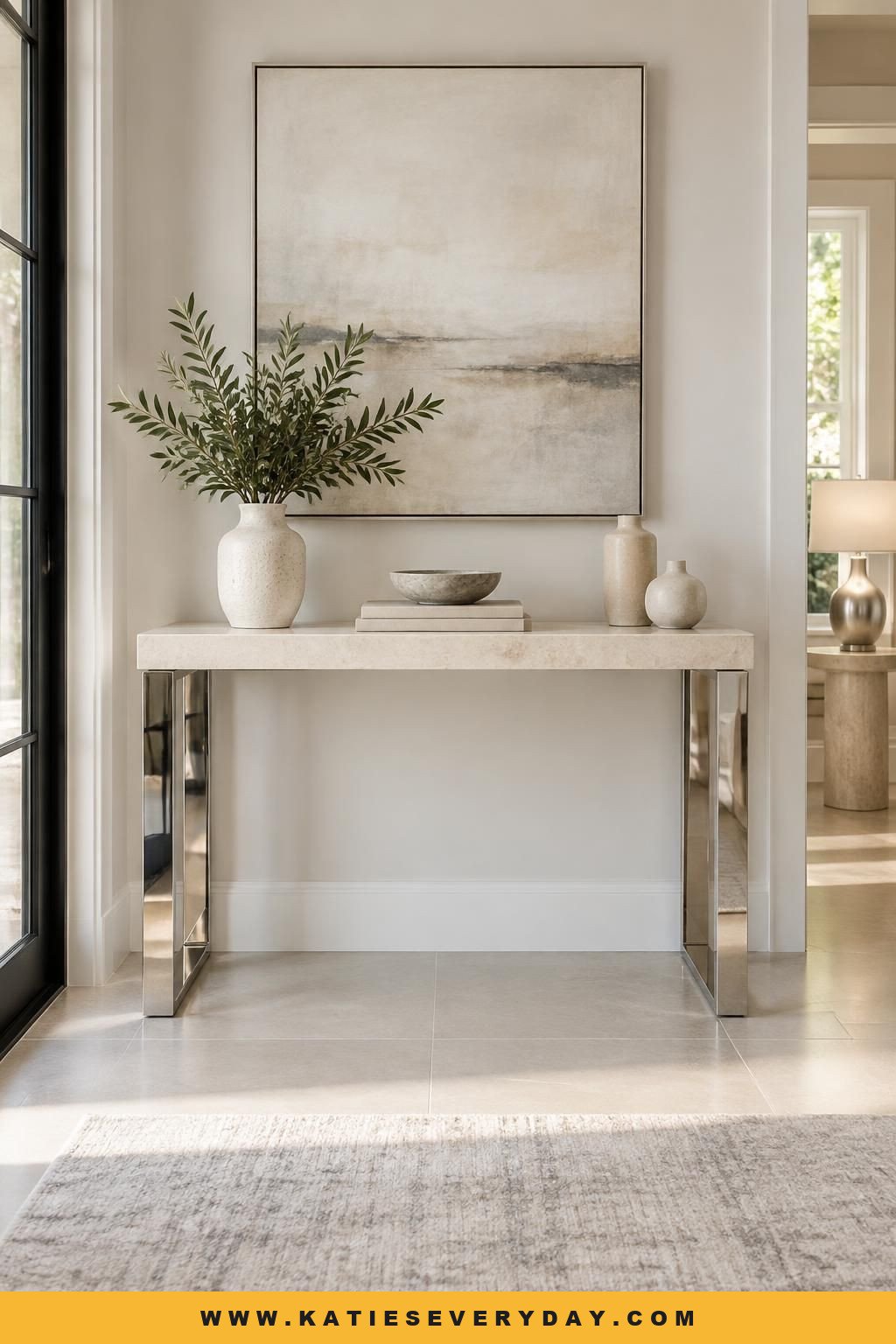
7. Polished steel with a pale stone top
Pair a reflective steel base with a pale stone top for a crisp, cool-toned contrast. Echo the silver tone in one nearby detail, such as a frame or lamp base, rather than adding several competing metal finishes. This look suits a streamlined, contemporary entry. A silver appearance alone doesn’t confirm that a frame is steel, so verify the material before naming it.
8. Aged-brass finish with a solid silhouette
Let a broad, sculptural frame in an aged-brass finish carry the design, without adding a competing stone top. A simple wall treatment helps keep the warm metal in focus in a collected or vintage-inspired room. If the exact material or finish isn’t confirmed, use a description such as “brass-tone” rather than calling it solid brass.

9. Industrial iron with reclaimed wood
Pair a dark iron frame with visibly grained, weathered wood for a contrast of rough and refined surfaces. Let knots or a natural edge show in a loft-like entry or rustic-modern living space. Distressed wood can look busy beside strongly patterned wallpaper or flooring. Use “iron” only when the frame material is confirmed; otherwise, describe it as dark metal.

10. Woven rattan with a natural wood frame
Use a woven rattan front or shelf with a natural wood structure for a tactile, relaxed look. In a casual entry or sunroom, leave the woven area uncovered so its pattern remains visible. This pairing may compete with a room that already has many woven textures. Confirm the material before calling a particular piece rattan.

11. Rattan with a dark painted frame
Contrast a natural woven panel or shelf with a dark-painted frame to make the weave stand out. Echo the frame color in one small accessory in an eclectic hallway or a room with mixed finishes. The look doesn’t need a regional or historical label, and the weave should only be called rattan when the material is confirmed.

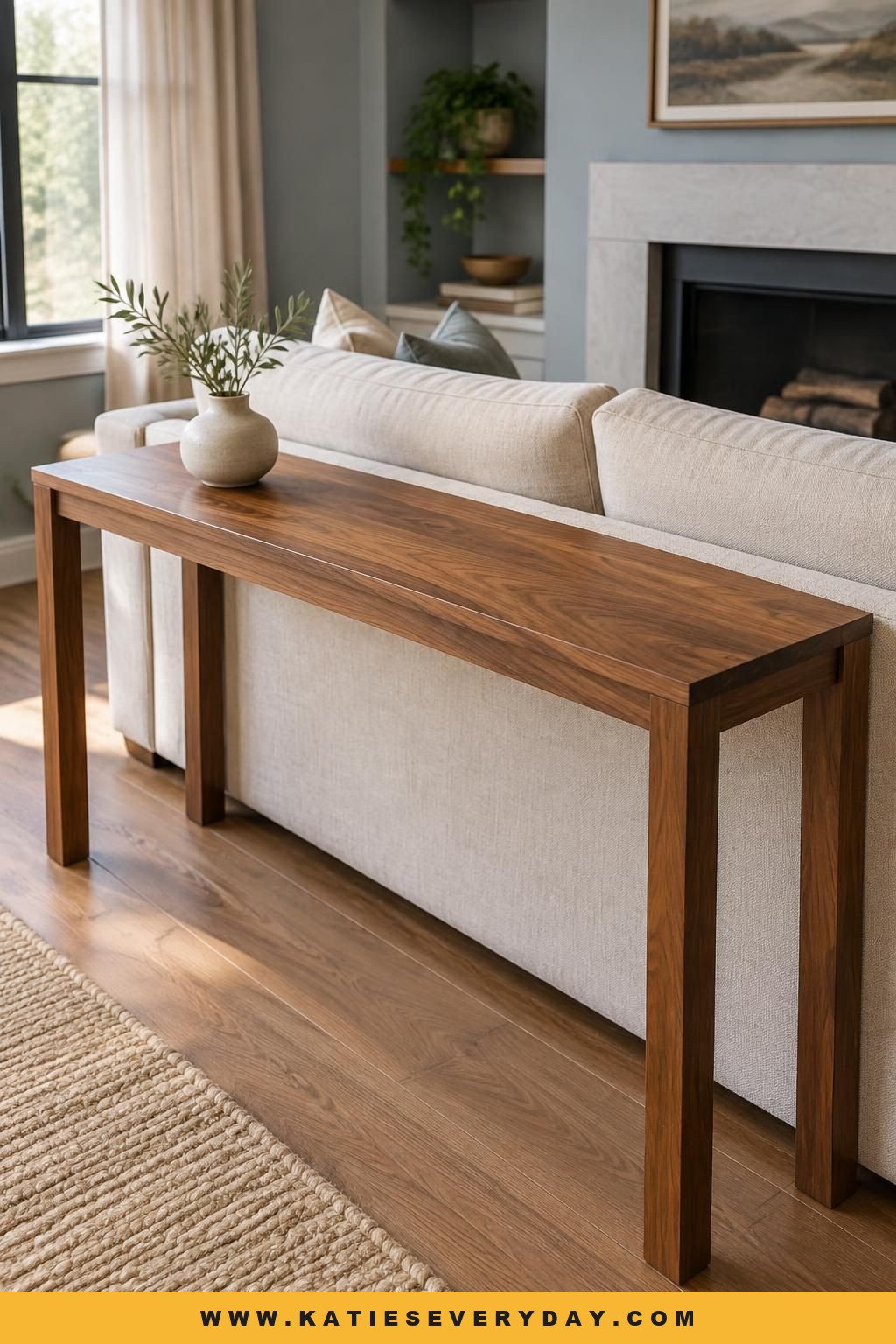
12. Warm walnut with a simple profile
Choose a walnut-toned top and clean lines for a warm alternative to stone and metal. Let the grain be the main surface detail, with restrained accessories, in a living room behind a sofa or an entry with cool-toned walls. A walnut appearance doesn’t confirm solid walnut, so describe the color or finish unless the wood is verified.
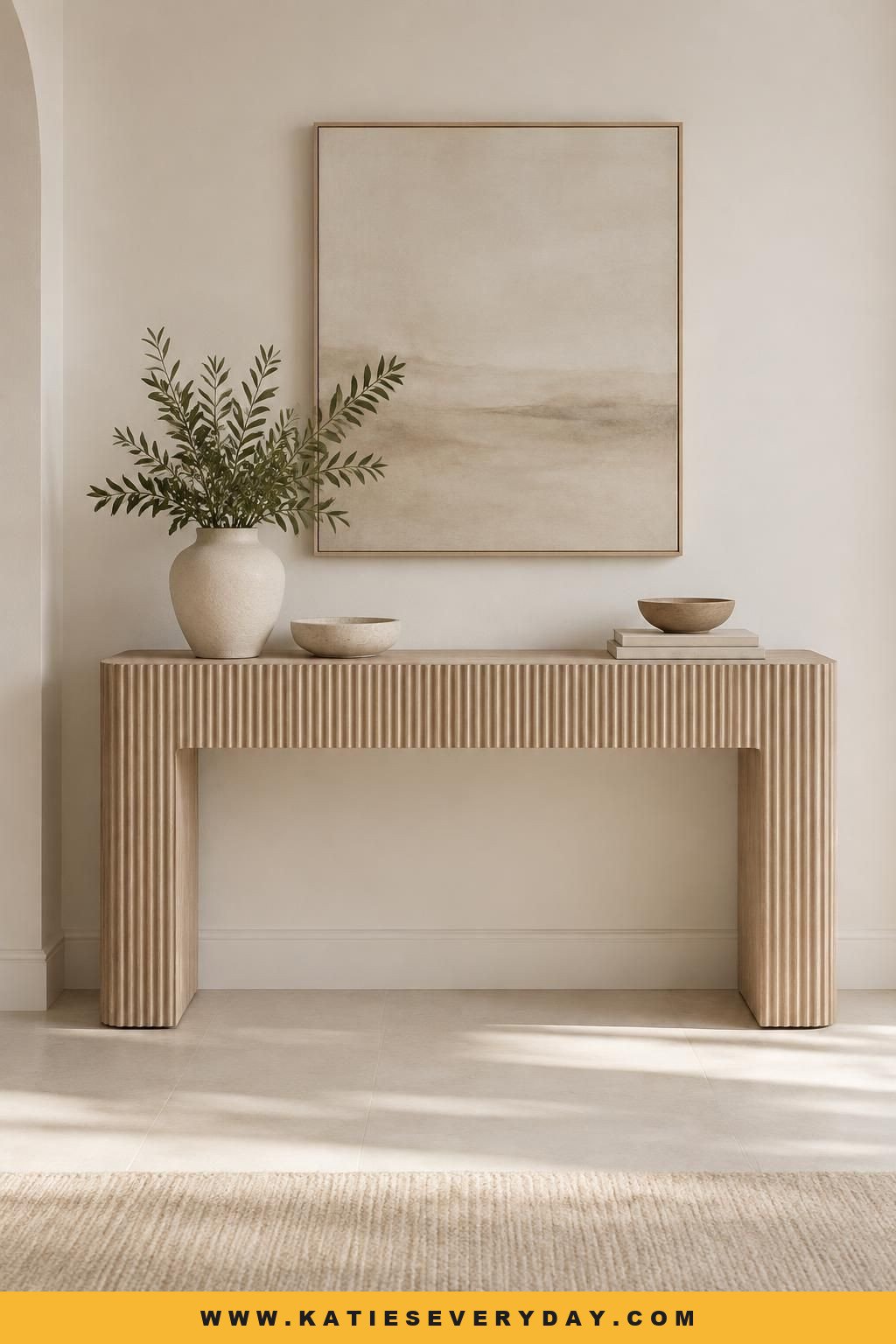
13. Pale fluted wood
Use vertical fluting across a console’s front or legs in a pale, oak-like finish for texture without a contrasting material. The grooves add lines and shadows in a soft-neutral entry or pared-back living room. Keep nearby patterns simple, and don’t call the wood oak unless the material is confirmed.
14. Colorful lacquer with a reflective top
Pair a saturated lacquered base, such as deep green or oxblood, with a clear or lightly tinted glass top. In an eclectic entry or living room, keep the wall decor simple so the color remains the focal point. This isn’t a neutral pairing: match the color name and finish to the actual example, and consider how the shade relates to the room’s existing palette.

Keep Exploring More Ideas
 8 Wooden Console Table Ideas for a Warm, Natural Look
 11 Vintage, Rustic, and Traditional Console Table Ideas
 25 Plus-Size Dresses for Weddings, Parties, and Special Occasions
 18 Plus-Size Work Outfit Ideas for a Polished Office Look
 20 Plus-Size Summer Outfit Ideas for Hot-Weather Style
 19 Small Living Room Ideas That Make Every Inch Work
 13 Compact One- and Two-Bedroom House Plans to Compare
 19 Simple and Modern Bedroom Ceiling Designs to Consider
 17 Bedroom Back Wall Ideas That Make the Bed the Focal Point
 17 Black and White Living Room Ideas With Balanced Contrast
 21 Living Room Decor Ideas for a More Pulled-Together Room
 13 Living Room Aesthetic Ideas With Colors and Details to Copy
See more Plus-Size Outfit Ideas →