
A living room can have all its main furniture and still feel unfinished because the seating, lighting, colors, or finishing touches don’t connect. If you’re unsure what’s missing, adding more isn’t always the answer: a rearrangement or a little editing may work better. Use these 21 ideas to spot what feels out of balance and choose a practical change that suits your room.
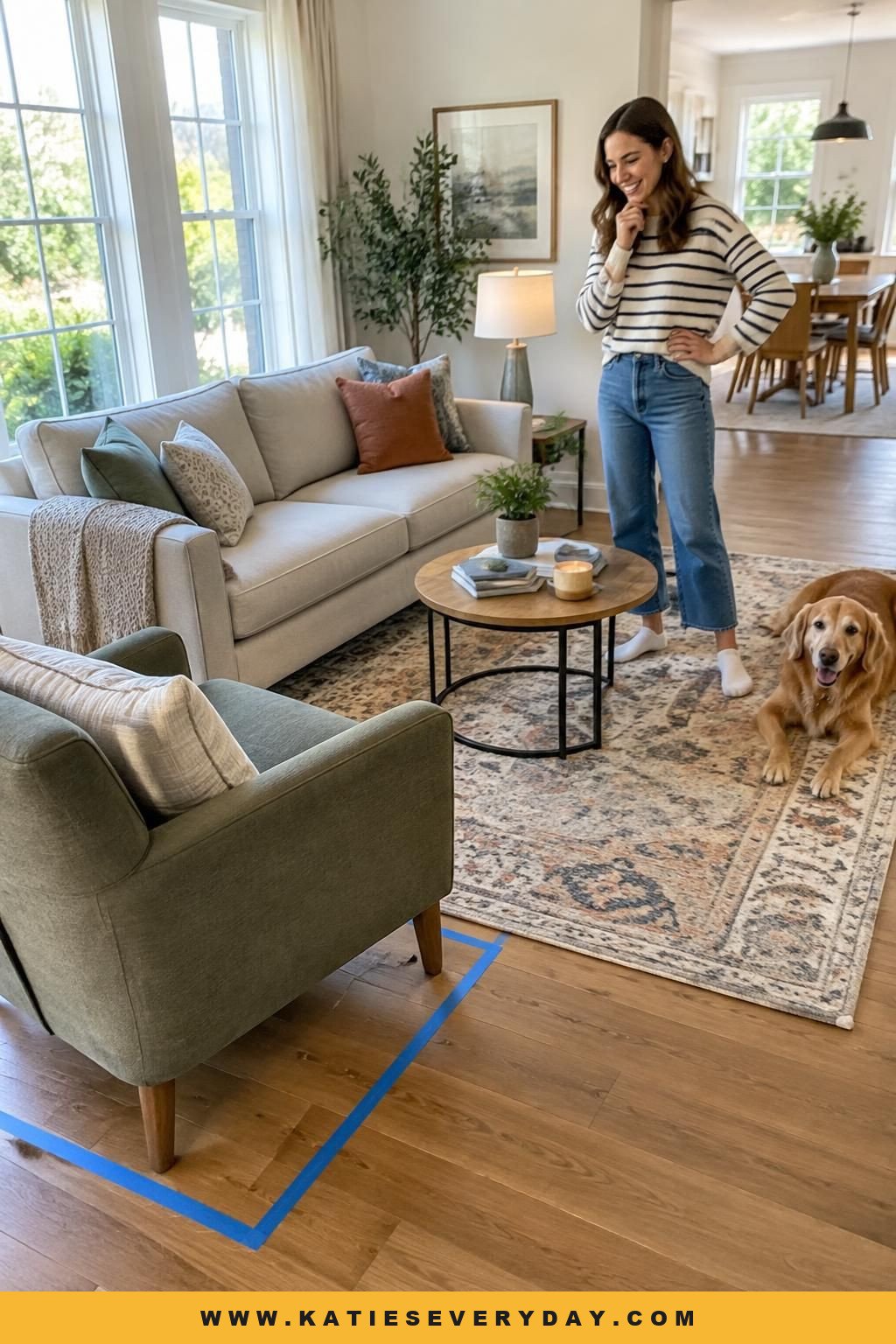
1. Build a conversation zone
Angle an armchair toward the sofa and place a coffee table within reach. If a full chair won’t fit, try a small ottoman instead. Mark the chair’s footprint with painter’s tape to test the layout before moving furniture, and keep the route through the room clear.
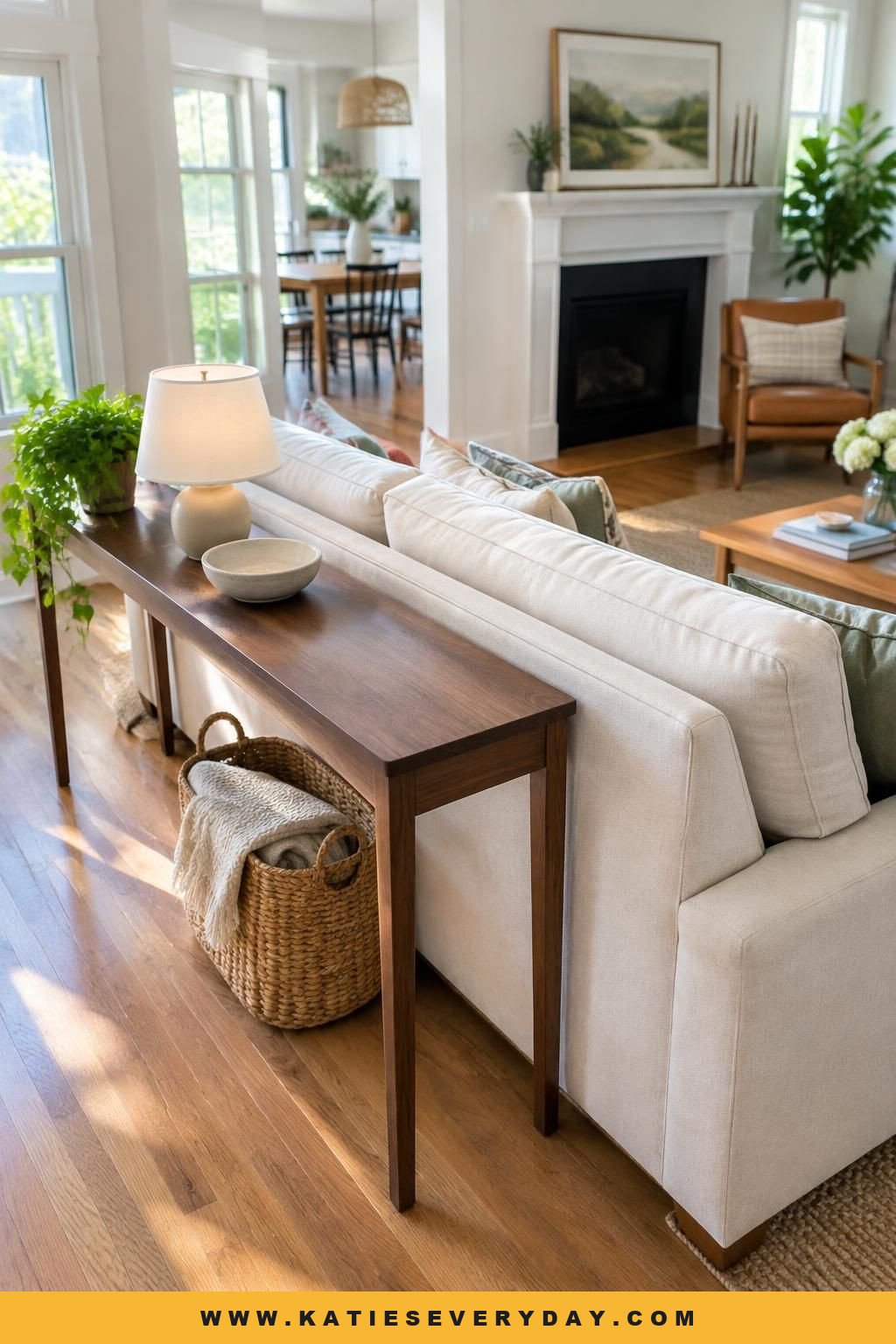
2. Float the sofa with a slim console
In a large or open-plan room, pull the sofa away from the wall and place a narrow console behind it. Add a lamp or small bowl to give the sofa’s back a finished edge and help define the seating area. Skip the console if it would pinch a walkway.
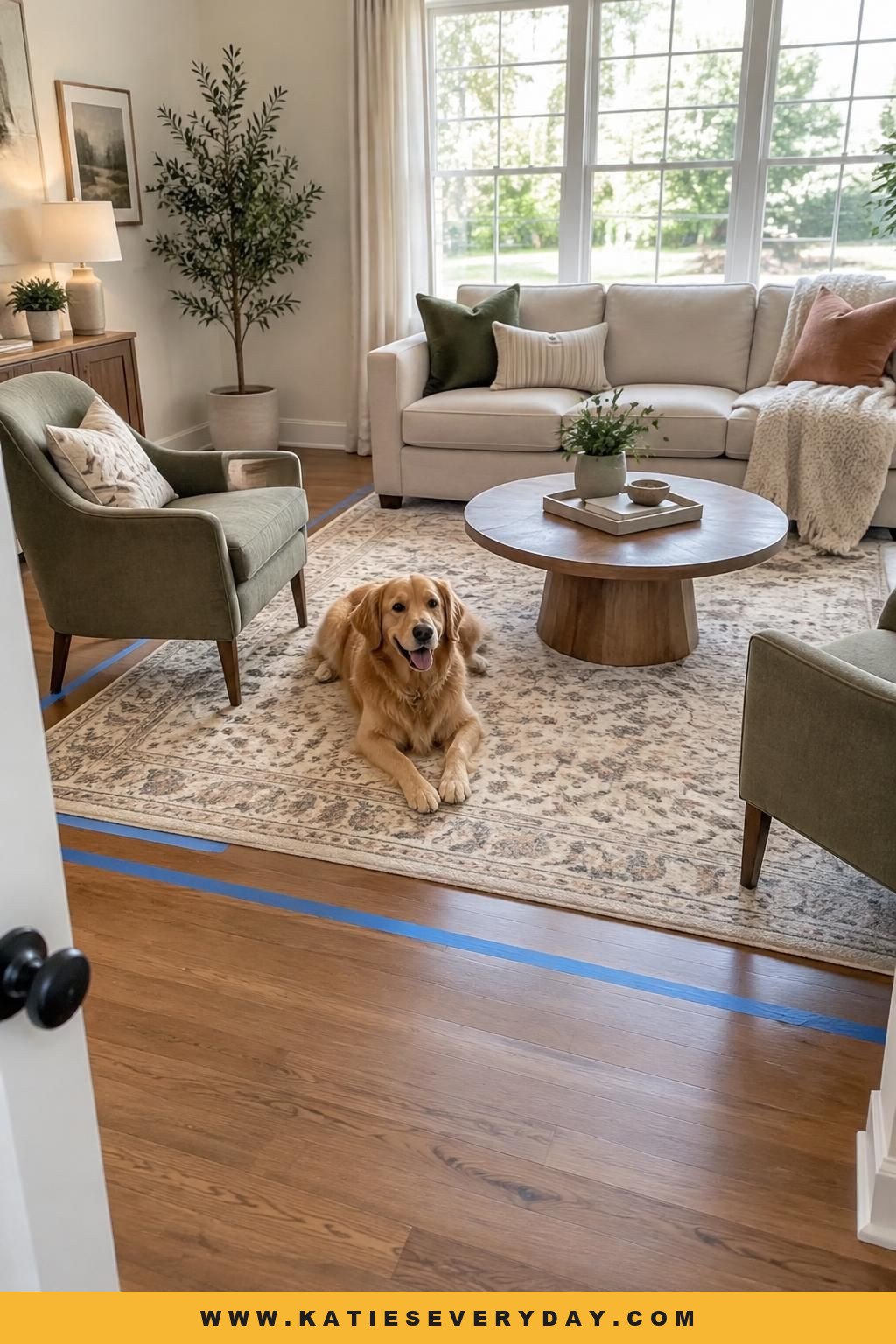
3. Connect the seating with a rug
Choose a rug that relates visually to the main seating group. Use painter’s tape to outline a possible size, then see whether the sofa and chairs can sit with their front legs on it. Don’t force an oversized rug into the room if it reaches into doorways or interrupts movement.
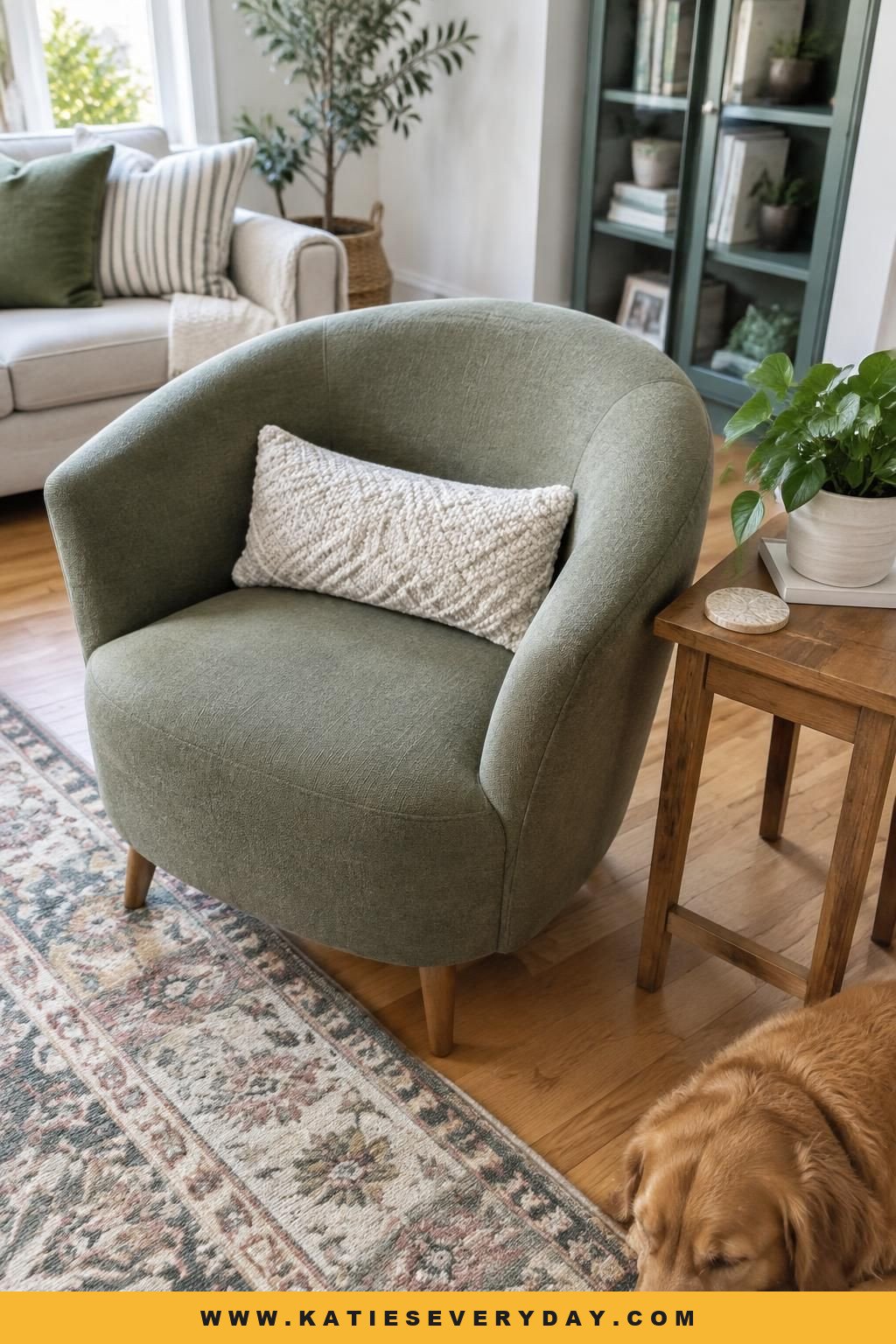
4. Give a boxy room one softer shape
Pair a rectangular sofa with a round or oval coffee table, or add a curved accent chair. A different outline adds variety among straight walls and rectangular furniture. Check that the piece fits the seating area and leaves room to pass.
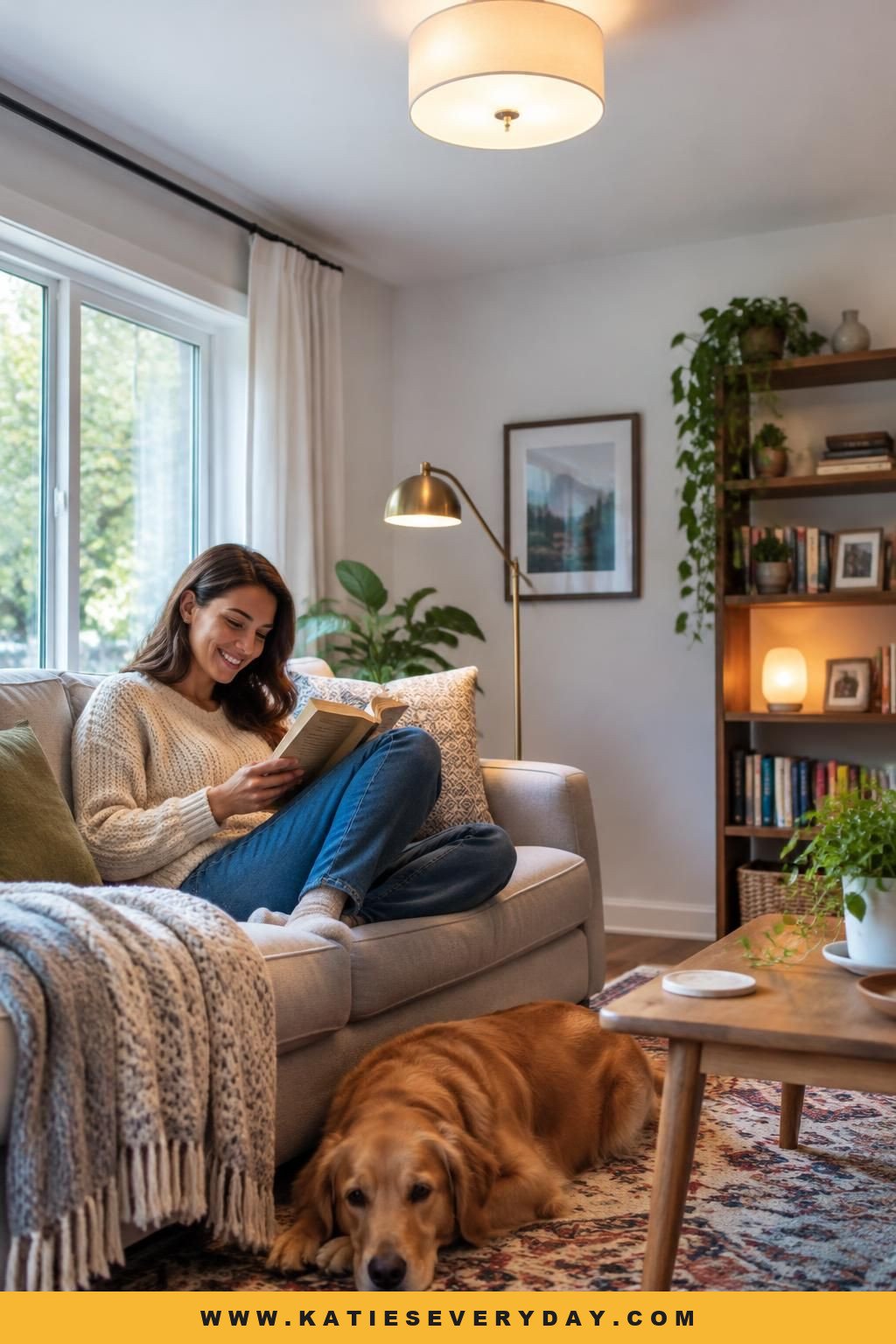
5. Layer the lighting
Combine general room lighting with a reading lamp beside the seat where you read and a smaller accent light near a shelf or artwork. These ambient, task, and accent layers serve different purposes. Check for glare on the TV, and keep cords out of walkways.
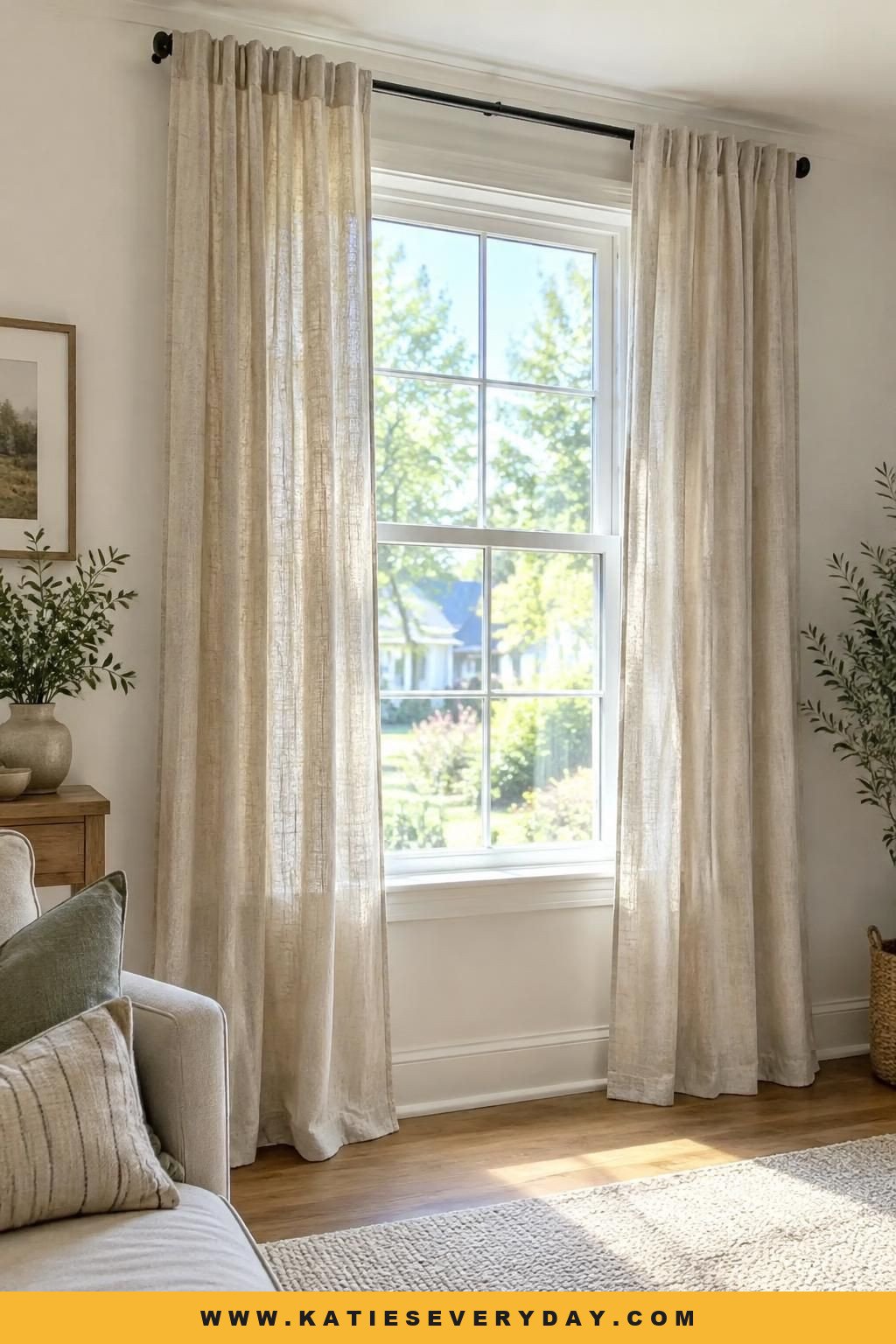
6. Frame a window with curtains
Try floor-length linen-look panels in a soft neutral or a color already used in the room. Where the window and wall allow, hang the rod higher and wider than the window, and measure so the fabric nearly reaches the floor. Sheers let in light but don’t provide the same privacy as opaque panels.
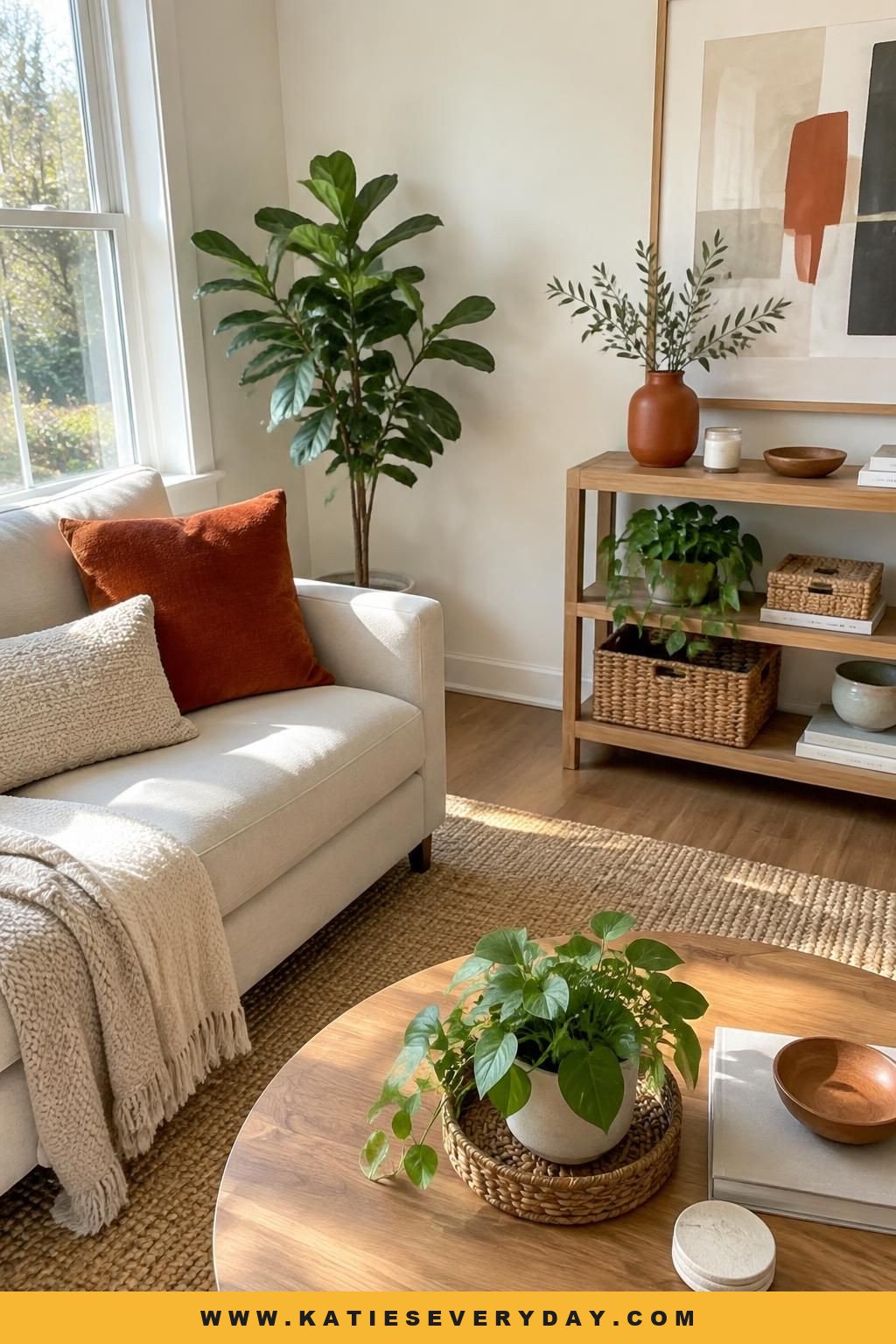
7. Choose one anchor color and repeat it
Keep a mostly neutral foundation if you like, then repeat an accent color—such as rust, olive, or blue—in a pillow, an artwork detail, and a vase. Use the color in more than one material to connect the pieces. Skip matching sets; tonal variation can keep the room from feeling overly coordinated.
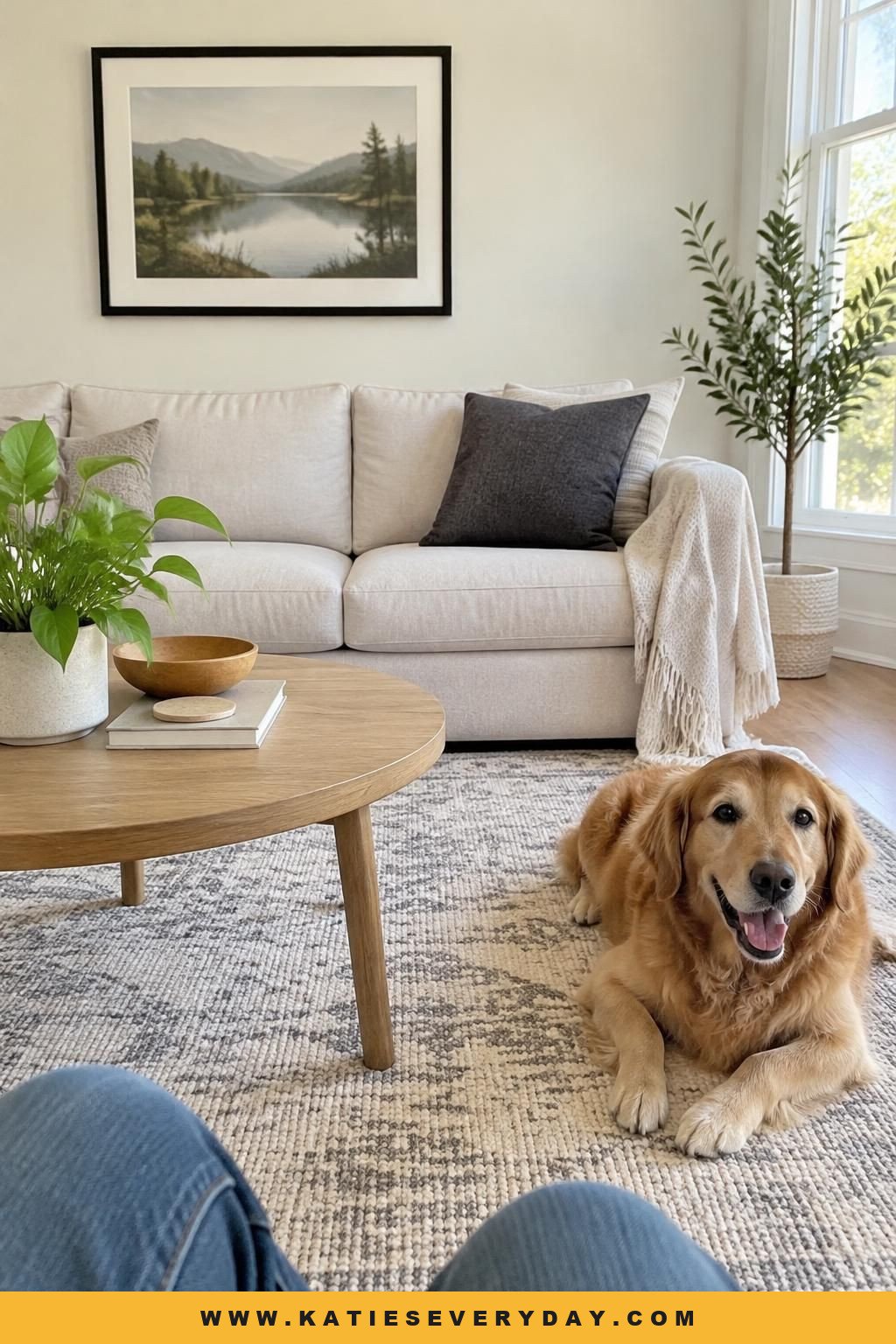
8. Add a dark counterpoint
If light neutrals look washed out, repeat a small dark detail in at least two places. A black frame, dark wood bowl, or charcoal cushion can give the eye a few clear points of contrast. In a dim room, too many dark accents may make the palette feel heavier.
9. Mix patterns by scale
Combine one larger pattern, such as a rug, with a smaller stripe or check on a pillow. A shared color helps link them without making the patterns identical. Lay samples together before buying, and keep new patterns restrained if the room already has patterned wallpaper or flooring.

10. Mix tactile materials
Pair a smooth sofa with a woven basket, a nubby cushion, and a wood or stone table. If the palette is simple but the room feels flat, start with one woven texture and one soft texture. Too many competing surfaces can make a small space look busy.

11. Hang one meaningful, well-scaled artwork
Choose a piece you like for the wall above the sofa, and consider its size in relation to the seating. One designer’s guideline suggests art or a mirror around 60–75% of the sofa’s width. Treat that as a starting point, not a rule: account for the wall, ceiling, and nearby objects.

12. Make a personal gallery wall
Combine a few prints, photographs, and personal mementos if one artwork won’t suit the wall or you want to display several smaller pieces. Consistent frames make the arrangement feel calmer; varied frames create a more eclectic look. Arrange the pieces on the floor first, or use a picture ledge if you want to change the display later. Leave some walls quiet.
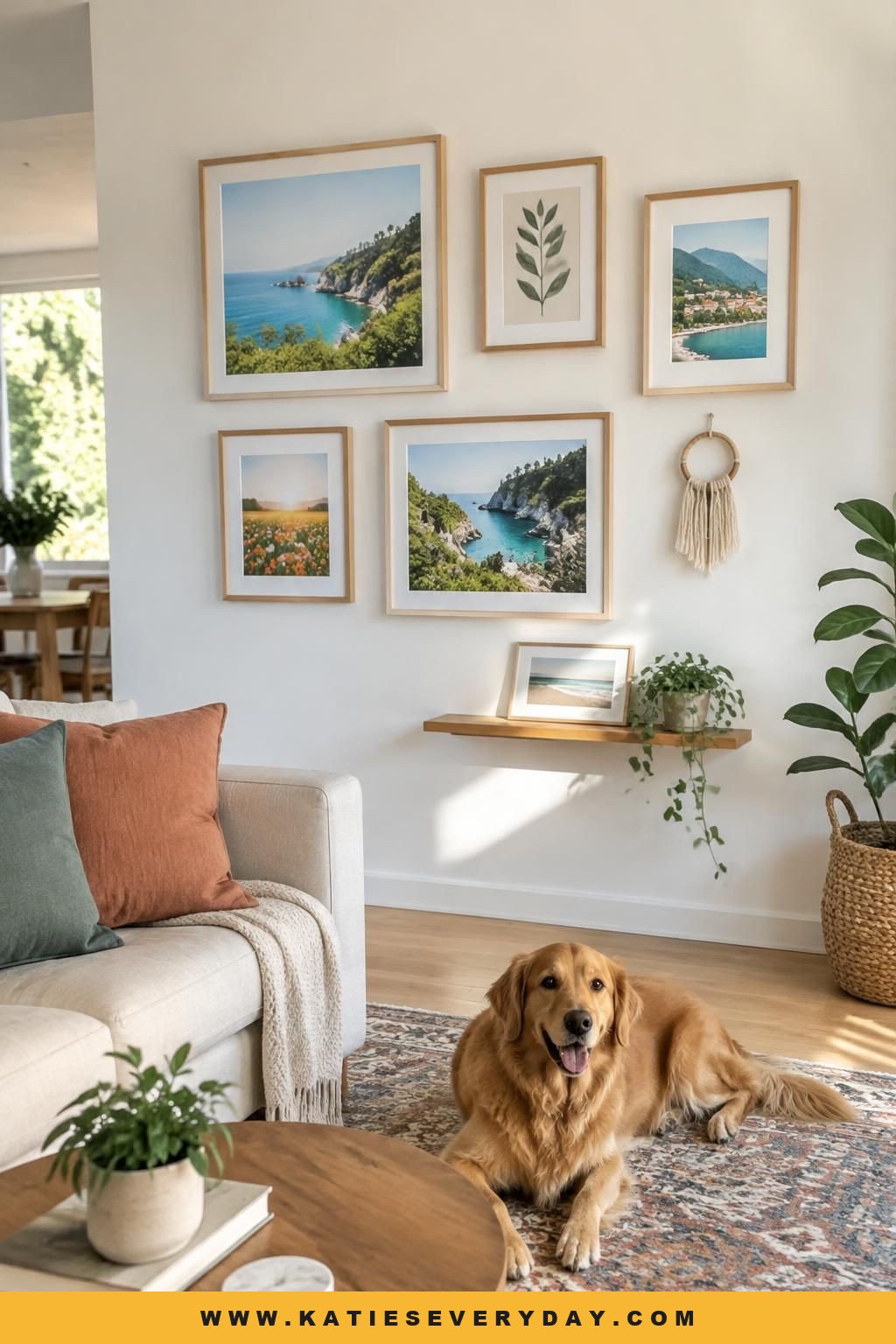
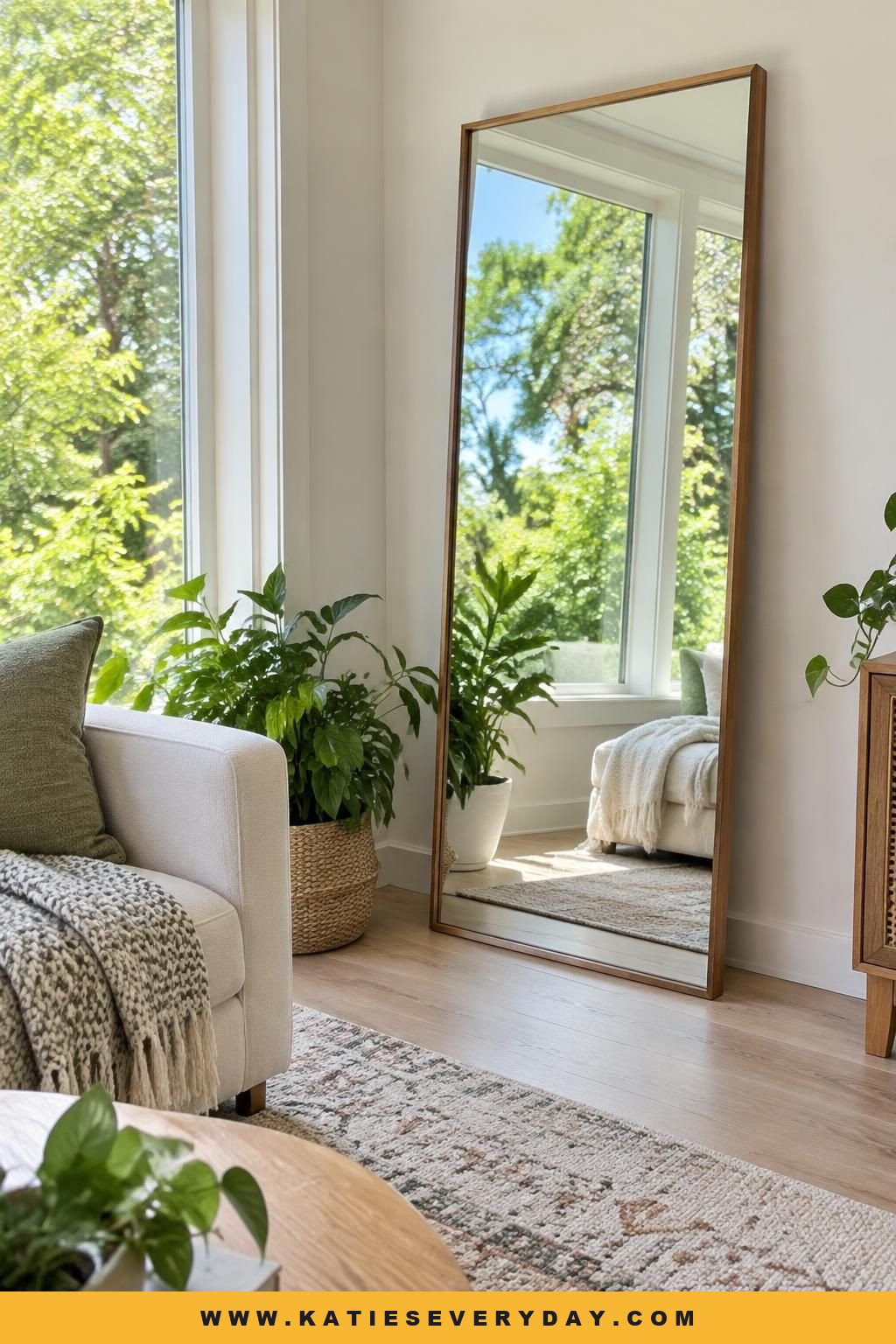
13. Place a mirror where it reflects something worth seeing
Position a mirror beside or opposite a window, or where it reflects artwork or a garden view. Check the reflection from your main seating area before choosing its spot. Avoid reflecting clutter, glare, or the TV if that makes the room feel busier.
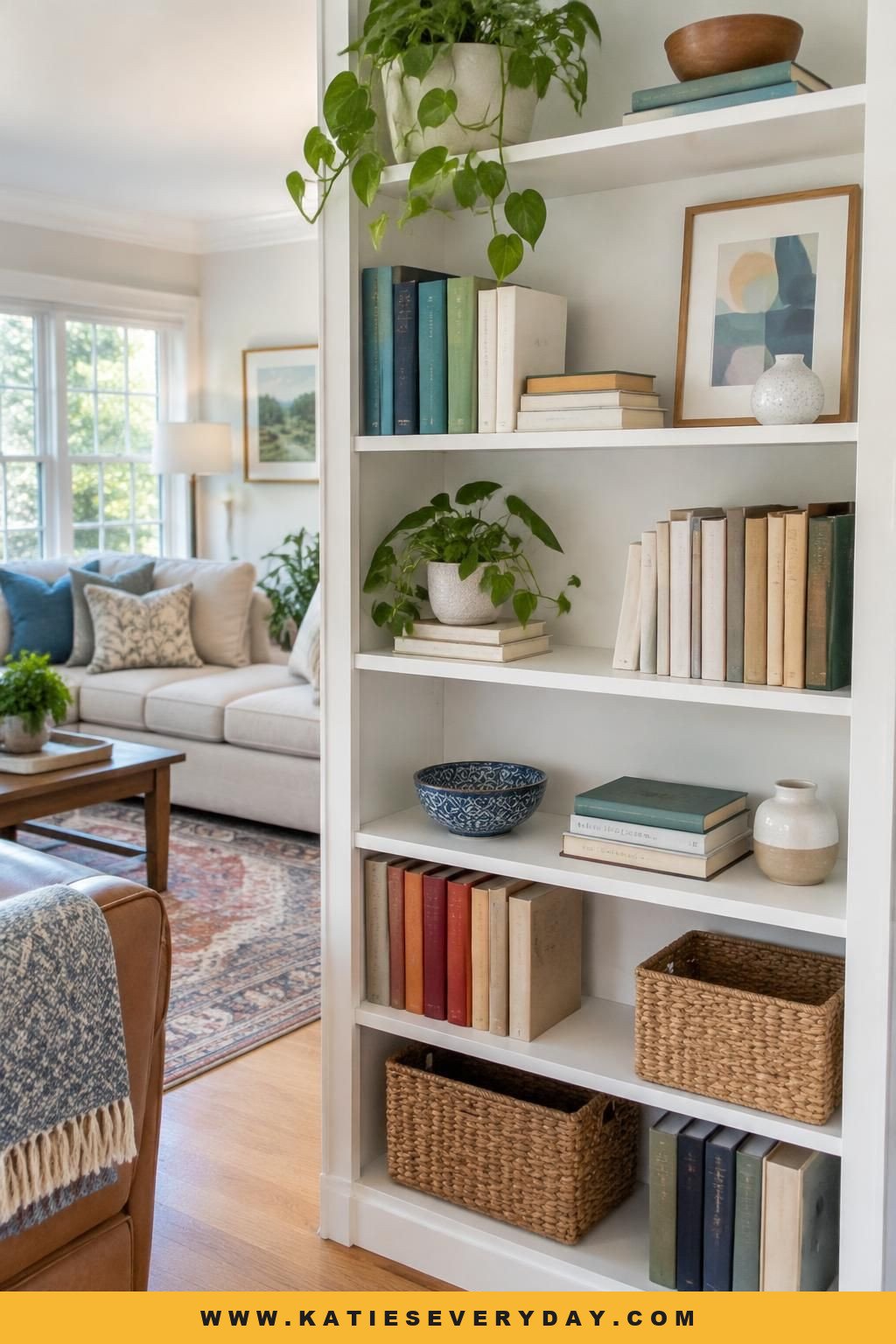
14. Edit the bookcase into a display
Keep the books you use, add a few ceramics or framed pieces, and leave some shelf space open. Group a few books by color or turn one cover outward. If the shelves feel crowded, remove or relocate items before buying more decor; don’t give up useful storage just to create a display.
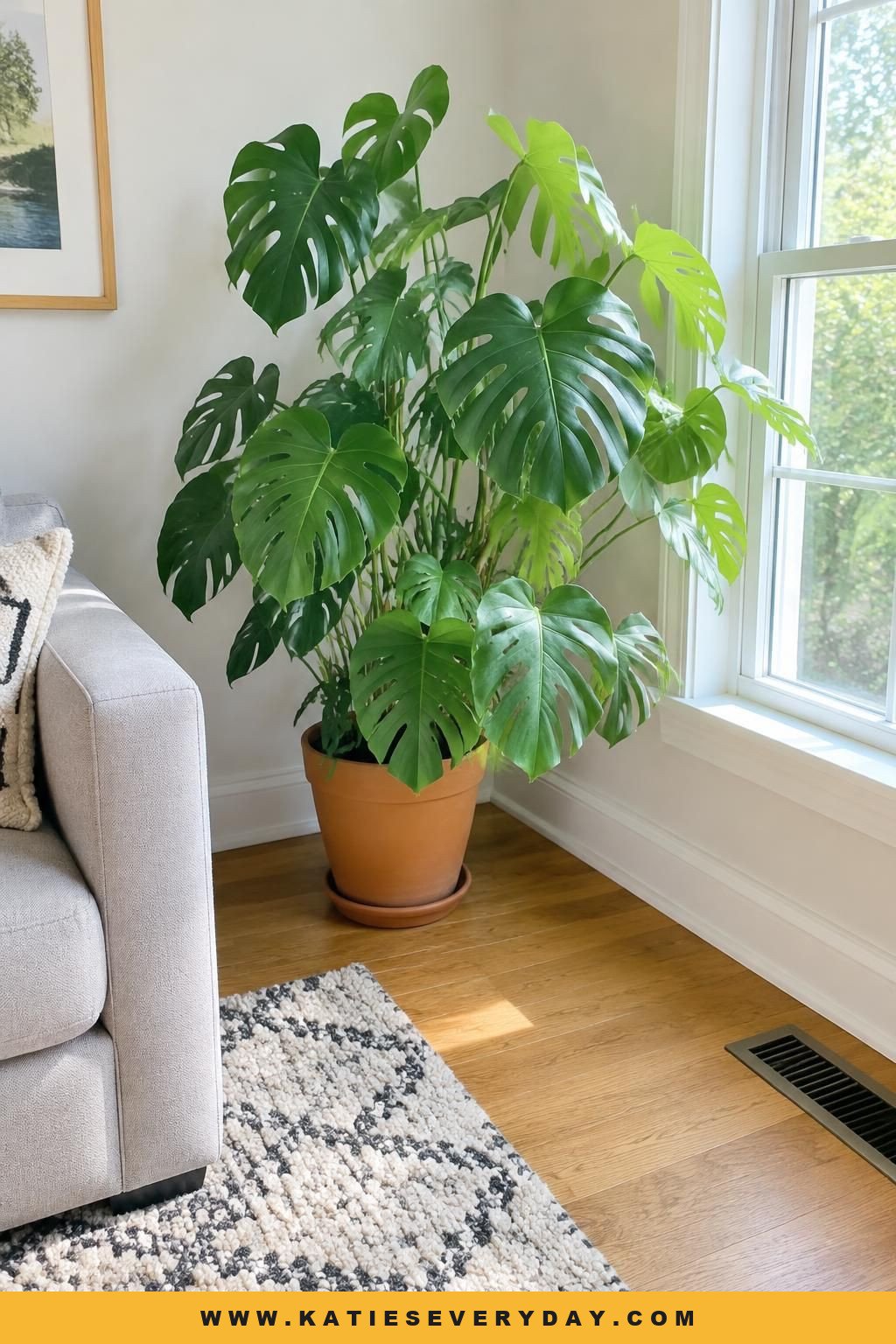
15. Add one larger plant in an underused spot
Use a floor plant in a spare corner, or choose a tabletop plant if floor space is limited. Pick a location that won’t block a path, window, or vent, and choose a plant suited to the available light and your care routine. If you have pets, check whether that specific plant is safe for them.
16. Give the fireplace or TV wall a clear focal point
Above a fireplace, try one artwork or mirror. Around a TV, keep decor simple and related in scale to the screen and console. If the wall already feels busy, remove a few objects rather than adding another. Follow safety guidance for anything near a working fireplace, and don’t obstruct the screen.
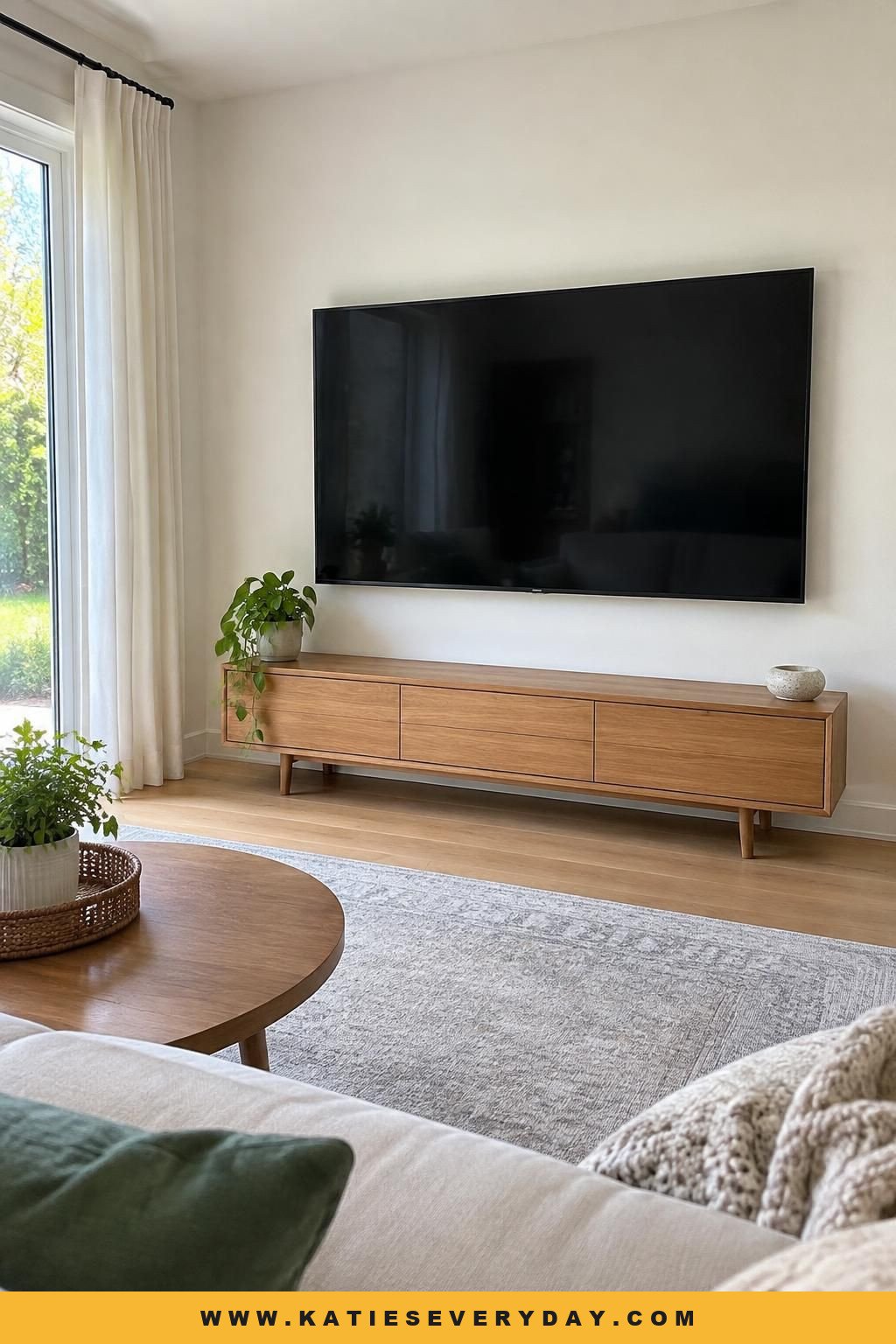
17. Repeat a finish to connect different furniture
Echo one finish—such as brass, walnut, or black metal—in a lamp, frame, or side table. Repeating a small detail can link pieces that don’t come from the same set. Use the finish in a few places, not everywhere, to avoid an overly matched look.
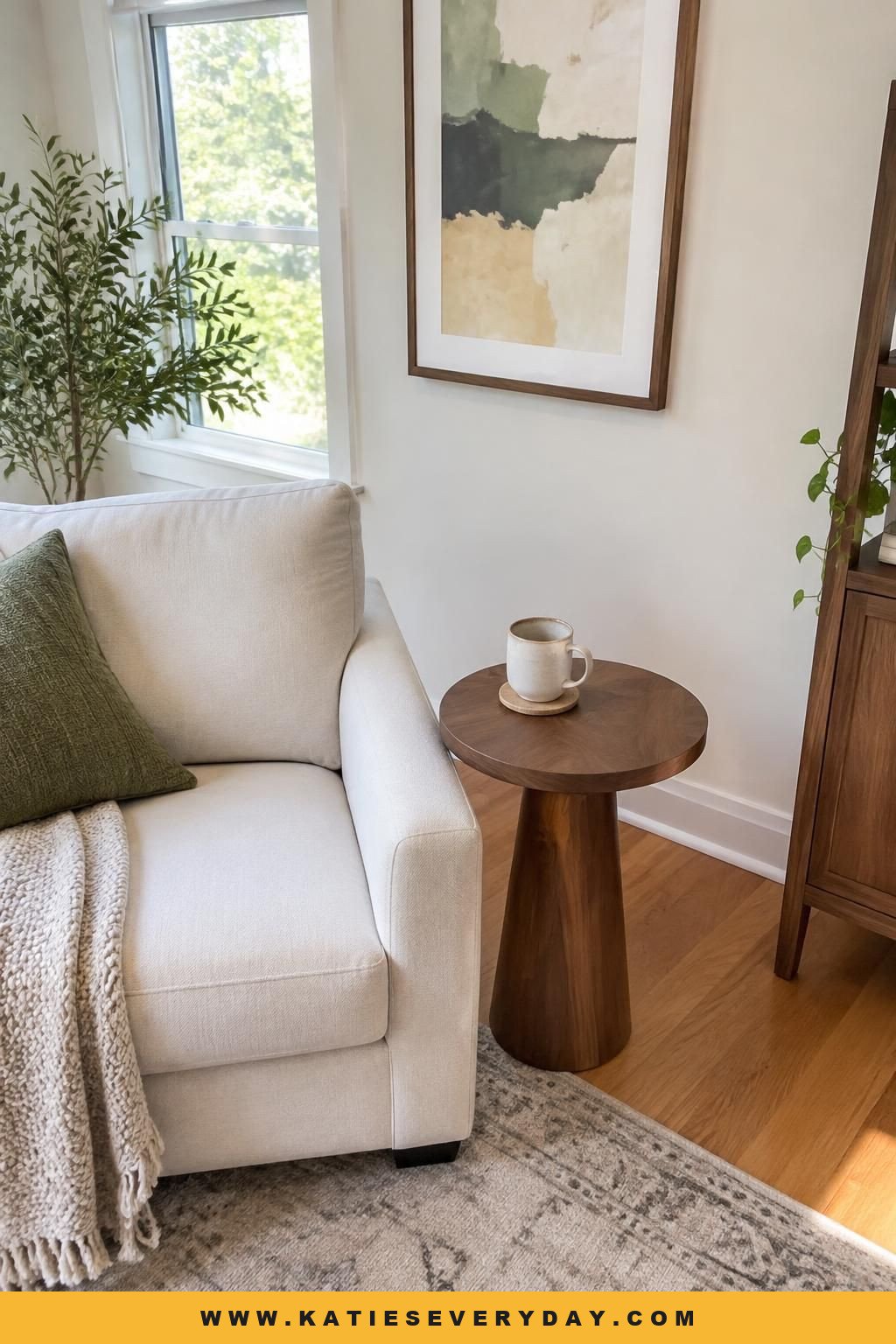
18. Style the coffee table with a compact grouping
Place a small stack of books with a low bowl or vase on a tray, leaving room for drinks and everyday use. Vary the objects’ heights rather than lining up identical items. If the table gets heavy use or children play nearby, skip fragile or tall decor. If it already looks crowded, edit the surface instead.
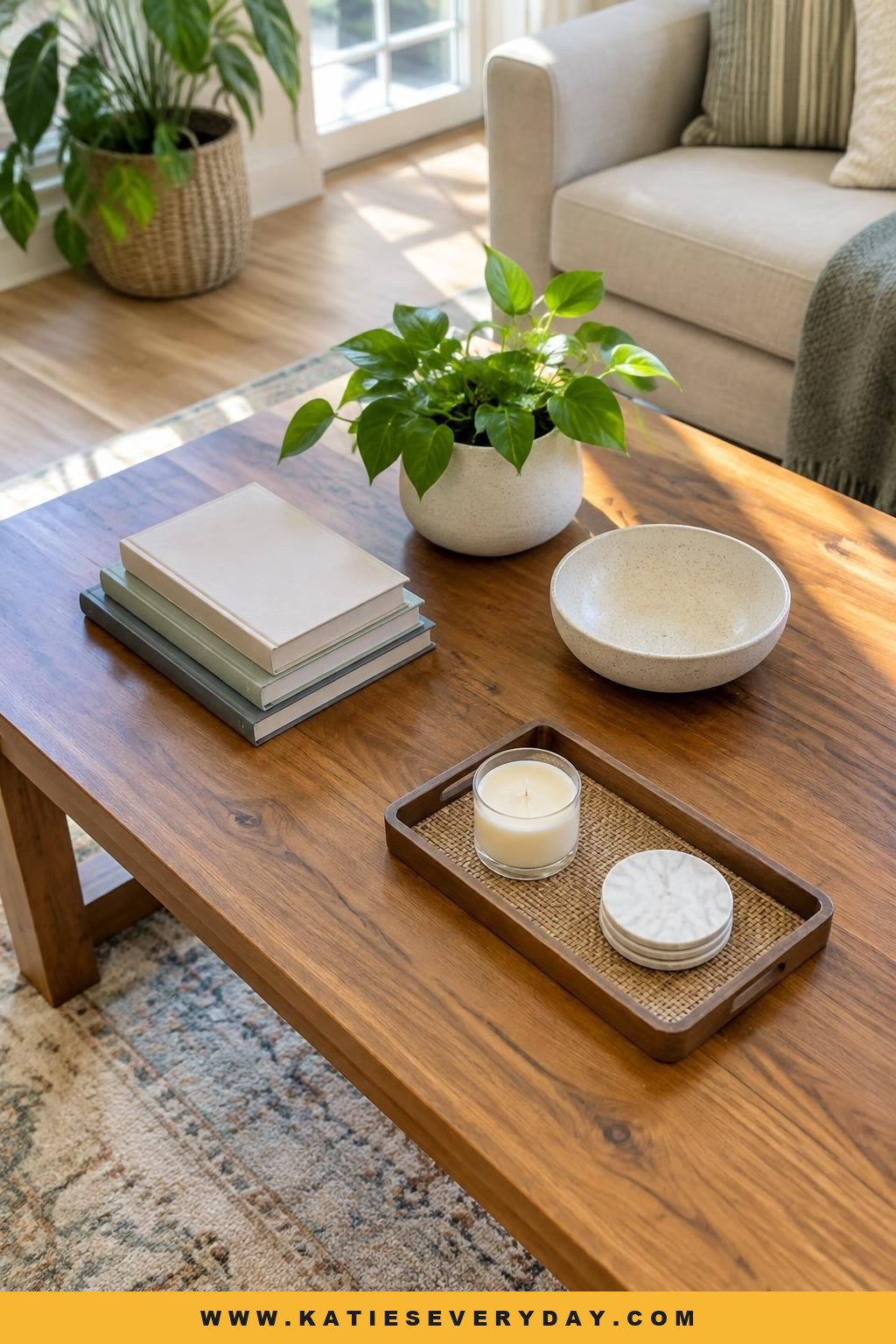
19. Add a throw where you’ll use it
Fold or drape one textured throw over a sofa arm or the back of a chair, choosing a color that appears elsewhere in the room. Keep it to one visible throw per main seating piece so the seats remain usable. If the room looks untidy, fold the throw neatly or put it away.
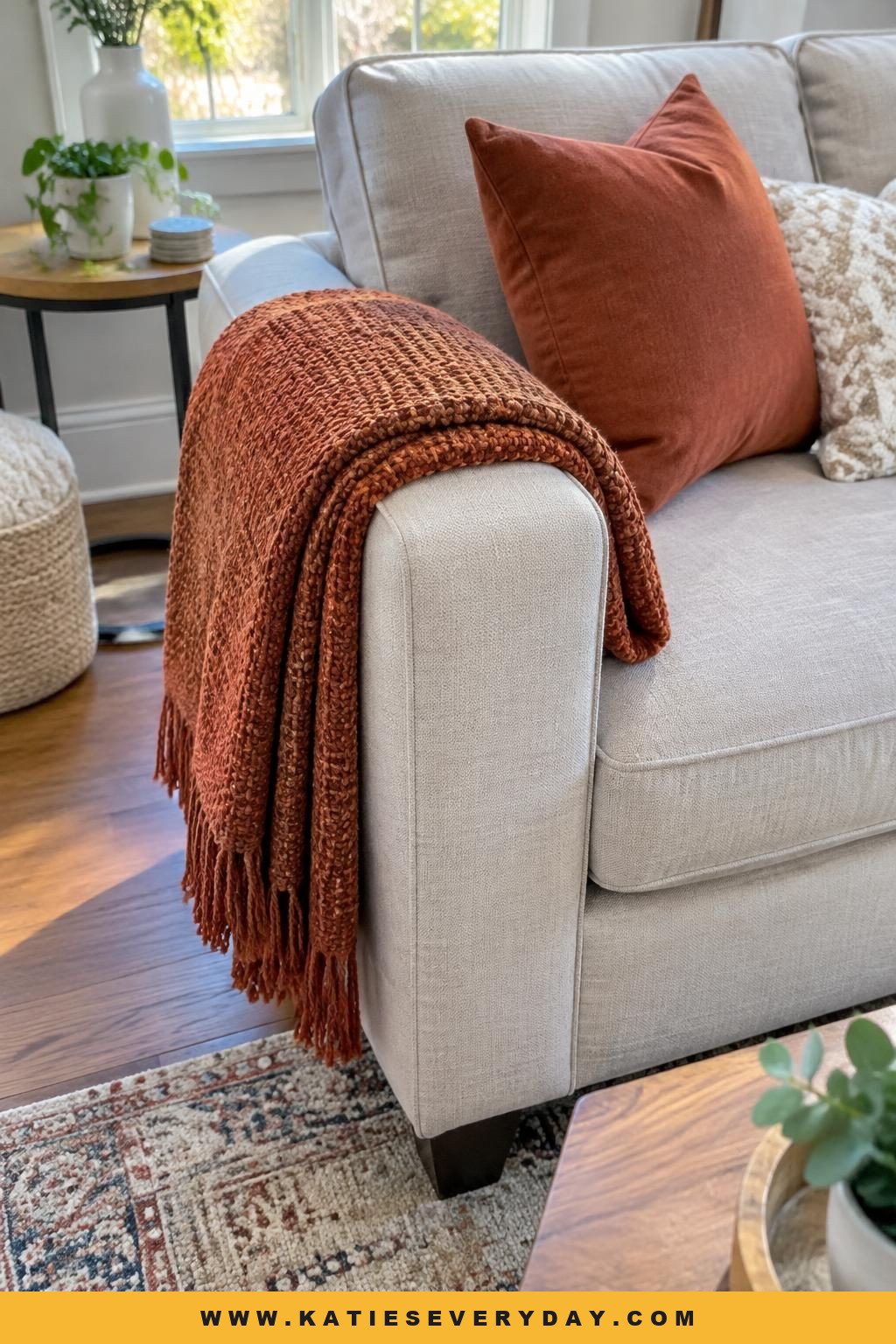
20. Use pillows to bridge colors and textures
Pair a solid pillow with a patterned one, drawing colors from the rug or artwork. Check the pillows in the room’s daylight before deciding whether the colors work together. Leave enough clear seat space for people to sit comfortably; extra pillows can crowd usable seating.
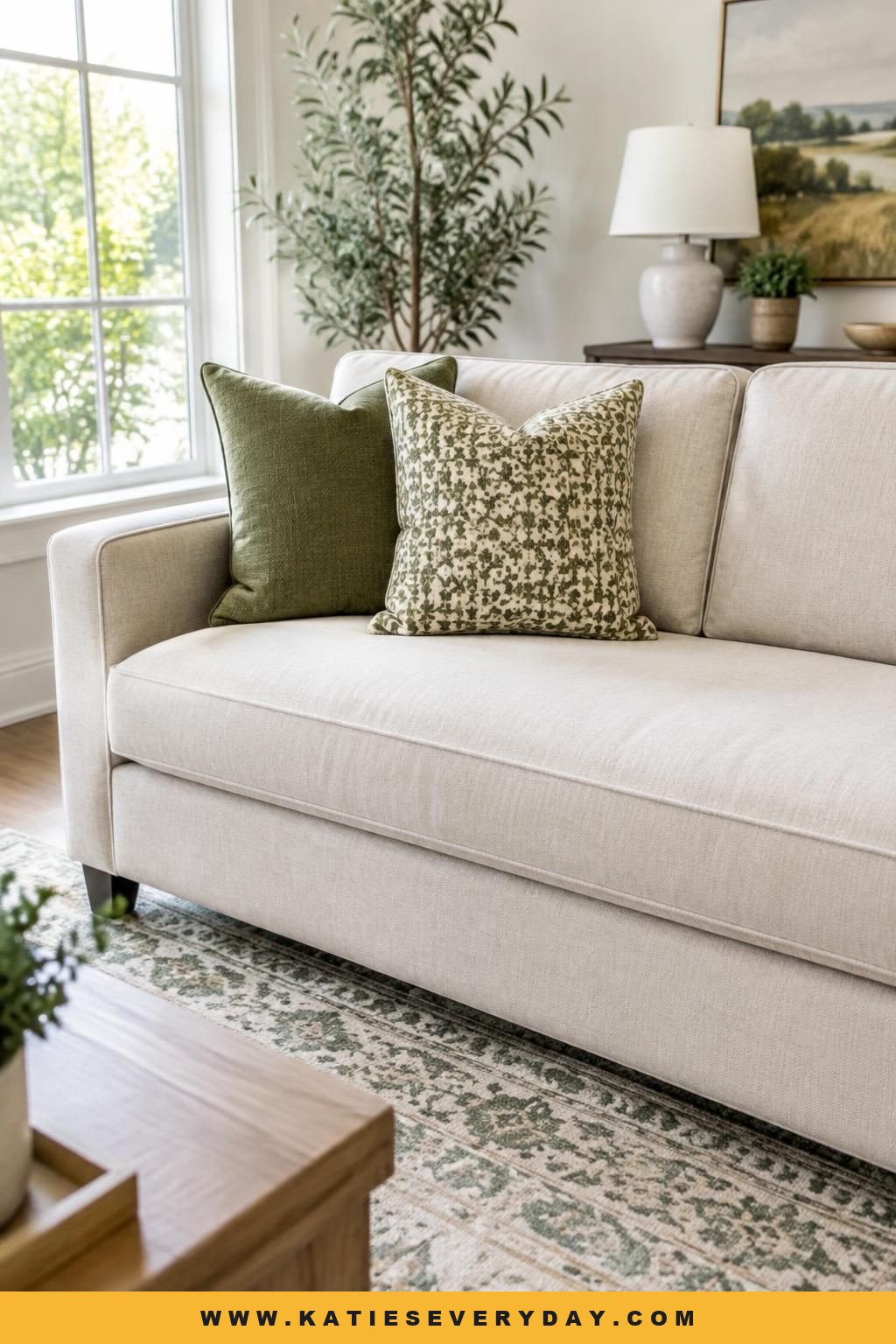
21. Finish with something personal
Display a framed travel photo, handmade bowl, collected object, or book tied to your household’s interests. Give it one intentional spot on a shelf, table, or wall instead of scattering many small keepsakes around the room. Keep the pieces that matter to you, and don’t buy decor just because it matches a trend.

Keep Exploring More Ideas
 19 Small Living Room Ideas That Make Every Inch Work
 13 Living Room Aesthetic Ideas With Colors and Details to Copy
 17 Black and White Living Room Ideas With Balanced Contrast
 13 Compact One- and Two-Bedroom House Plans to Compare
 19 Simple and Modern Bedroom Ceiling Designs to Consider
 17 Bedroom Back Wall Ideas That Make the Bed the Focal Point
 12 Bedroom Layout Ideas for a More Usable Room
 9 Bedroom Design Styles and the Details That Define Them
 11 Bedroom Aesthetic Ideas With Colors and Details to Copy
 13 Bedroom Ideas for Couples That Feel Personal to Both
 19 Small Bedroom Ideas That Make Every Inch Work
 14 Minimalist Bedroom Ideas That Feel Warm, Not Empty
See more Home Design →