
A simple bedroom can feel bare if you remove furniture and décor without adding texture or a personal detail. Choose one palette, one main furniture finish, and one focal point, then keep only the furniture you’ll use. These 21 ideas give you specific color, material, and layout combinations to adapt to your room and existing pieces.
1. Warm White, Linen, and Oak
Pair warm-white walls and bedding with a light oak bed or nightstand and washed-linen curtains. Repeat the pale wood in two places, such as the bed and nightstand, to connect the room without making every finish match.
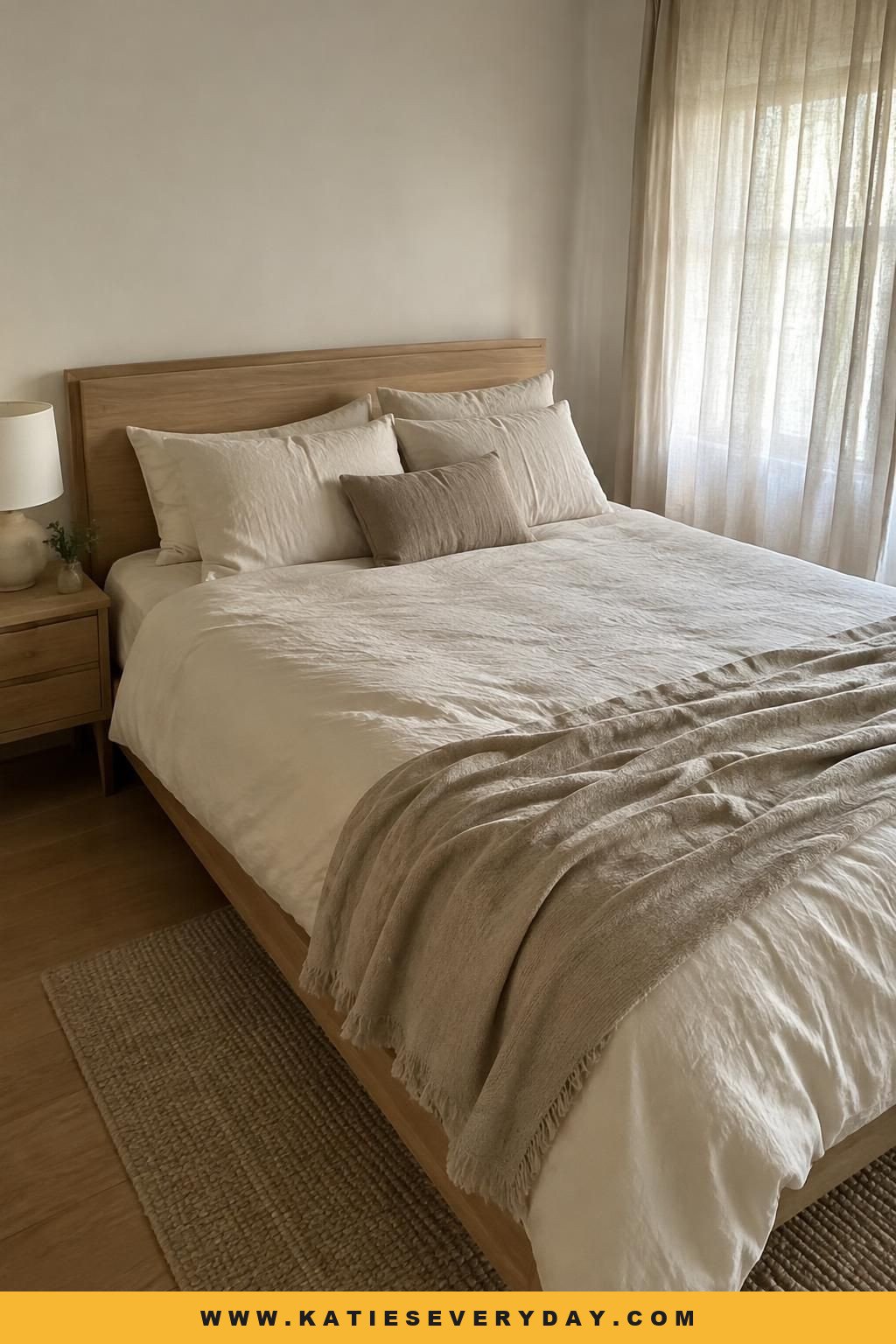
Compare paint and fabric in your room’s light: near-matching whites can look unintentionally different. If you already have a wood bed, choose complementary pieces rather than replacing it.
2. Cream and Chunky Texture
Combine cream bedding, a plain upholstered headboard, a low-contrast rug, and one nubby neutral throw. Fold the throw across the lower third of the bed so you add texture without hiding its shape.
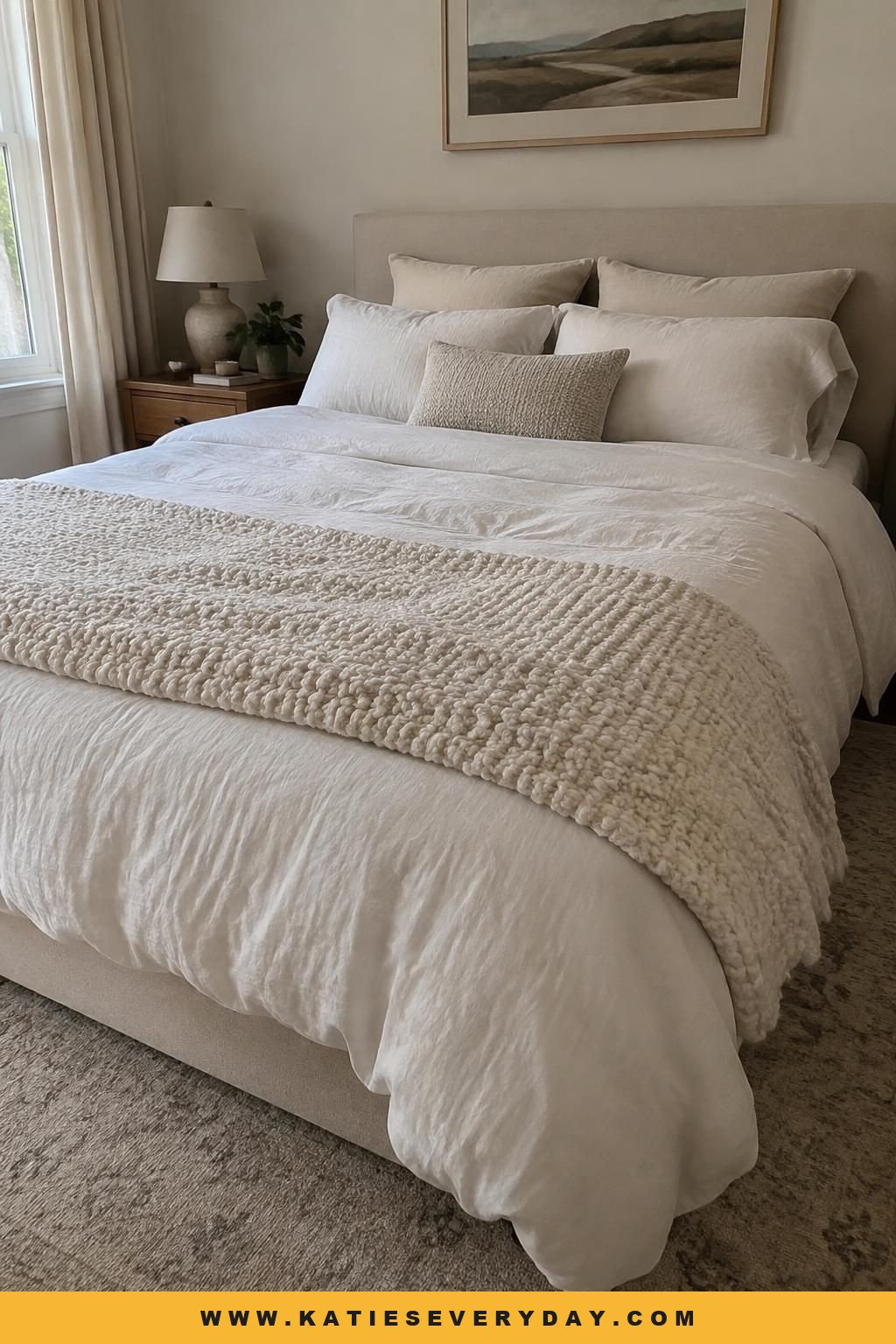
High-pile fabrics can collect lint and pet hair. Choose a flatter weave if upkeep is a concern.
3. Greige with Natural Oak
Set greige walls against white bedding and natural oak furniture. Add one small charcoal detail, such as a lamp or frame, instead of repeating dark accents around the room.

Sample the greige in your room before painting; its appearance can shift with the light. If your existing furniture has a different wood tone, keep the other finishes simple.
4. Pale-Wood Monochrome
Use soft white, pale beige, and light wood across the bedding, bed frame, and nightstands. A subtle woven rug adds texture without introducing a strong contrast.
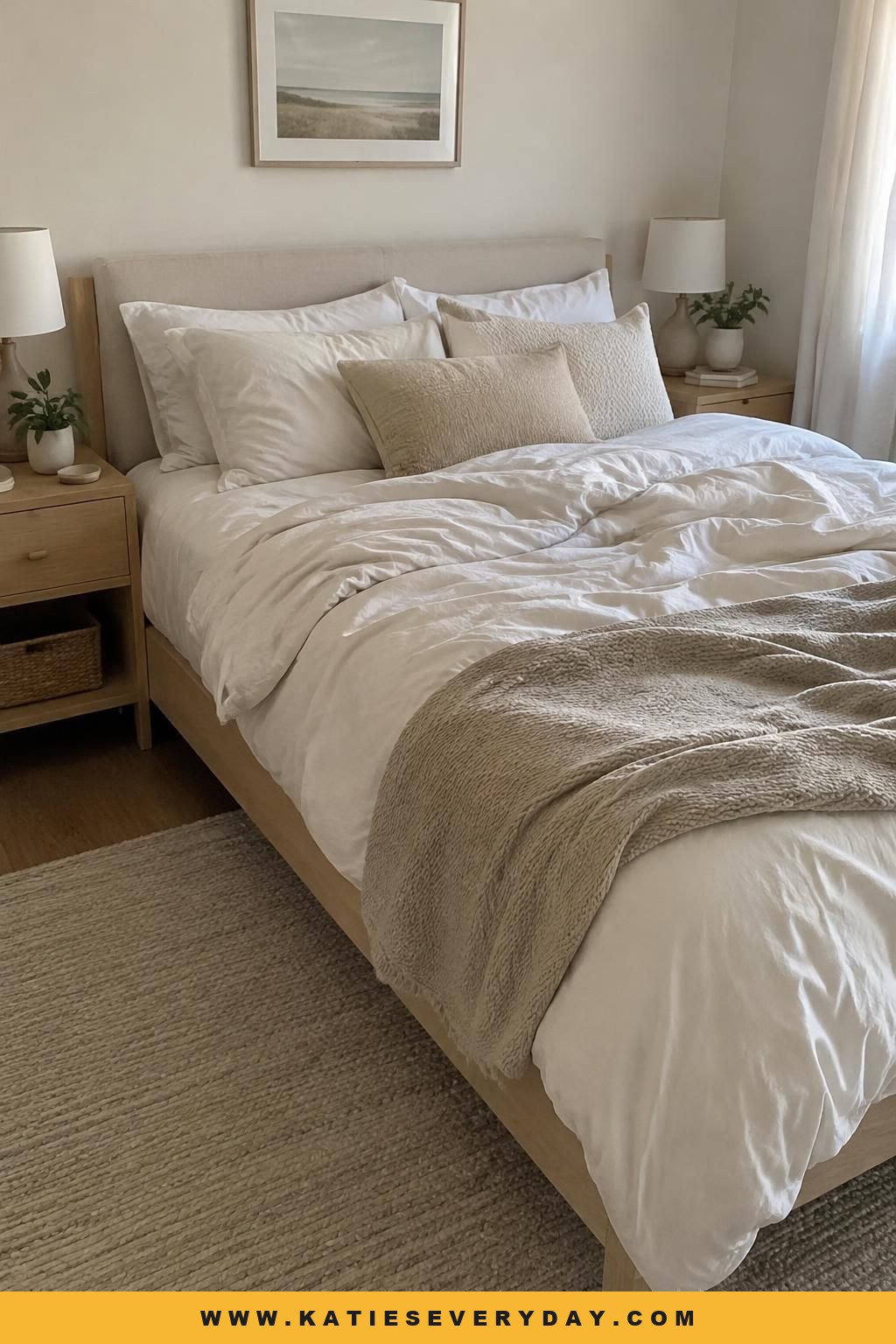
This restrained palette can suit a small room. Pale surfaces may show marks more readily, so choose materials you can maintain.
5. Sage and Cream
Pair cream bedding and light oak furniture with muted sage on one large surface, such as a wall or bed textiles. Repeat the green once in a small item, like a cushion.
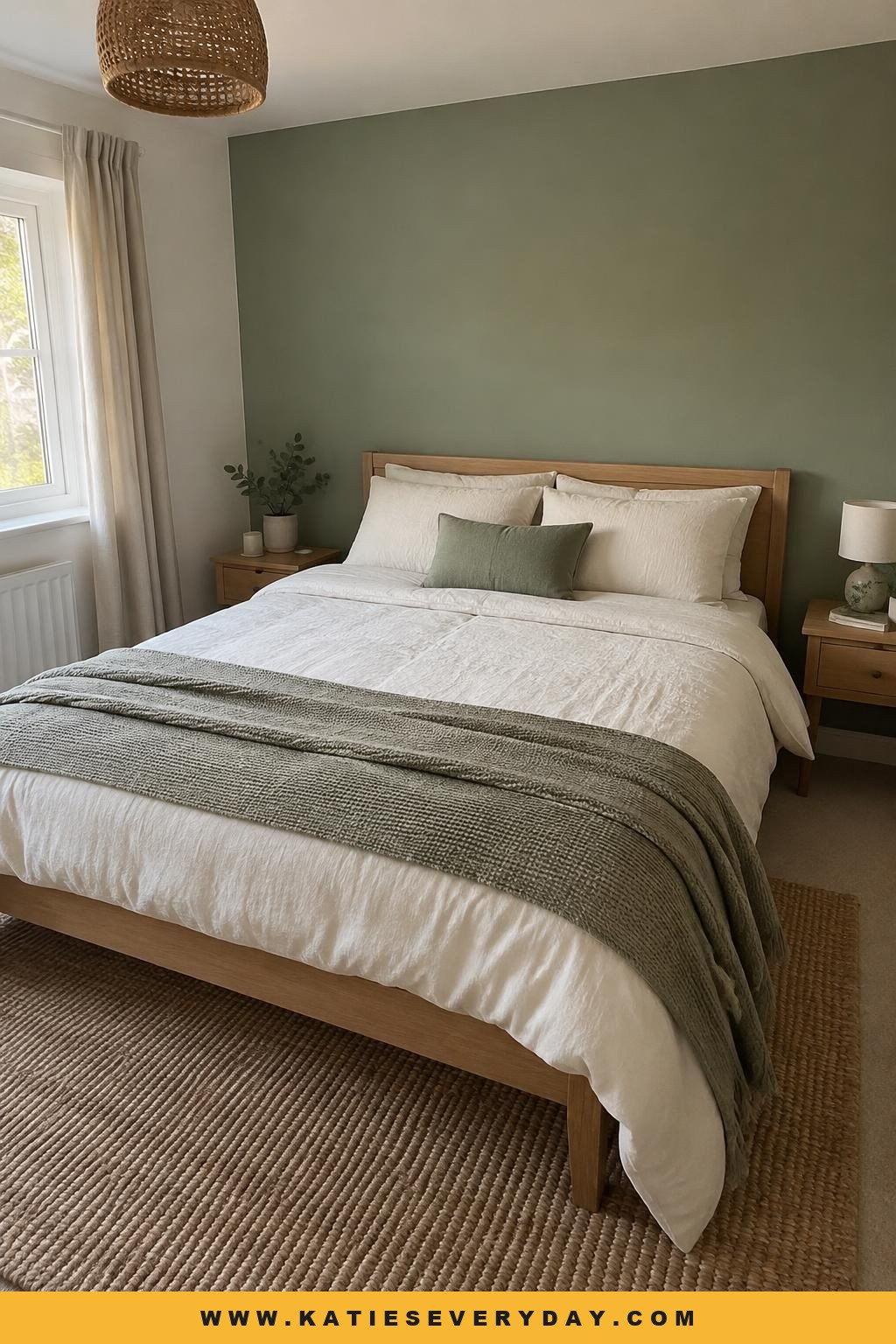
Test the exact shade before painting: sage can look different depending on its undertone and the room’s light.
6. Dusty Blue and Warm White
Choose dusty-blue bedding or paint the wall behind the bed, then balance it with warm-white walls and medium-tone wood. A small blue-gray object on the opposite side of the room can echo the bed’s color.
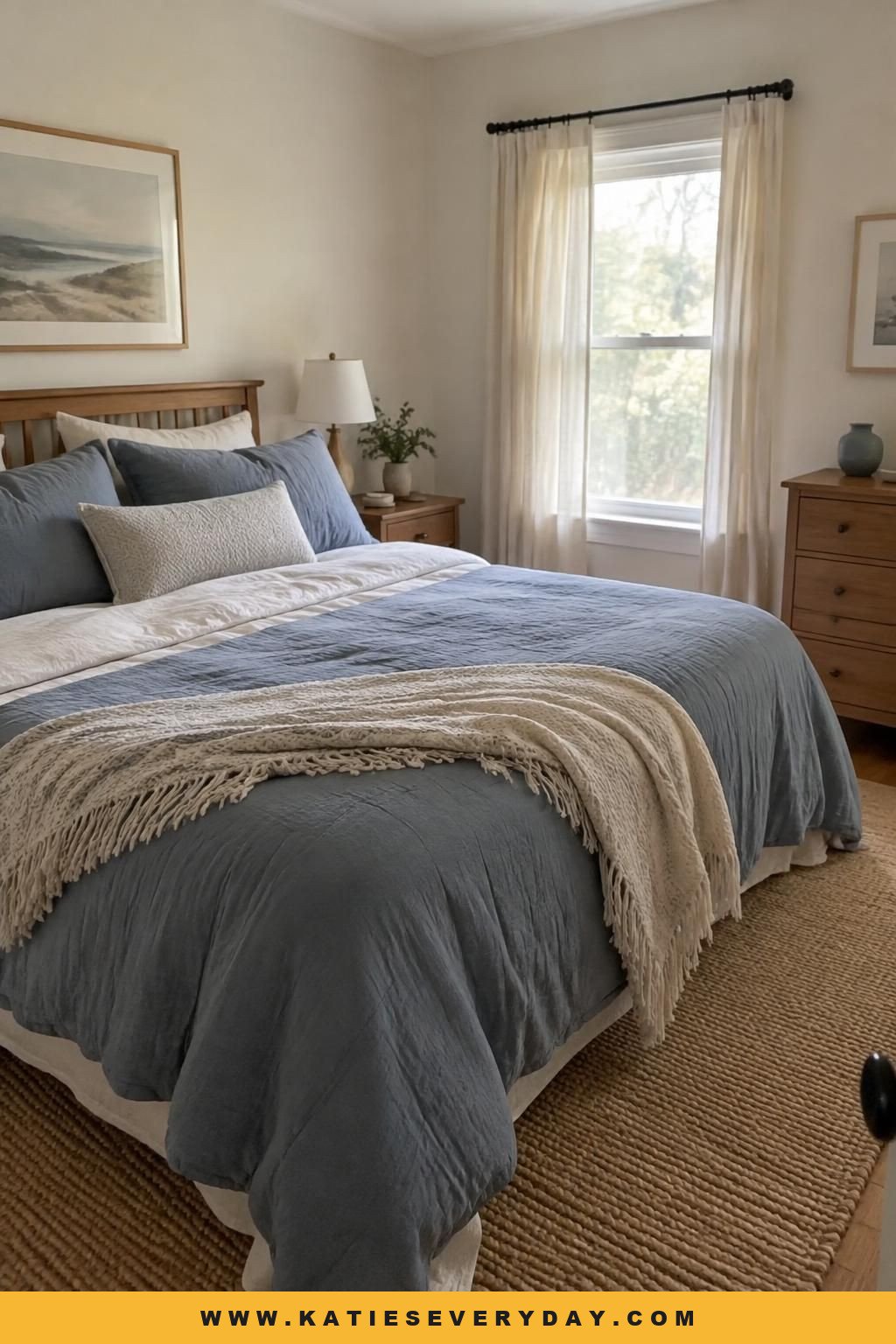
Too many blue-gray surfaces can make the palette feel cool. If you want a smaller change, start with bedding rather than paint.
7. Navy as the One Dark Note
Keep the walls and bedding white, then add navy in a throw or headboard and use a natural-wood bedside table. If the room already has several noticeable finishes, keep navy on the bed or behind it—not both.
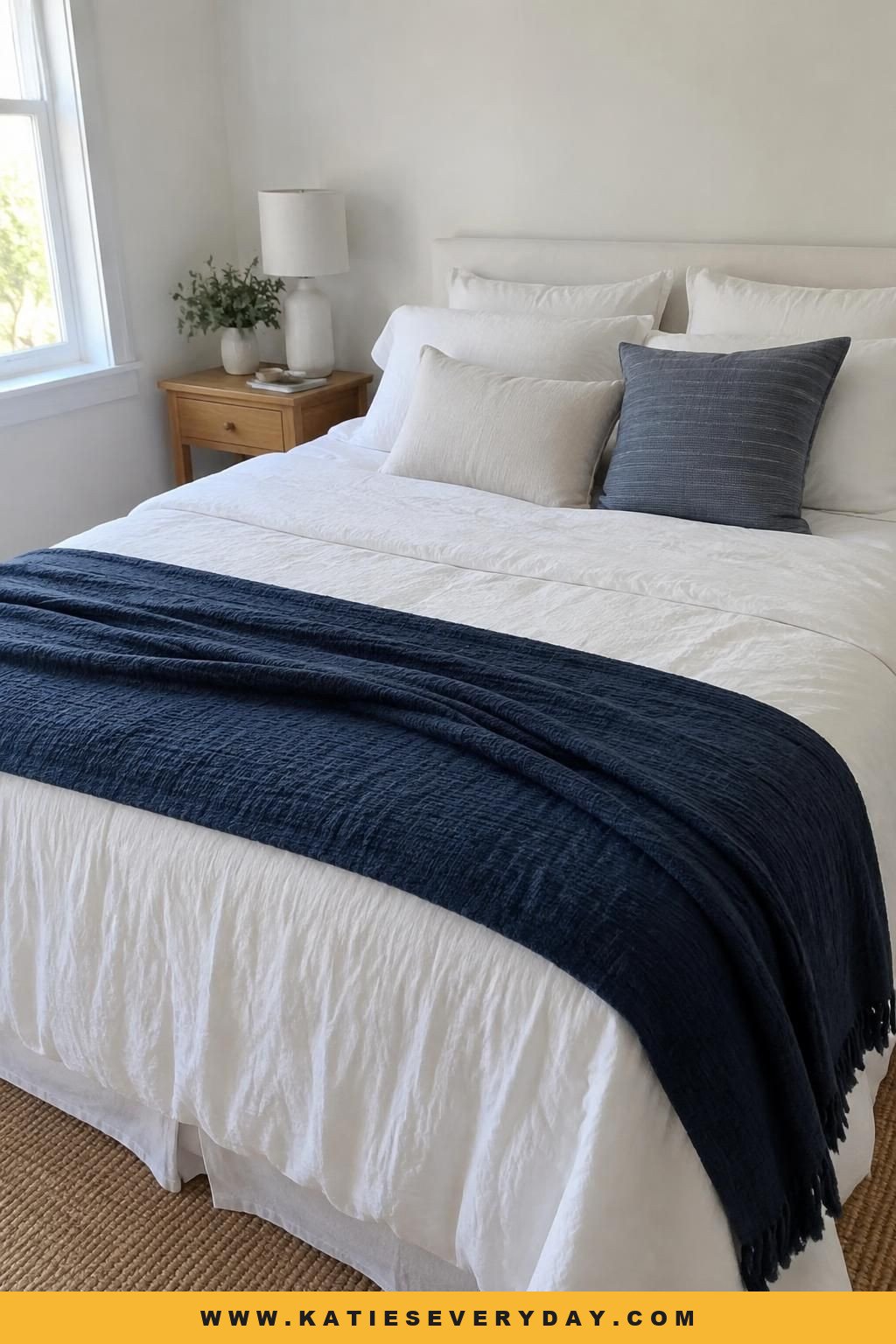
A large dark area may not suit you if you want an airy-looking scheme. Try a smaller textile before committing to a dark headboard or wall.
8. Muted Blush with Walnut
Pair dusty-blush bedding or an accent wall with warm white and walnut-toned furniture. Choose a muted pink rather than a bright shade, and let one walnut piece lead.

Blush isn’t a universal neutral. Check it against your existing flooring and furniture before choosing the color.
9. Clay, Sand, and Cream
Start with cream bedding, sand-colored textiles, and wood. Add clay or terracotta in one bed textile and a small piece of art to give the palette a clear accent.

Too much orange-red can overwhelm a pale scheme. If you’re unsure, try a clay-colored throw first and keep the larger surfaces light.
10. Charcoal and Soft White
Use soft-white walls and bedding, then add charcoal to one or two details—a lamp, frame, or bed throw. A warm-wood bedside table softens the contrast.

Extensive dark paint or bedding can make the room feel heavier. Keep the large surfaces light if you want a crisp, graphic look.
11. Black, White, and One Wood Tone
Pair white walls and bedding with one consistent wood tone. Repeat black in a few clean-lined details, such as a lamp and two or three small frames grouped above the bed.

Too much black can make the room feel stark. Add a tactile throw or textured curtains rather than scattering more accessories around the room.
12. Japandi-Inspired Low Profile
Choose a low, simple wood bed, warm-white bedding, and a few useful accessories. Pair the bed with a low bedside table instead of a tall chest.
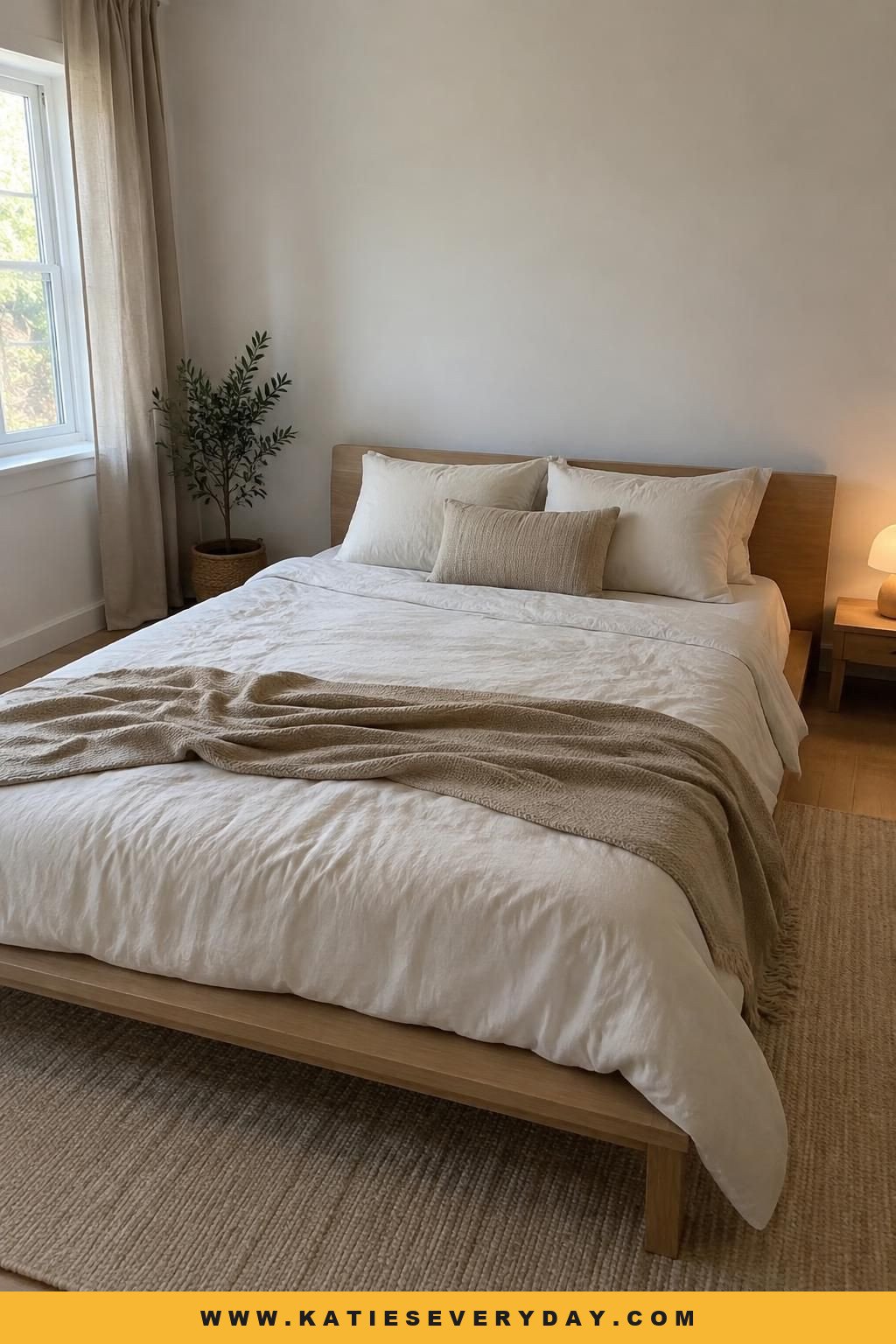
A low bed may not suit you if you prefer a higher position for sitting or getting out of bed. Check the bed height before choosing this look.
13. Scandi-Inspired Light and Practical
Use light walls, pale wood, simple bedding, and a compact lamp. Add one soft-colored accent, such as a muted-blue cushion, and choose a bedside table that fits the items you use.
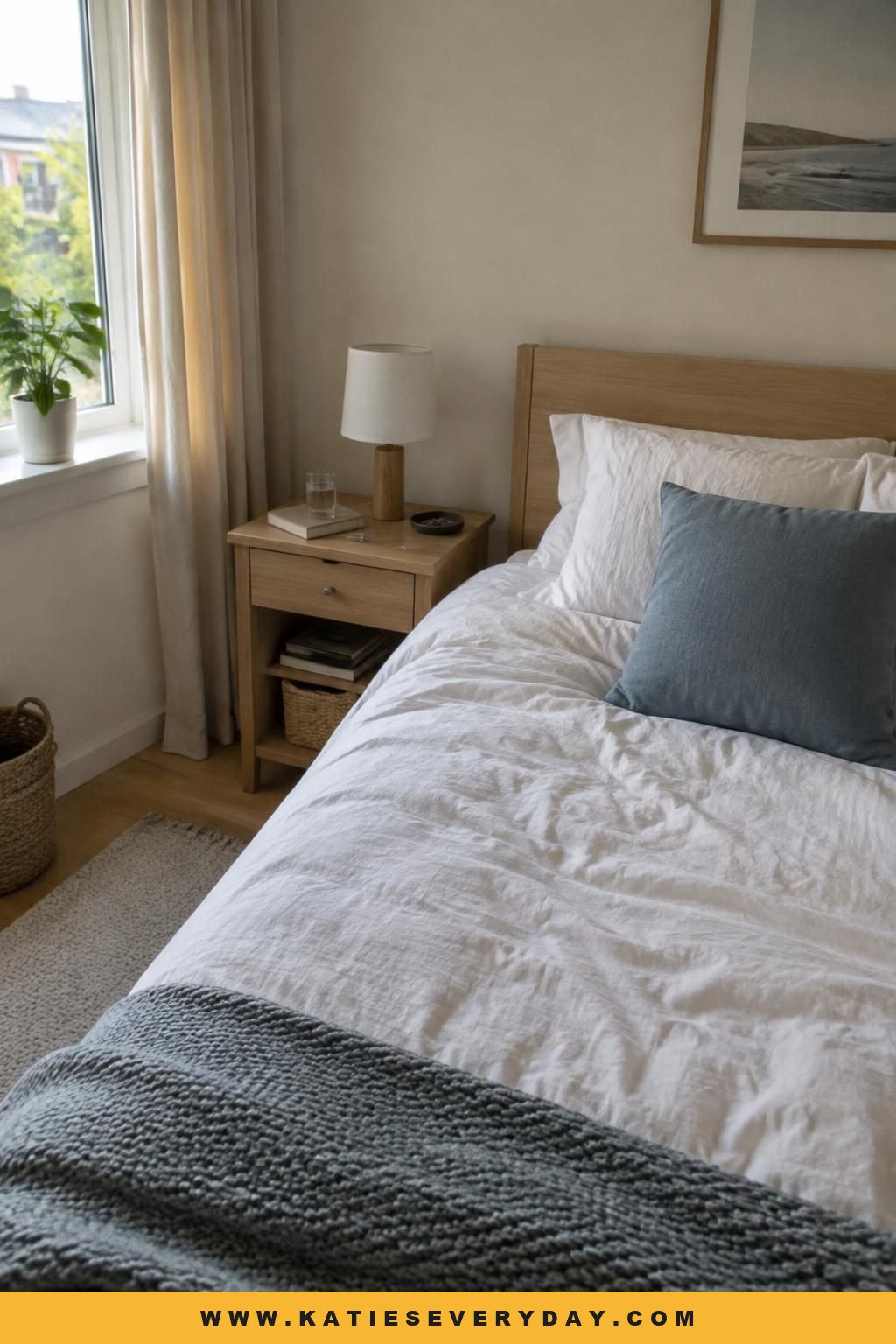
Don’t add pale accessories just to fill blank surfaces. Leaving useful tabletop space clear is part of the design.
14. Mid-Century Walnut and Cream
Let one walnut piece, such as a bed or nightstand, lead. Pair it with cream bedding and one tapered-leg or curved furniture detail, keeping the other furniture visually quiet.

Several statement pieces can make the room feel themed rather than simple. If you already own a walnut nightstand, use it as the focal piece.
15. Upholstered Bed, Quiet Surroundings
Choose a plain oatmeal or gray-beige upholstered headboard, white bedding, and uncomplicated wood or metal nightstands. A squared or gently curved shape gives the bed a focal point without a patterned feature wall.
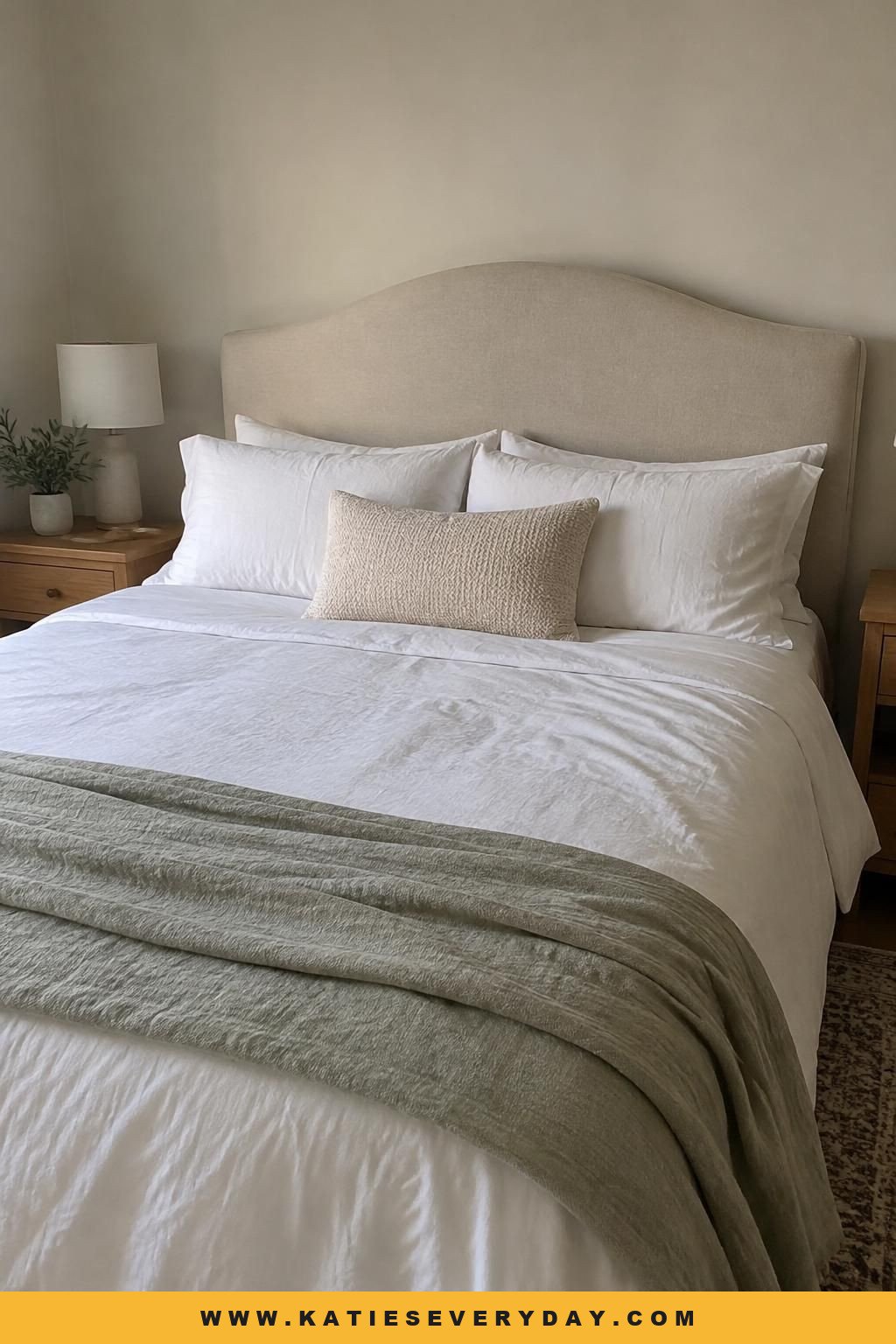
Check the headboard’s cleaning instructions before you buy. Avoid combining strong color, tufting, and decorative piping if you want a restrained look.
16. One Continuous Headboard Wall
Center the bed against a defined area of paint or wood paneling, then add compact nightstands and balanced bedside lights. Align each light with its nightstand so the bed and bedside pieces read as one zone.
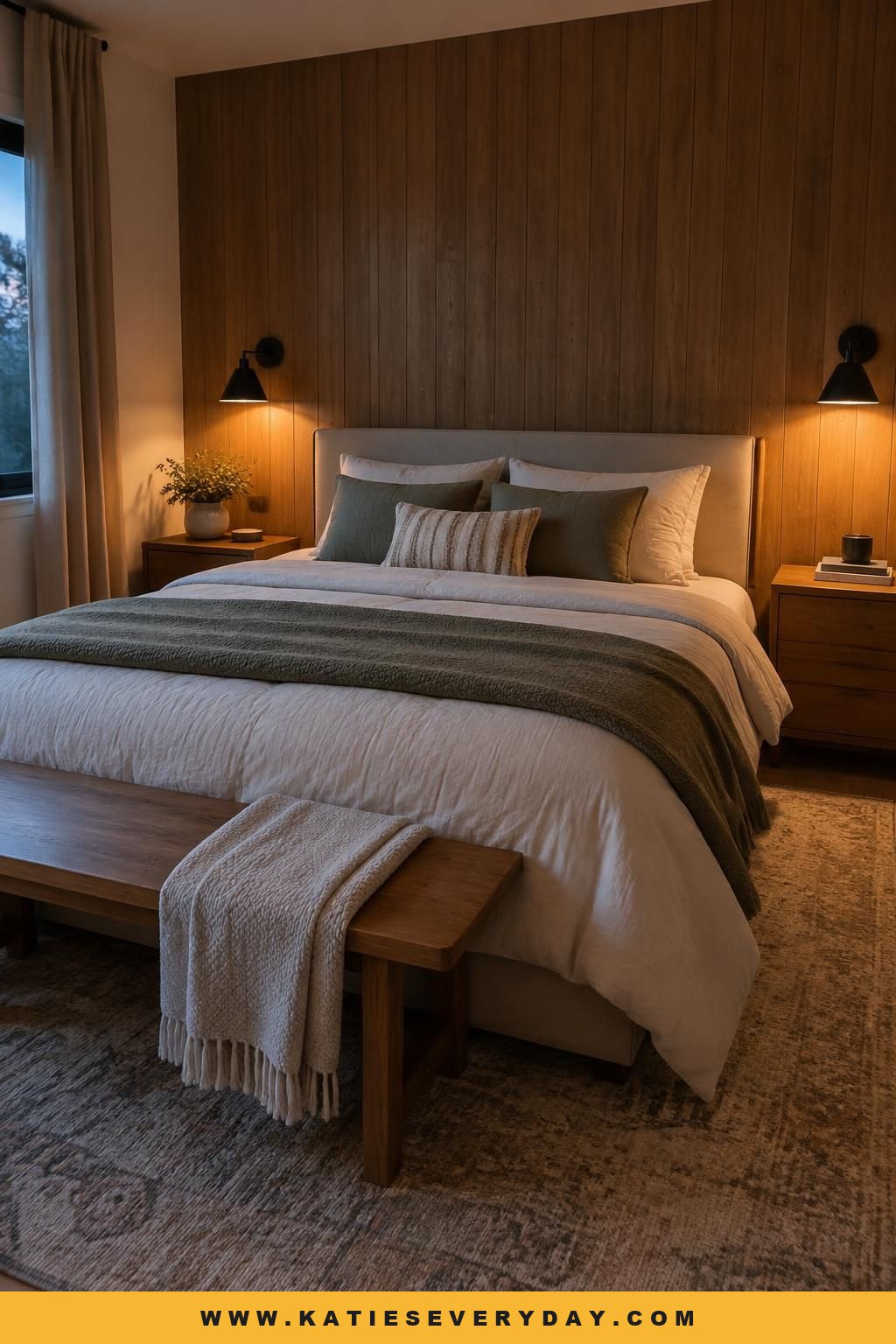
A feature wall is a more permanent change than swapping textiles. Test the paint or wood tone first, or try the color in a duvet or throw before changing the wall.
17. Floating Nightstands for a Clear Floor Line
Center the bed and use shallow, wall-mounted nightstands with wall-mounted reading lights. Check that each shelf can hold the items you use nightly before choosing a narrow model.
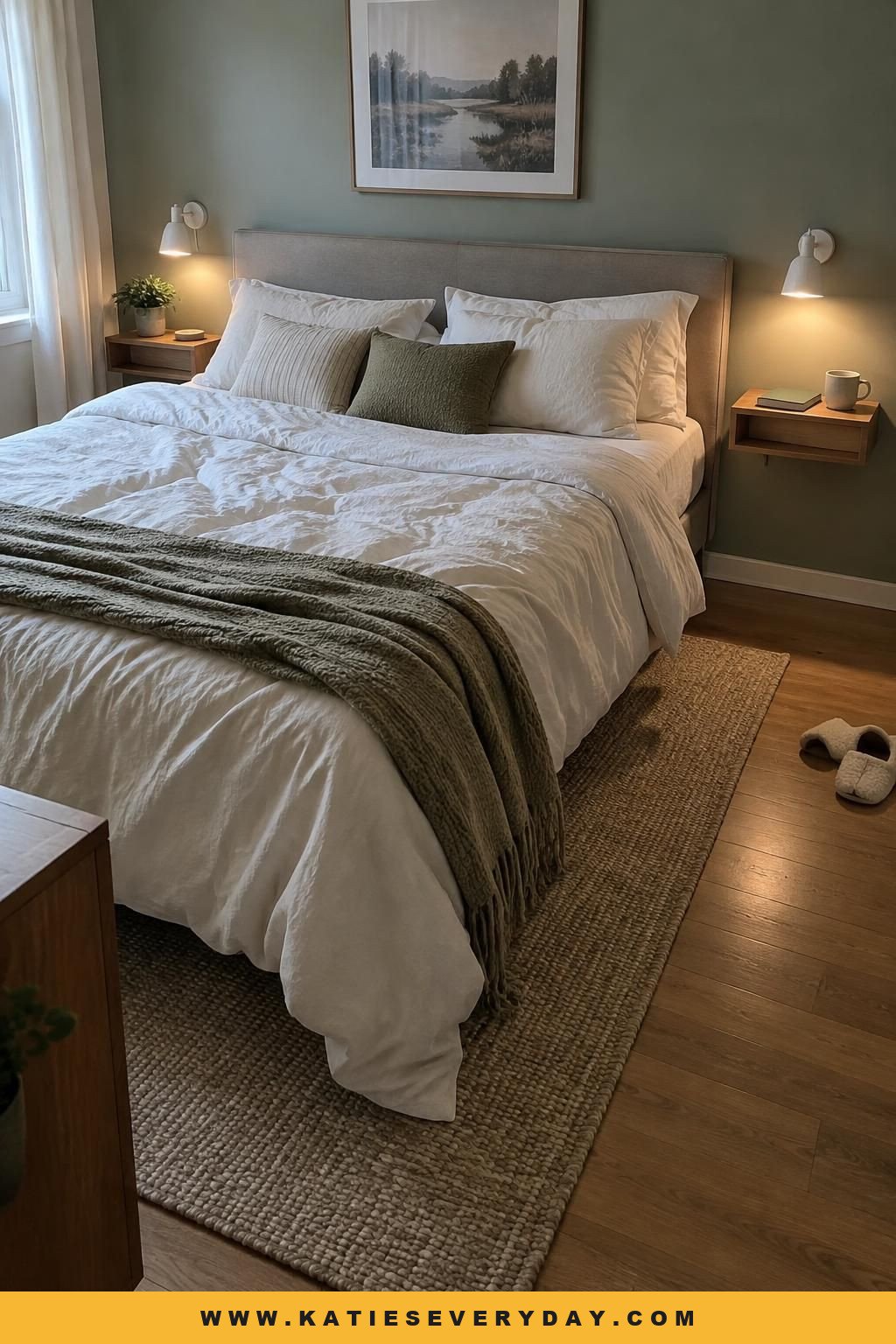
Confirm the wall can support the shelves, and check mounting requirements and outlet access. Measure the walkway too; a floating nightstand still needs to be easy to reach.
18. One Nightstand, No Forced Symmetry
If one side of the bed is against a wall or has a tight walkway, put a nightstand on the accessible side and place a lamp above or beside it. Center art over the bed—not the full wall—if the bed sits off-center.

Don’t squeeze in a second table to make the room symmetrical. Check that the lamp and nightstand don’t obstruct your route in and out of bed.
19. Storage Bed, Minimal Extra Furniture
Choose a bed with built-in or under-bed storage, then keep the bedside furniture to one or two tables. Decide what you’ll store there before buying, especially if you need to reach it often.

Check the bed’s opening clearance against rugs and nearby furniture. Storage is less useful if everyday items are hard to access.
20. One Personal Artwork Focal Point
Keep the walls, bedding, and furniture simple, then hang one larger artwork or a deliberate small grouping above the bed. Choose the art after settling on your main bedding and wall colors so the palette connects.
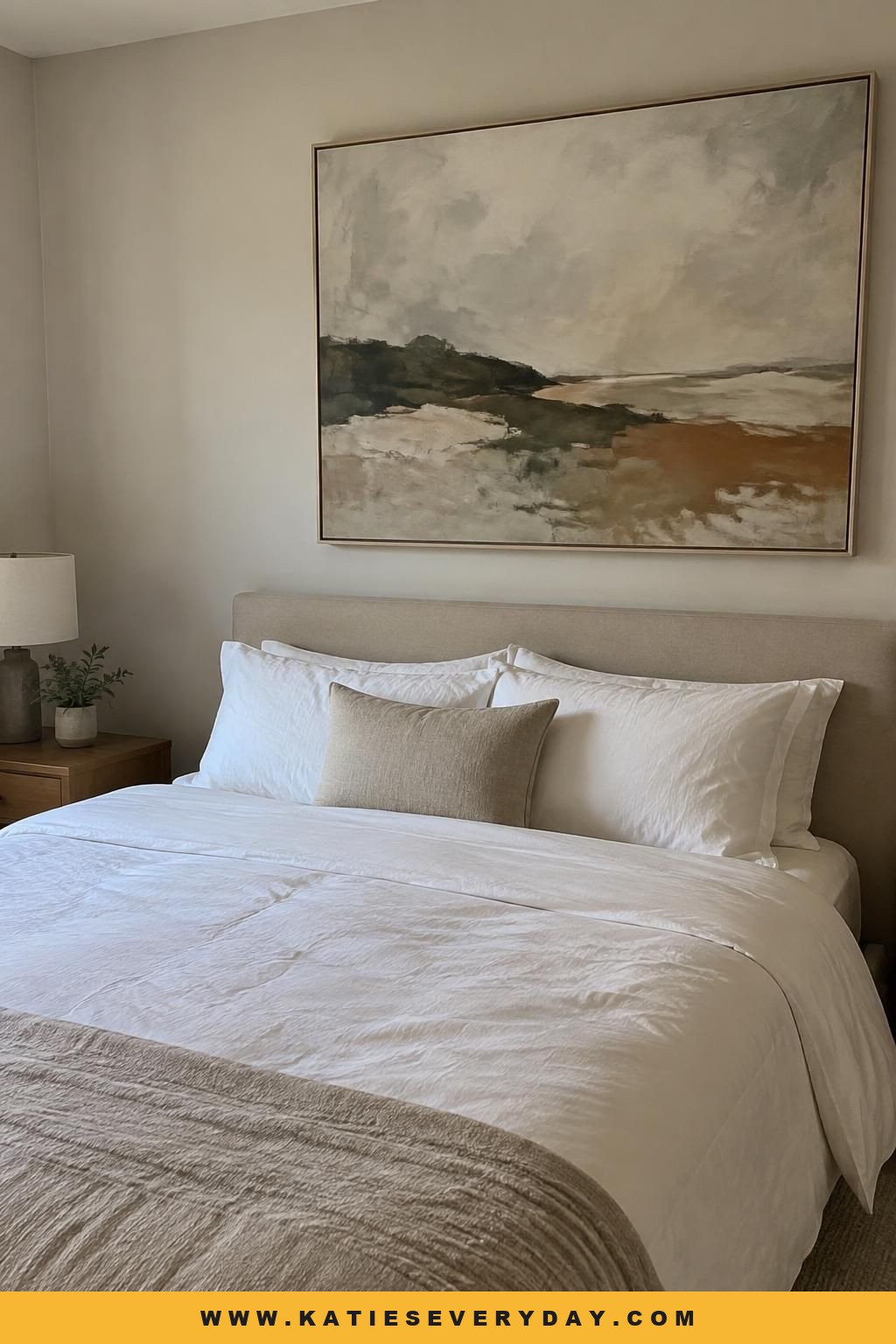
Consider the art’s size in relation to the bed, and secure it safely. A piece that overwhelms the bed wall can throw off the room’s balance.
21. A Compact Reading Corner
If you have enough space, place a small chair or stool by a window with a simple side table and task light. A floor lamp or wall light can leave more room on the table.
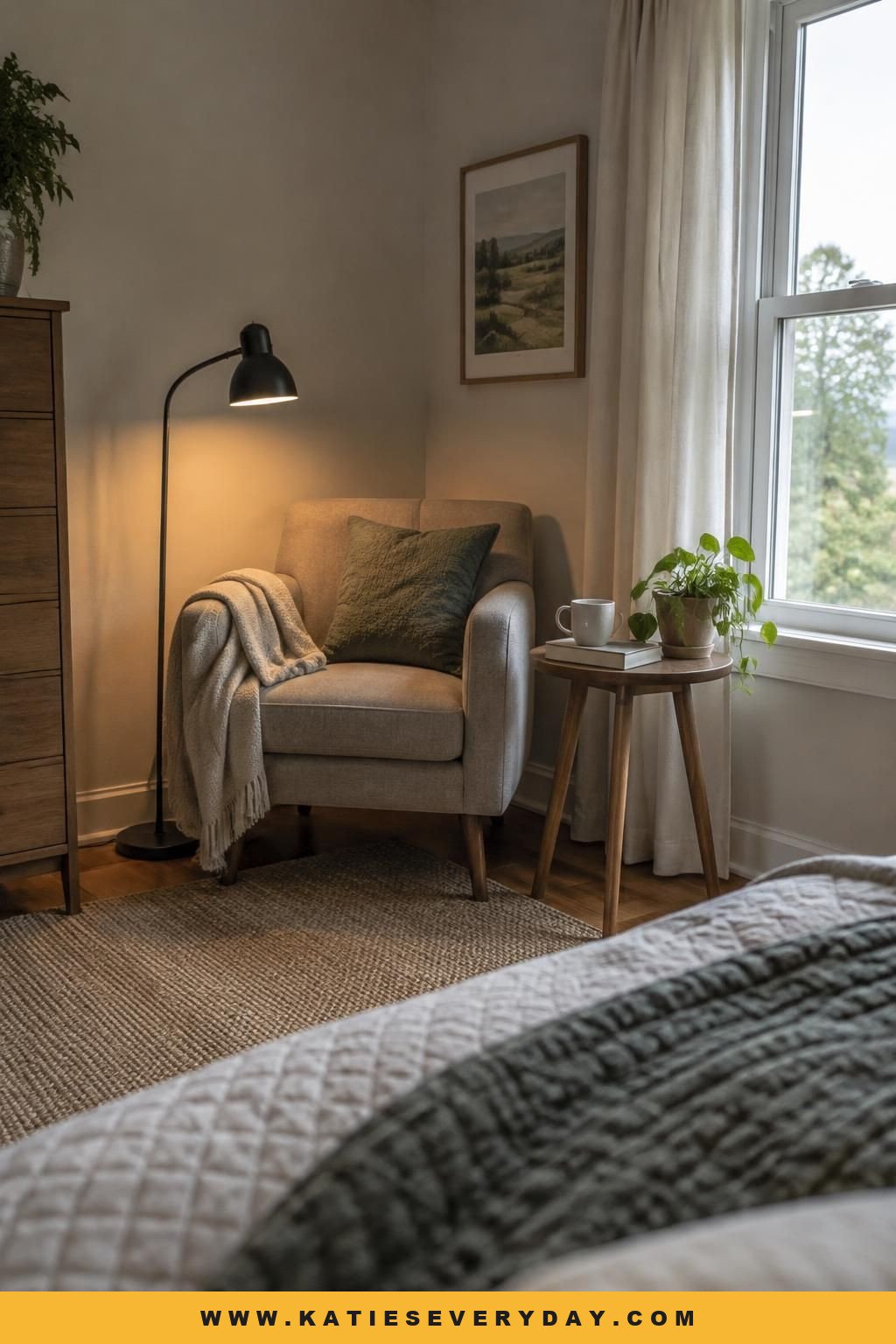
Measure the corner with the chair pulled out, not just tucked away. Skip the chair if it blocks a walkway or makes the room harder to use.
Keep Exploring More Ideas
 12 Bedroom Layout Ideas for a More Usable Room
 14 Minimalist Bedroom Ideas That Feel Warm, Not Empty
 17 Bedroom Back Wall Ideas That Make the Bed the Focal Point
 19 Small Bedroom Ideas That Make Every Inch Work
 13 Bedroom Ideas for Couples That Feel Personal to Both
 9 Bedroom Design Styles and the Details That Define Them
 11 Bedroom Aesthetic Ideas With Colors and Details to Copy
 17 Indian Bedroom Design Ideas That Balance Tradition and Modern Style
 19 Small Living Room Ideas That Make Every Inch Work
 13 Compact One- and Two-Bedroom House Plans to Compare
 19 Simple and Modern Bedroom Ceiling Designs to Consider
 17 Black and White Living Room Ideas With Balanced Contrast
See more Bedroom Ideas →