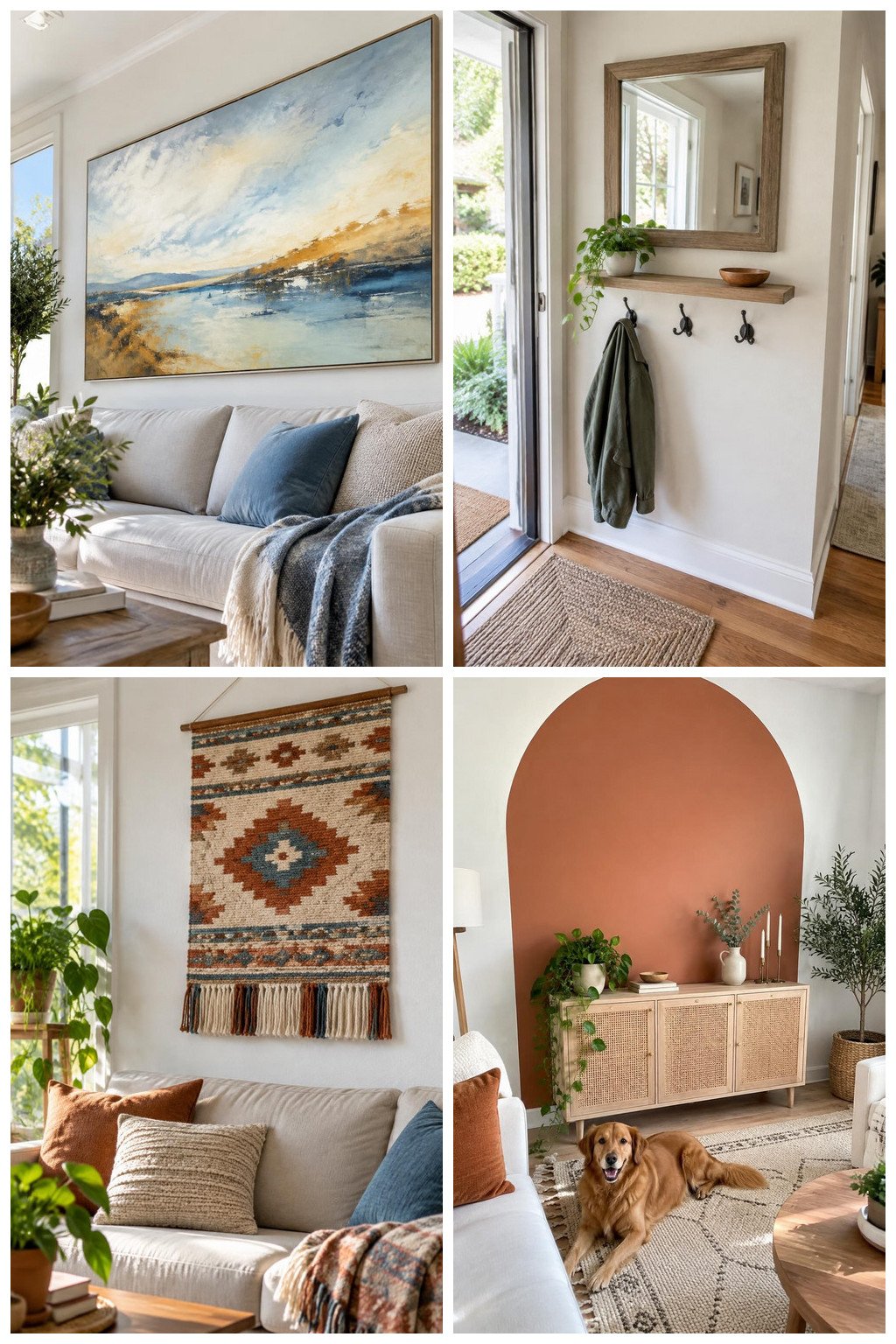
An empty living-room wall can feel unfinished, but filling it automatically can make a busy room feel crowded. Choose one large piece for a simple focal point, a coordinated group for photos or posters, a mirror for reflection, or shelves and hooks when function matters. Measure the wall and nearby furniture, then tape out the arrangement—including any gaps—and check it from your main seat before buying or drilling. The 13 ideas below help you compare art, mirrors, functional displays, and textured wall treatments, including options for a small farmhouse-style entryway.
1. One oversized landscape or abstract
Choose one horizontal canvas or framed print for a simple focal point above a sofa or console. A single image gives the wall one clear center of attention; pick colors that echo a cushion, rug, or another detail already in the room.
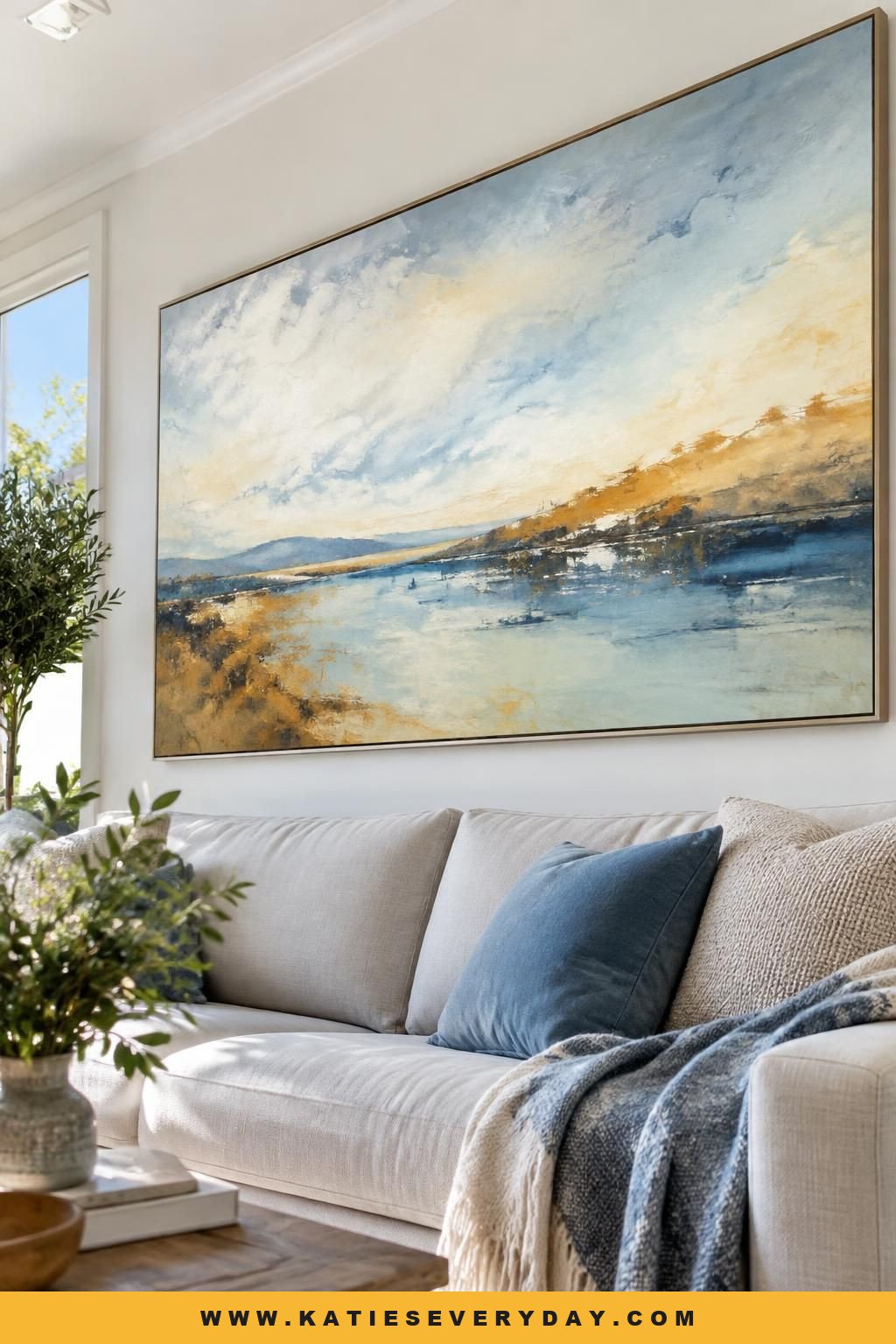
Tape out the artwork’s full outer dimensions before shopping or hanging. Check the outline from your usual seat and in relation to the furniture below it.
A piece that’s too small can look stranded. A very large image is a commitment to a subject you’ll see often, so choose one you’re happy to live with.
2. Three-panel landscape
Use three related panels in a shared palette and medium when one large canvas feels too monolithic but a full gallery wall feels busy. Together, the panels form one horizontal composition while breaking up a long wall.
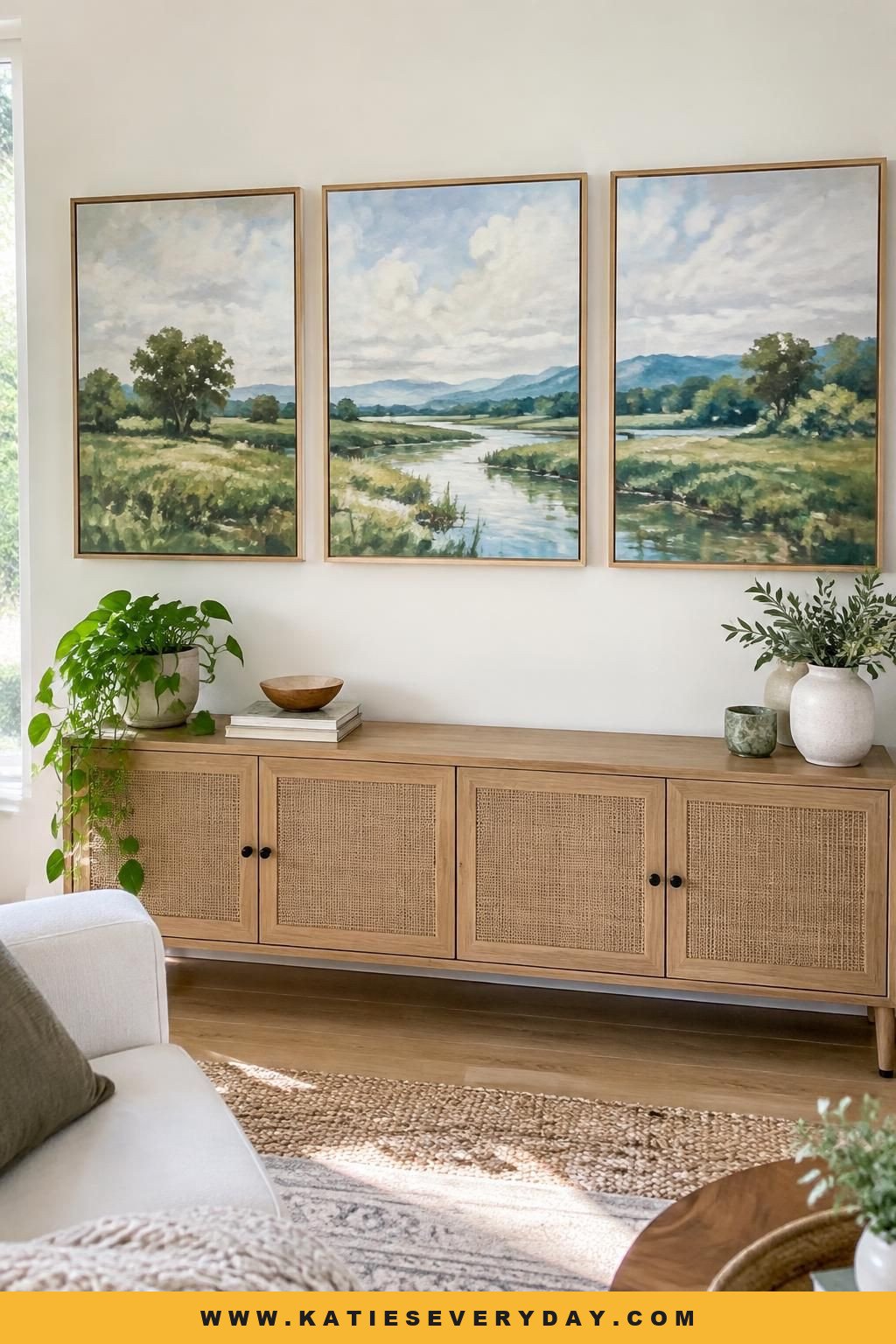
Plan the total width as all three panels plus the spaces between them. Keep those gaps consistent so the set reads as one arrangement.
Three unrelated prints may not feel connected just because their frames match. Look for a shared color, subject, or visual style.
3. Black-and-white photo collage
Arrange personal or travel photos in monochrome for a display that feels coordinated. Repeat black, white, or natural-wood frames to connect different images, and mix close-up and wide shots for variety.
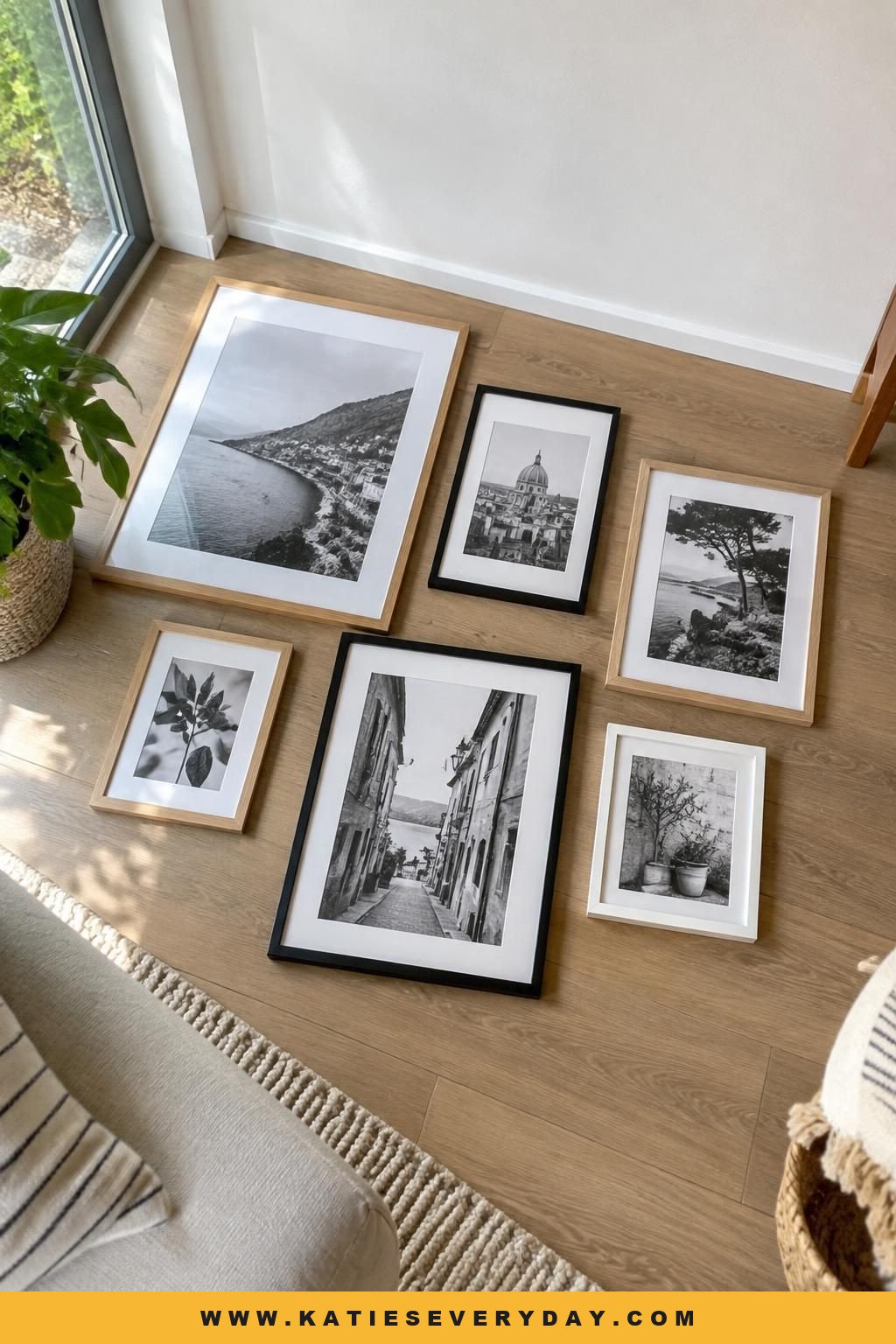
Lay the frames on the floor first and photograph the arrangement before hanging. Start with fewer, larger prints rather than a cluster of tiny frames, which can look visually noisy.
4. Framed poster pair
For living room ideas with posters, frame two related prints—such as concert, film, travel, or botanical posters—as a pair. Matching frames and mats make the two pieces feel like one deliberate unit without requiring a full gallery wall.
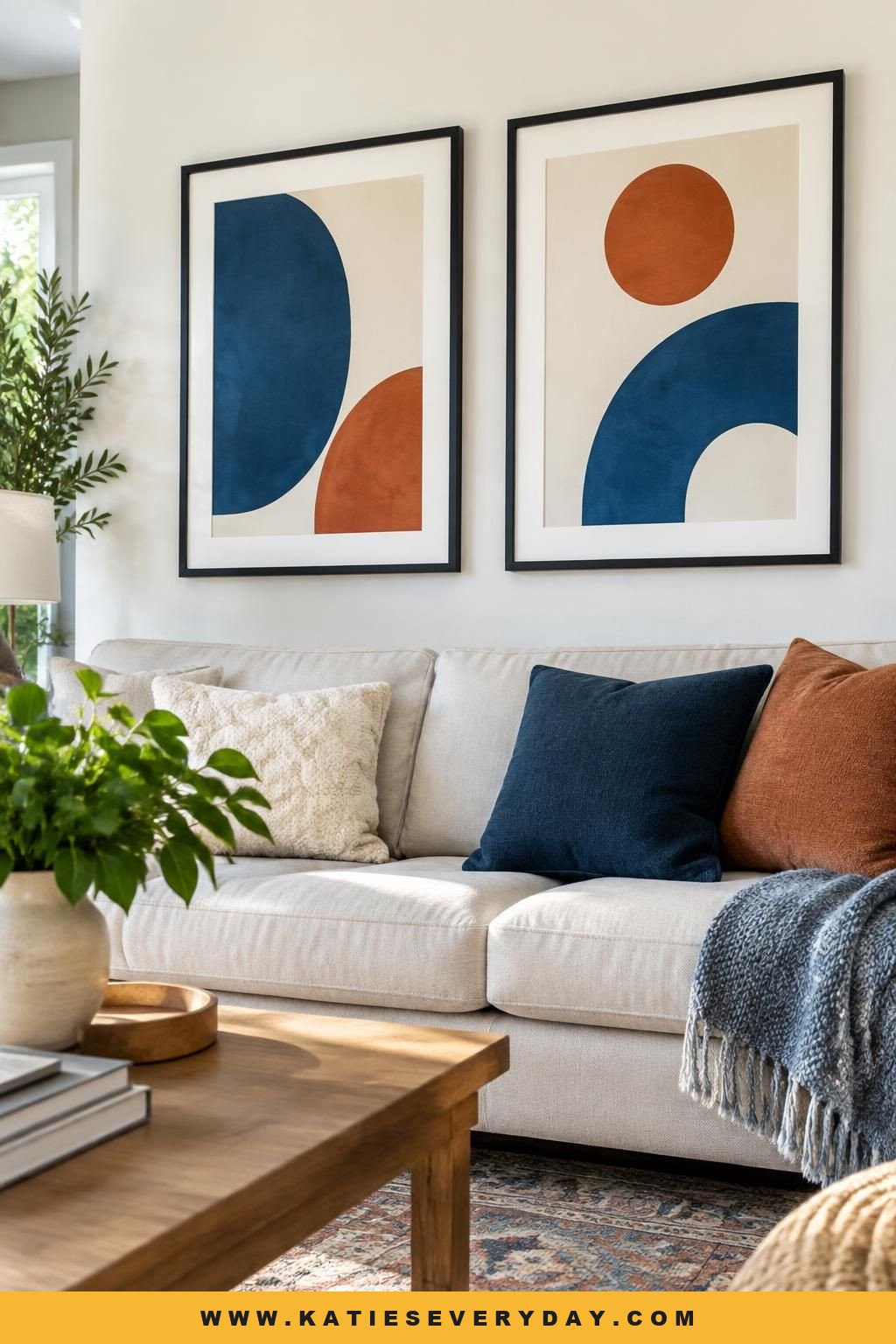
Align their top edges or center the pair as a single block over the furniture. Check that the prints have similar visual weight and margins; a bold image beside a very pale one can feel unbalanced.
5. Collected, mixed-frame gallery
Combine photographs, prints, and drawings around one larger anchor piece for an informal, collected display. The anchor gives the arrangement a center, while smaller works add personal detail.
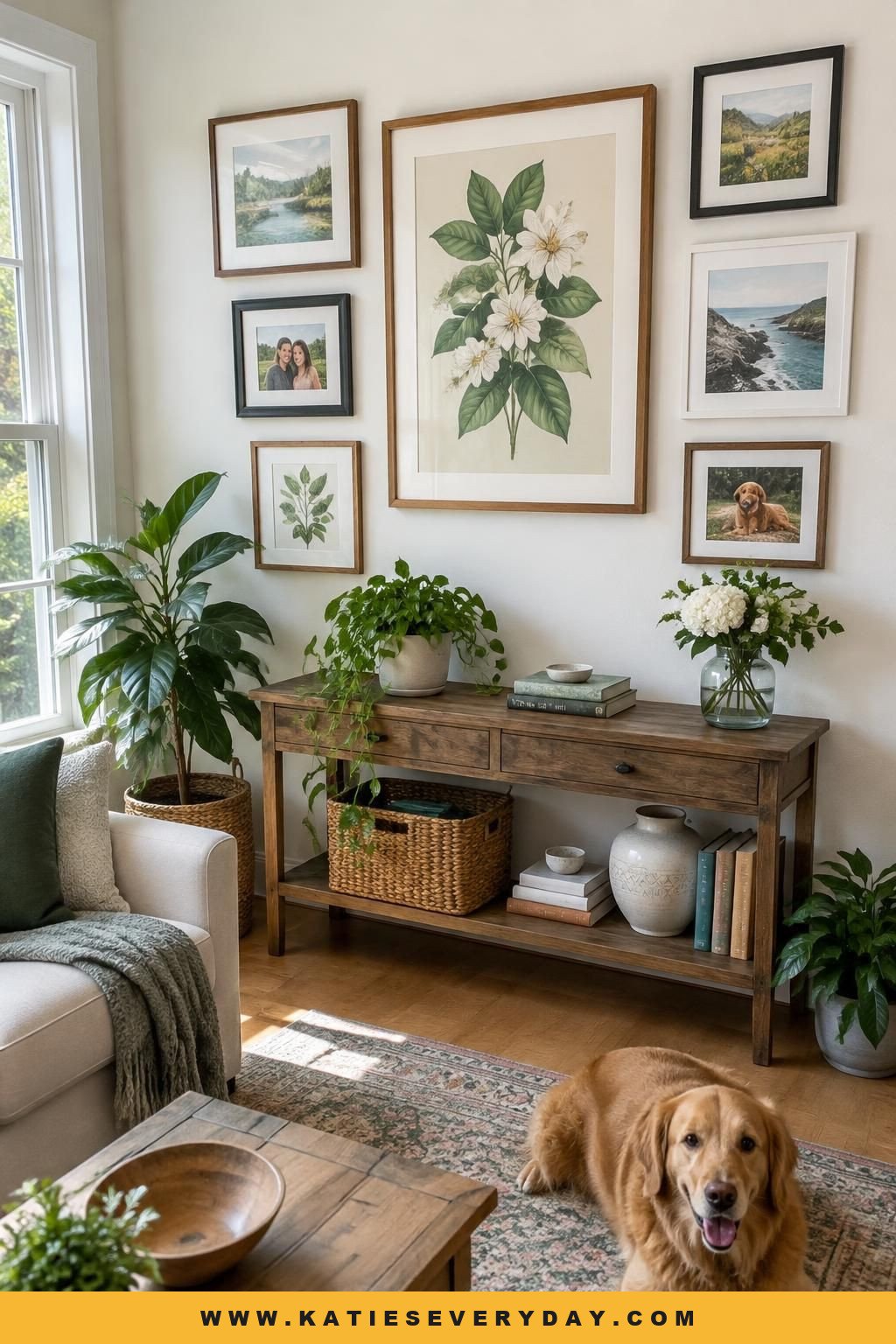
Repeat a frame finish, color, or subject to keep the mix from looking scattered. Lay the pieces out on the floor and take a picture before hanging. If every frame, color, and subject competes for attention, edit out the pieces that don’t connect.
6. Picture ledge with leaning art
Install one or two slim picture ledges for art you may want to rearrange. Place the largest frames at the back and layer only a few smaller pieces in front so each work remains visible.
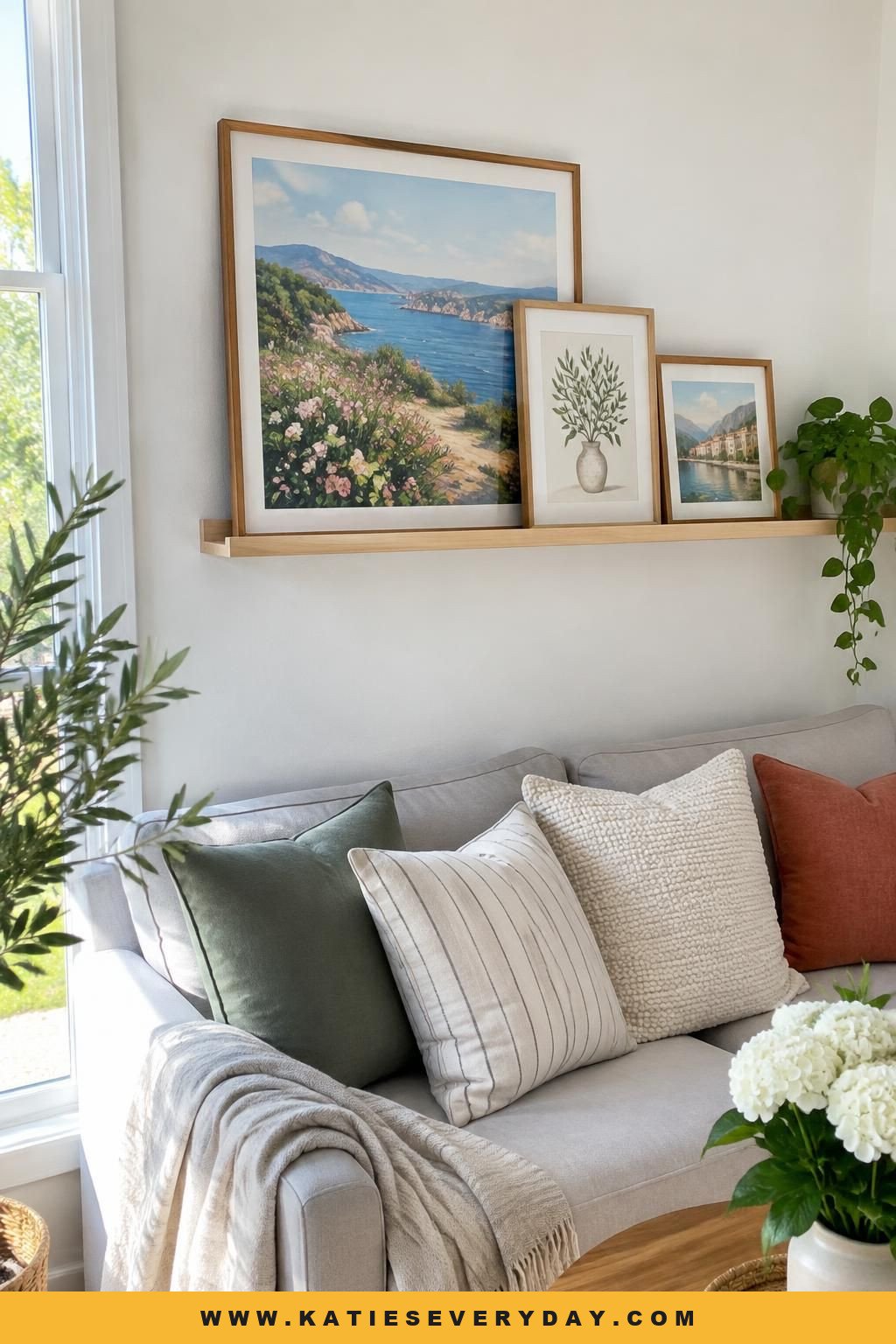
A ledge lets you change the display without rehanging each frame. Check its load rating and secure it as directed; avoid heavy or unstable objects.
7. Statement mirror over furniture
Choose a round, arched, or rectangular mirror above a sofa, mantel, or console when you want a focal point that reflects part of the room. Pick a frame that relates to finishes already in the space, such as warm wood or dark metal.
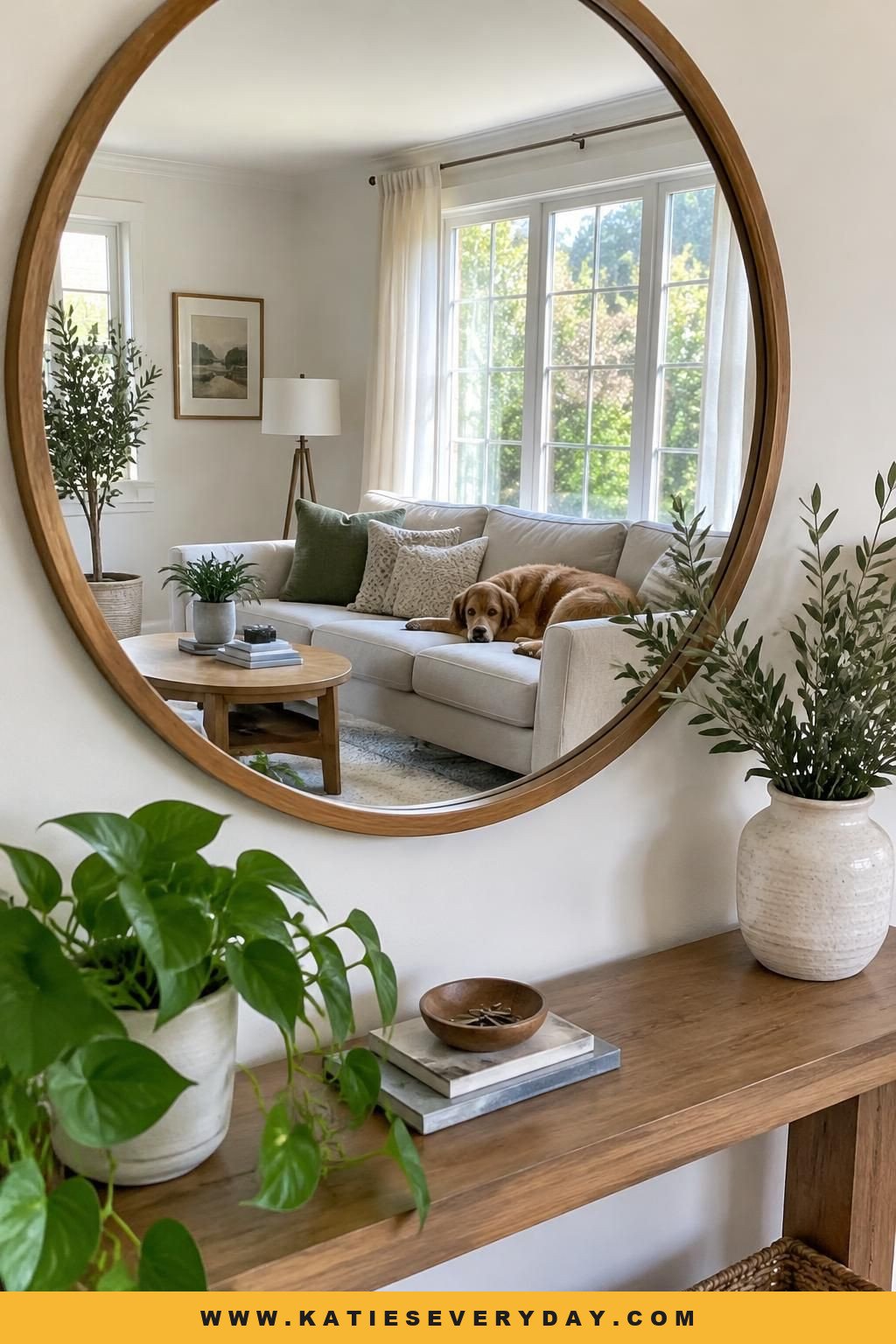
Check the reflection from your main seat before hanging. A mirror reflecting a blank wall or visual clutter may not give you the effect you want. Secure it with hardware suited to its weight.
8. Farmhouse entryway drop zone
Combine a modest wood-framed mirror, a slim shelf or console, and a short row of dark metal hooks for a small farmhouse-style entryway. Use warm wood, a light neutral, and restrained black accents to make the pieces feel related.
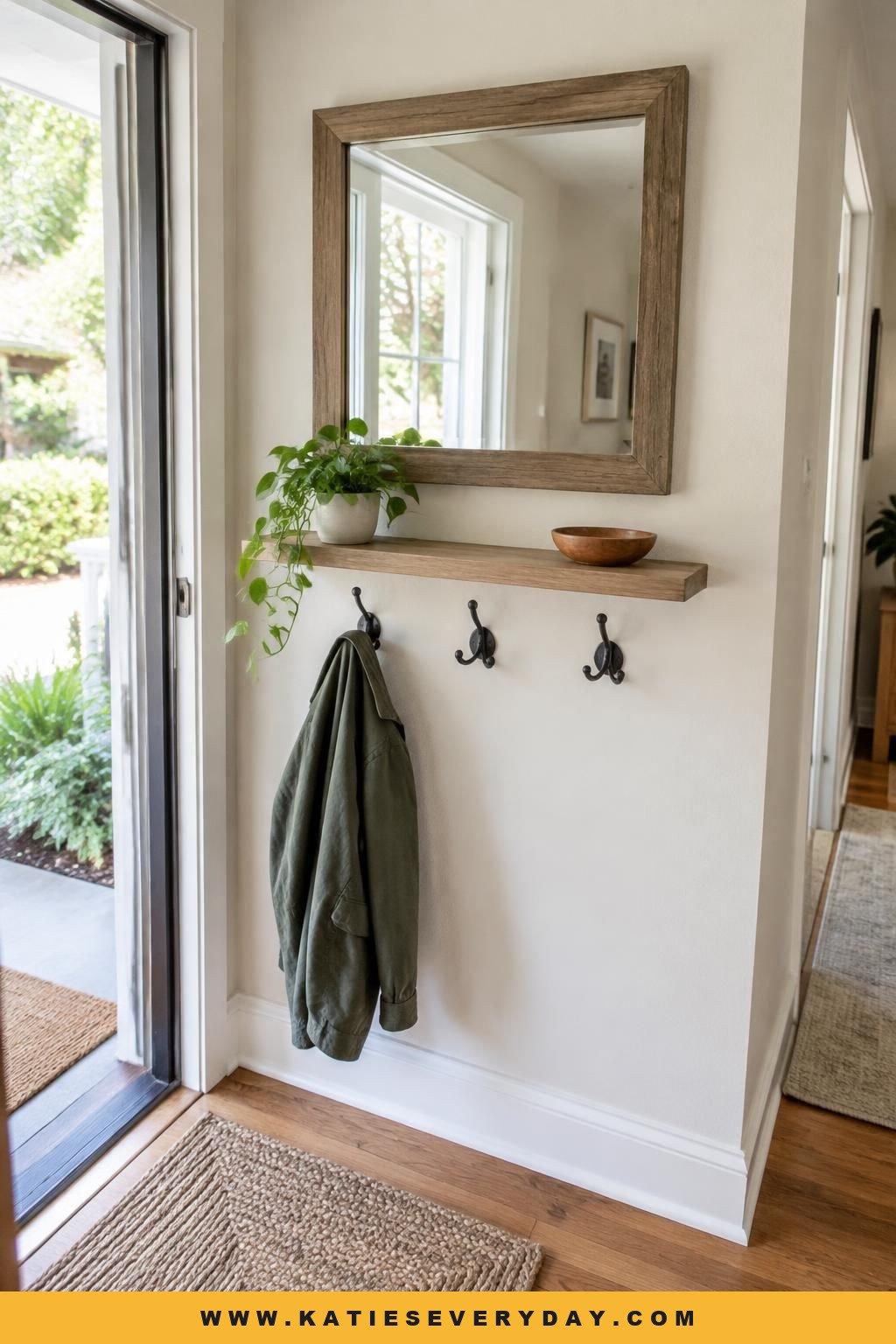
Keep clear space around the hooks so coats and bags don’t cover the mirror or shelf. If the entry is narrow, skip the console and use only the wall-mounted pieces that fit. Hooks can look messy when overloaded, so leave some empty space.
9. Floating display shelves
Choose one or two long floating shelves when you want display space as well as wall decor. Arrange a few books, framed art, and a small sculptural object; vary their heights but leave visible gaps.
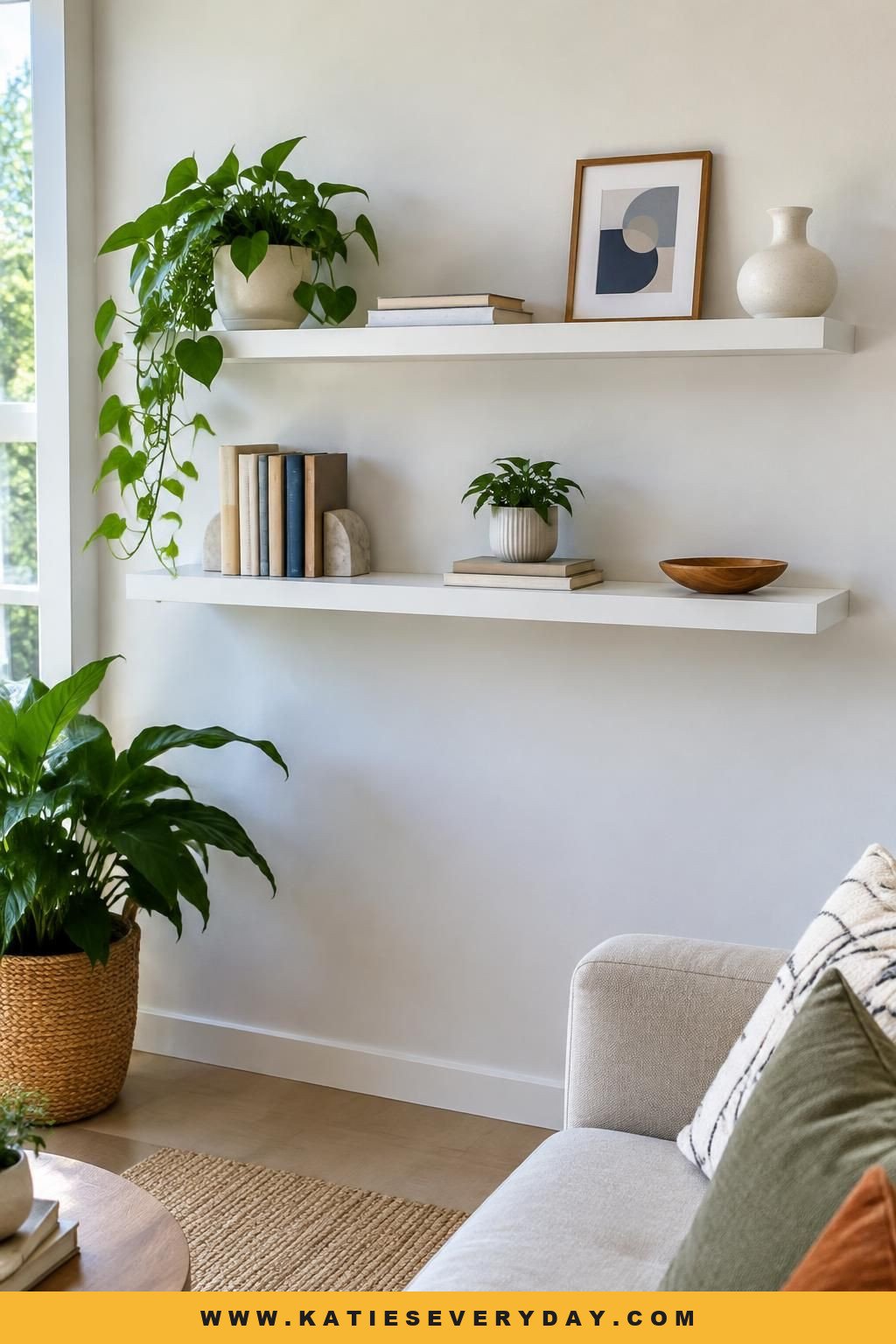
Shelves need secure installation and regular dusting. Too many small objects can make them look cluttered, so don’t fill every open spot.
10. Woven textile or vintage rug
Hang a woven wall hanging, tapestry, or lightweight vintage rug when you want texture and pattern instead of another framed image. Choose colors that relate to the upholstery or floor rug.
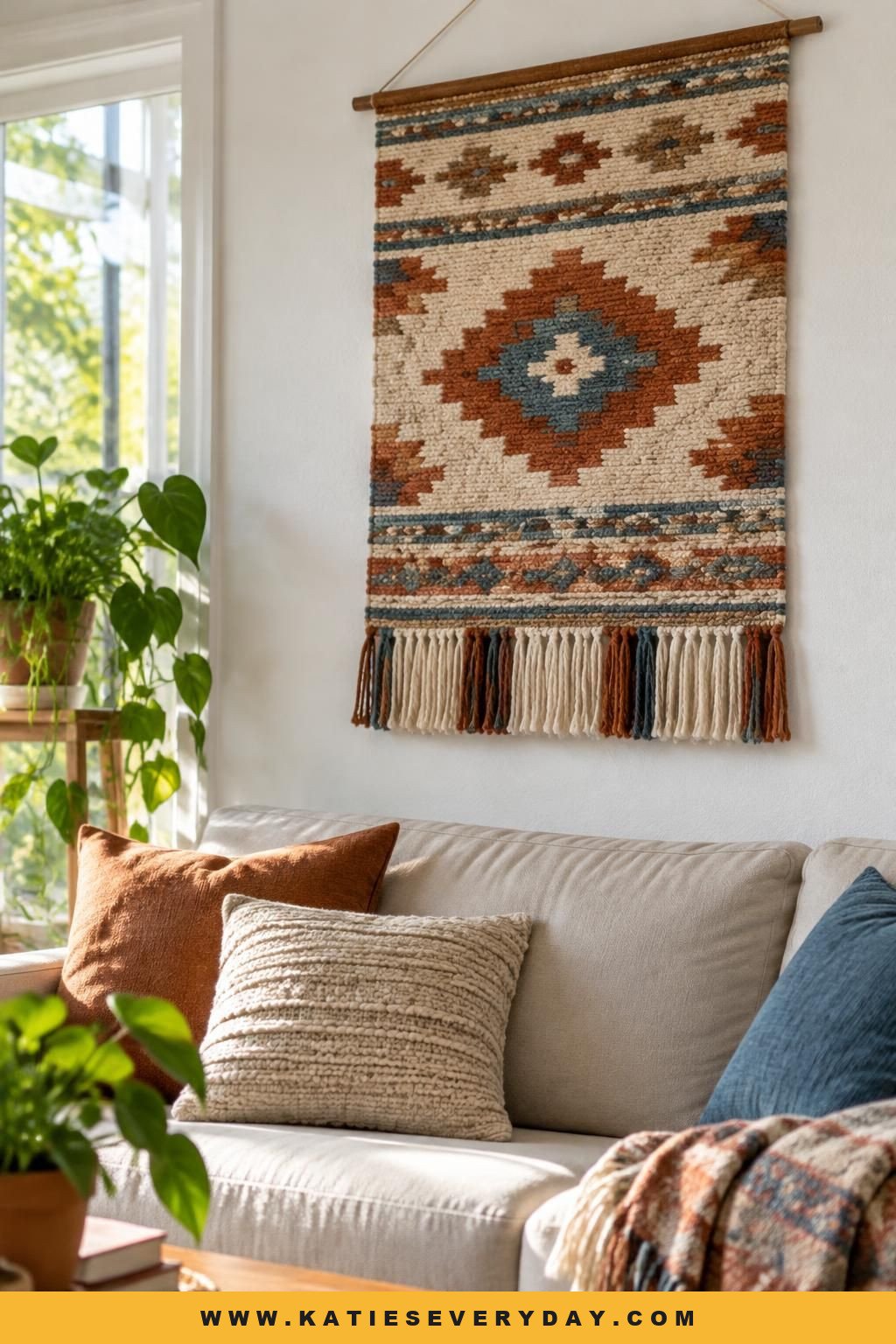
Use a proper textile-hanging method rather than putting a single nail through the fabric. Fabric can collect dust and may fade in strong direct sunlight, so check its care and hanging requirements before choosing a piece.
11. Painted accent or mural wall
Turn the wall itself into the focal point with a painted arch, color block, hand-painted motif, or mural. This gives you a feature without needing to collect multiple framed objects.
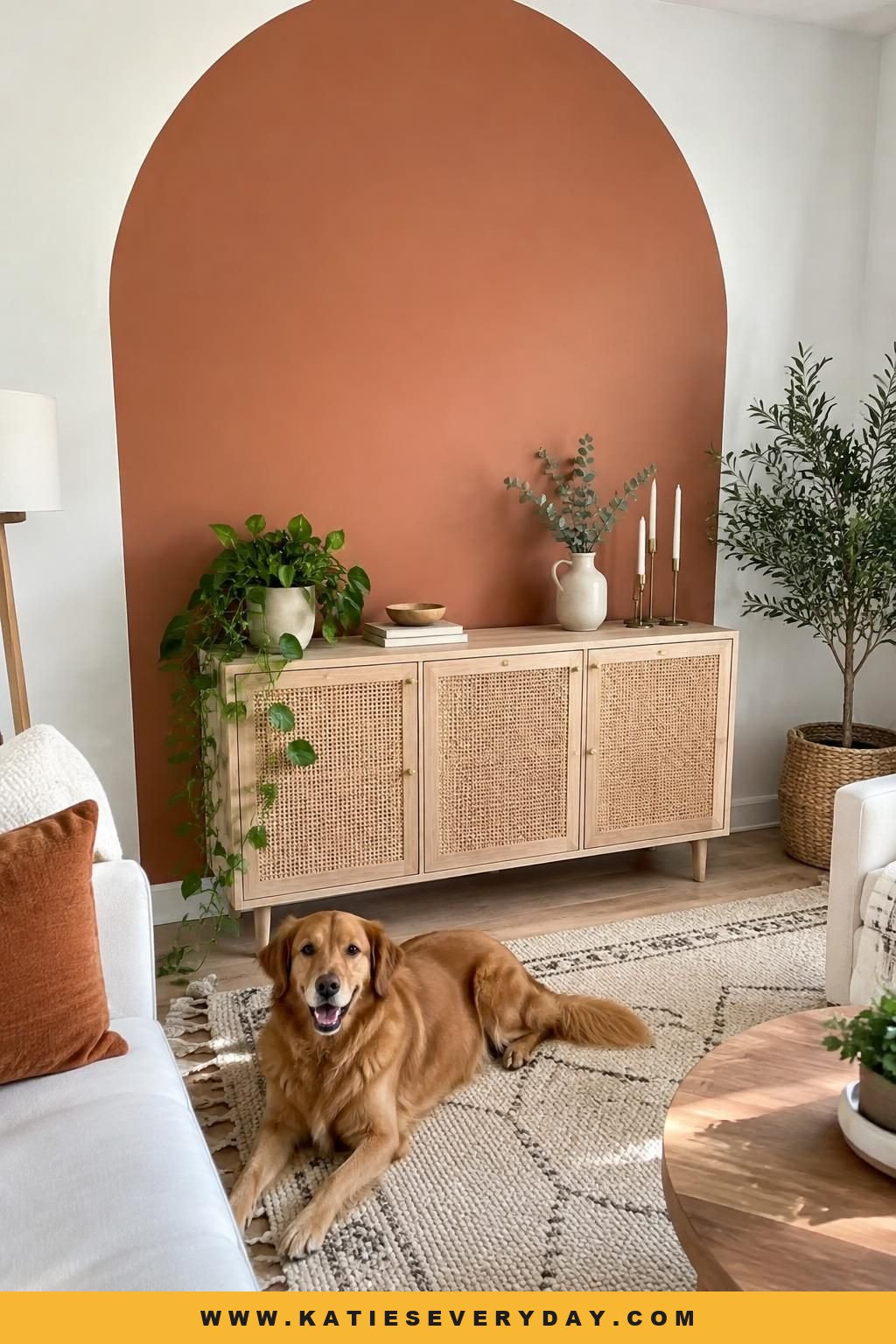
Test the color and shape with paint samples or painter’s tape before committing. A strong color or large motif can dominate the room, and you may need to repaint if your palette changes. Keep additional art limited so the wall treatment has room to read clearly.
12. Shallow paneling or shiplap
Add painted vertical or horizontal boards, or applied wall molding, for architectural texture. Warm white, soft beige, or muted green can support a farmhouse-leaning look.
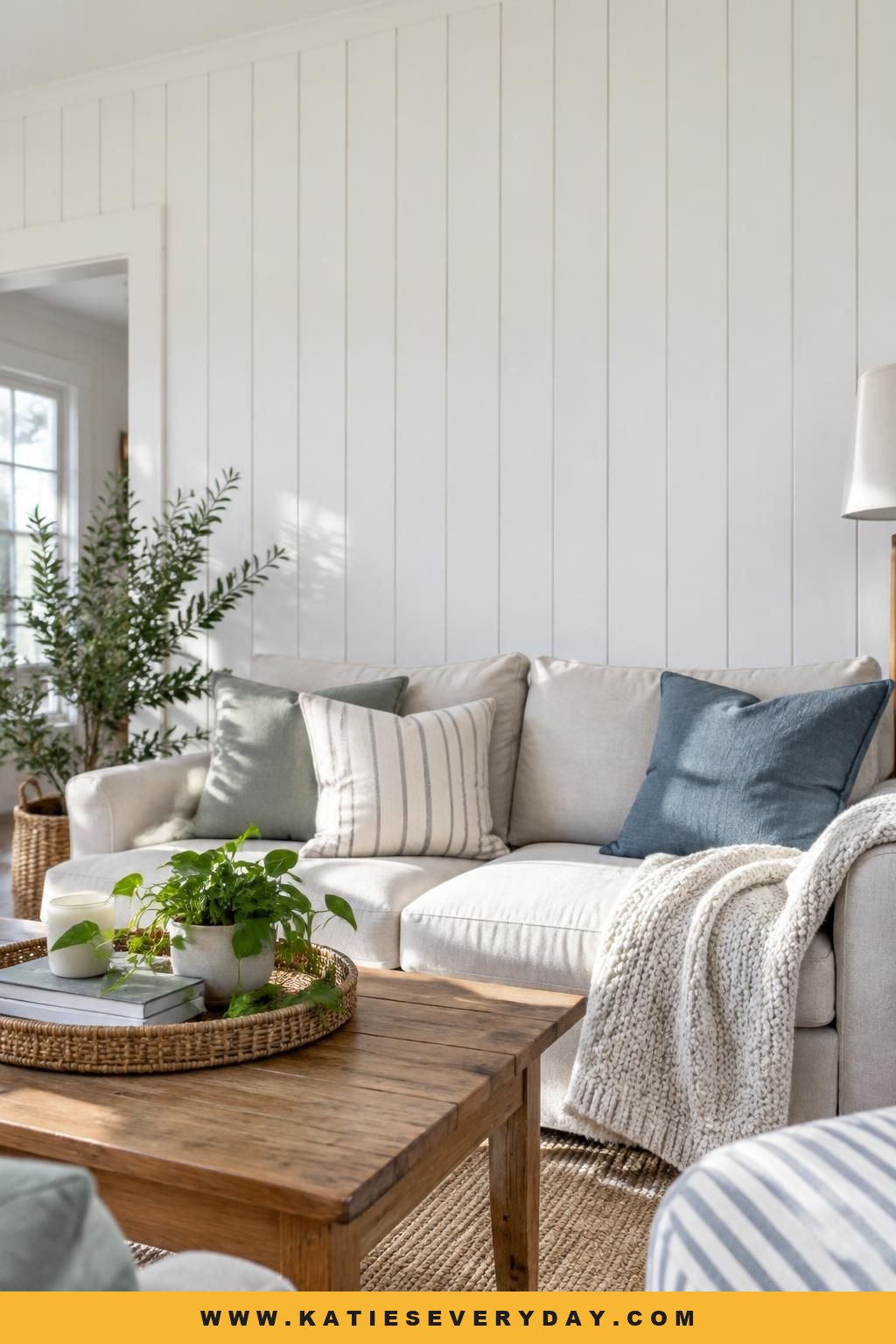
Decide whether the paneling is the feature or the backdrop before adding a gallery; competing focal treatments can feel busy. Unlike hanging prints, paneling is a more involved and less easily reversible change. Material and installation choices affect the effort and cost.
13. Sculptural plates or dimensional wall objects
Arrange decorative plates, shallow baskets, or metal or wood wall sculptures in a planned cluster when you want dimension beyond flat prints. A limited palette and clear outline help different shapes read as one display.
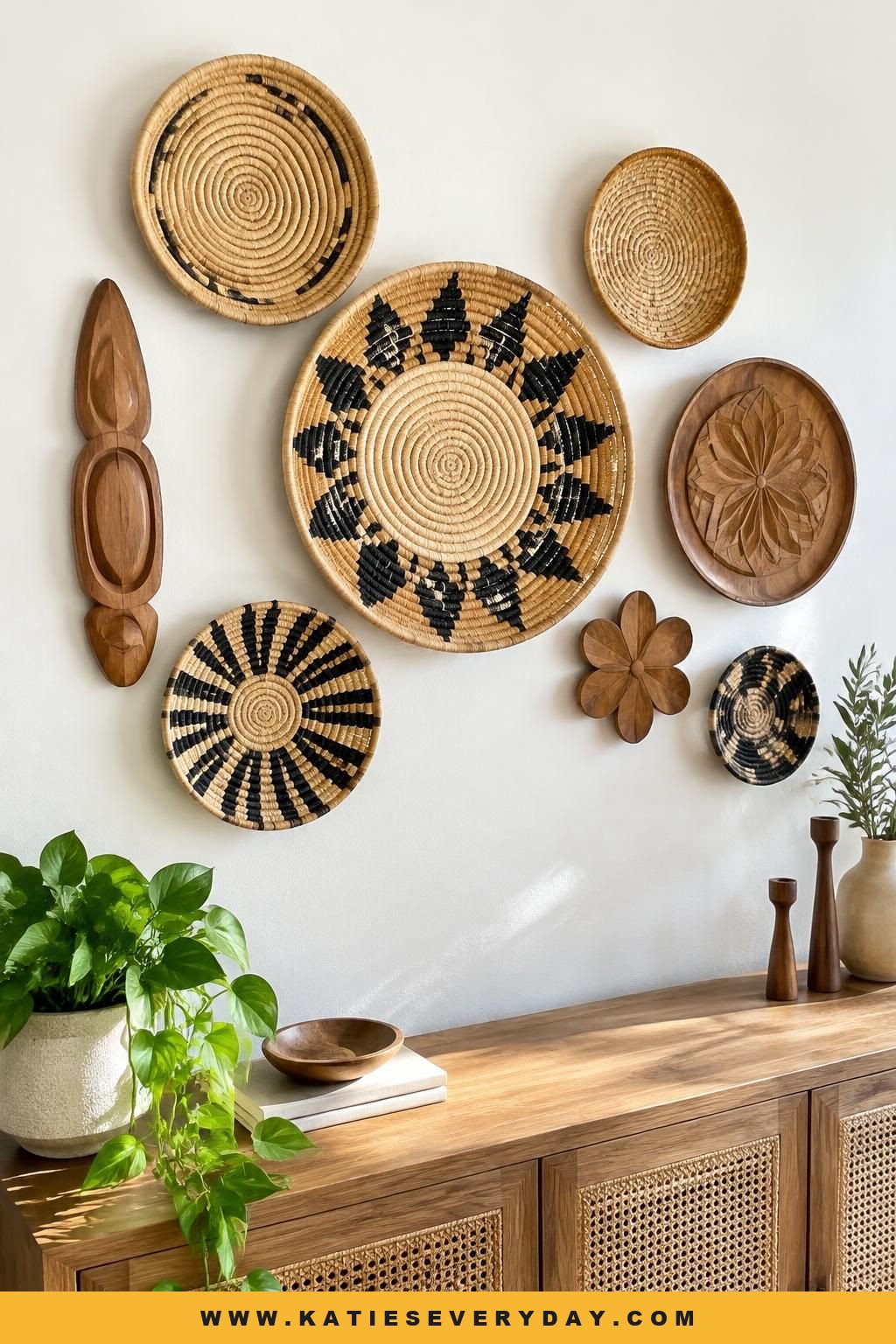
Trace the arrangement on paper first, then check that it fits the wall and furniture below. Use a hanger rated for each object’s weight. Fragile or heavy pieces need secure installation and may not suit a high-traffic passage or a wall near children’s play areas.
Keep Exploring More Ideas
 19 Small Living Room Ideas That Make Every Inch Work
 13 Living Room Aesthetic Ideas With Colors and Details to Copy
 21 Living Room Decor Ideas for a More Pulled-Together Room
 17 Black and White Living Room Ideas With Balanced Contrast
 13 Compact One- and Two-Bedroom House Plans to Compare
 19 Simple and Modern Bedroom Ceiling Designs to Consider
 17 Bedroom Back Wall Ideas That Make the Bed the Focal Point
 12 Bedroom Layout Ideas for a More Usable Room
 9 Bedroom Design Styles and the Details That Define Them
 11 Bedroom Aesthetic Ideas With Colors and Details to Copy
 13 Bedroom Ideas for Couples That Feel Personal to Both
 19 Small Bedroom Ideas That Make Every Inch Work
See more Home Design →