
Bedroom design styles can overlap, and labels such as “modern” and “contemporary” don’t always mean the same thing. Compare each look by four cues: palette, furniture shape, materials, and signature detail. Start with symmetry for a classic look, cleaner lines for a contemporary one, or worn finishes, woven textures, and layered patterns for a more relaxed room.
1. Classic Traditional
For classic traditional, look for symmetry, familiar furniture shapes, and a collected feel. A carved or four-poster bed, polished or aged wood, and a matching pair of bedside lamps or sconces set the tone. Warm whites, muted greens or blues, and traditional patterns such as florals and stripes suit the palette; paneling or crown molding can add another classical detail.

For a simple take on classic bedroom design, keep the bed and one or two traditional accents, then limit the patterns and ornament. Too many carved pieces or competing prints can make your room feel formal or crowded.
2. Transitional
Transitional design pairs streamlined furniture with selected traditional details. Try an upholstered, clean-lined bed with a curved chair, classic bedside lamp, or traditional chandelier. Warm neutrals, tactile fabrics, and a mix of straight and curved shapes help tie the pieces together.
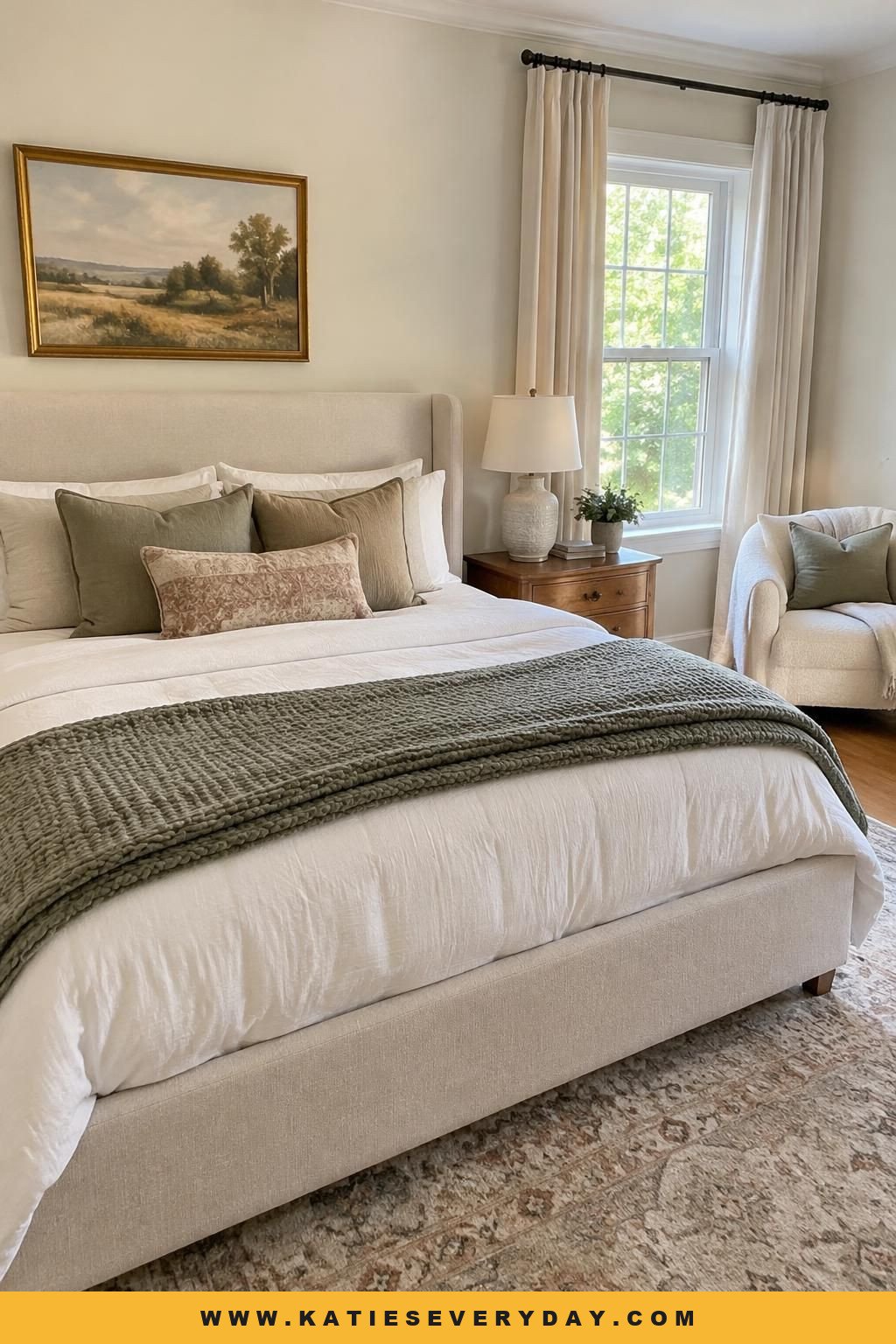
For simple and elegant bedroom design, let the furniture stay uncluttered and give one traditional accent room to stand out. If your pieces come from several styles, repeat a color, shape, or material to connect them. Too many unrelated details can make the mix feel unplanned.
3. Contemporary
Contemporary design uses current-looking furniture, clean lines, and few decorative extras. A restrained palette might combine white, black, or gray with one accent color; smooth wood, glass, metal, or upholstery can add contrast. Make one sculptural light fixture or headboard the focal point and keep nearby surfaces quieter.
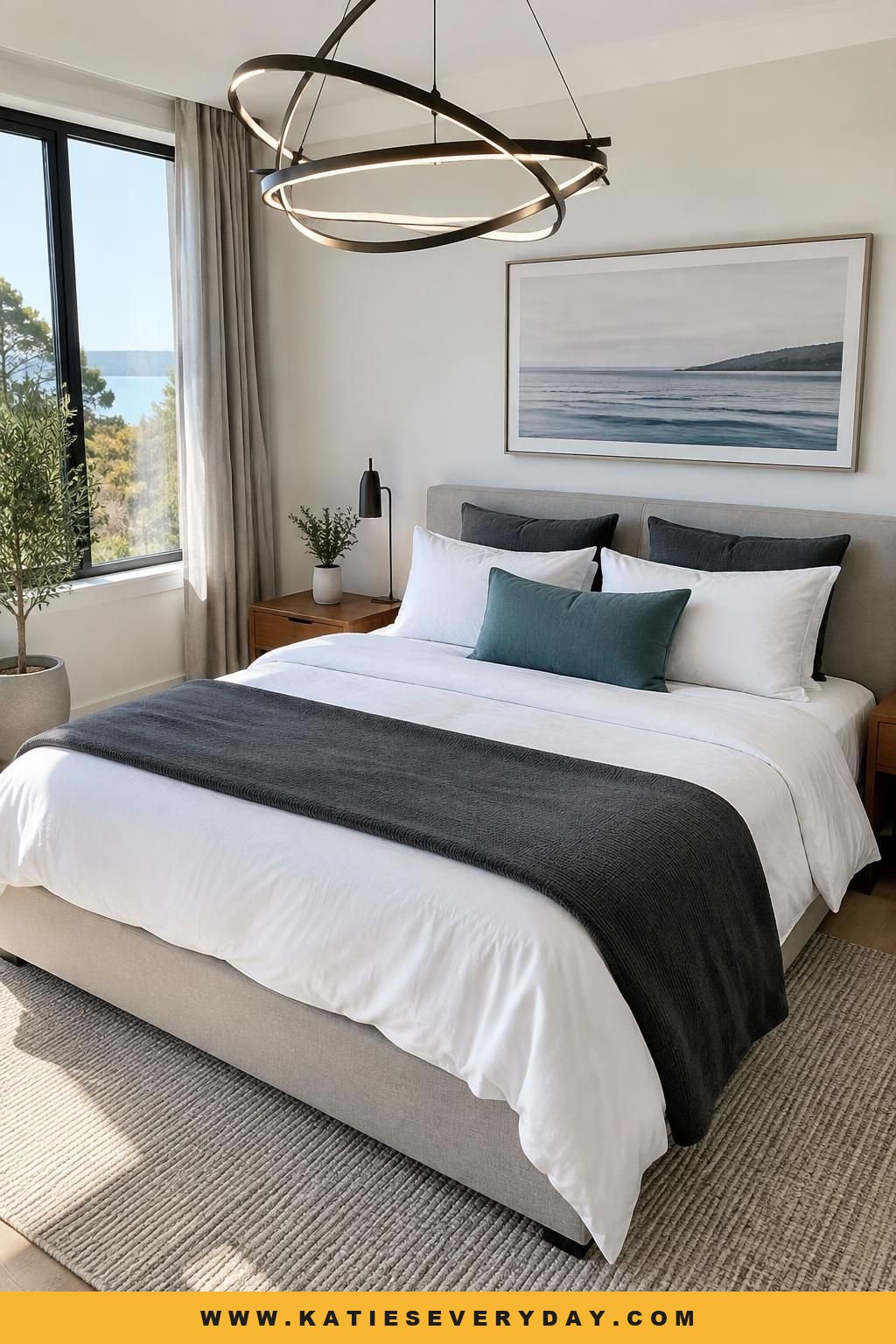
Contemporary describes a current, evolving look; it isn’t simply another word for modern. If every surface is smooth and every color is neutral, your room may feel stark. Add texture with a soft rug, textured upholstery, or layered bedding.
4. Mid-Century Modern
Choose mid-century modern for warm wood, low streamlined furniture, tapered or angled legs, and organic curves. A focused accent in olive, mustard, rust, or teal can bring in color without making every piece feel retro. A bedside table with tapered legs is enough to suggest the style; you don’t need a full set of period-inspired furniture.
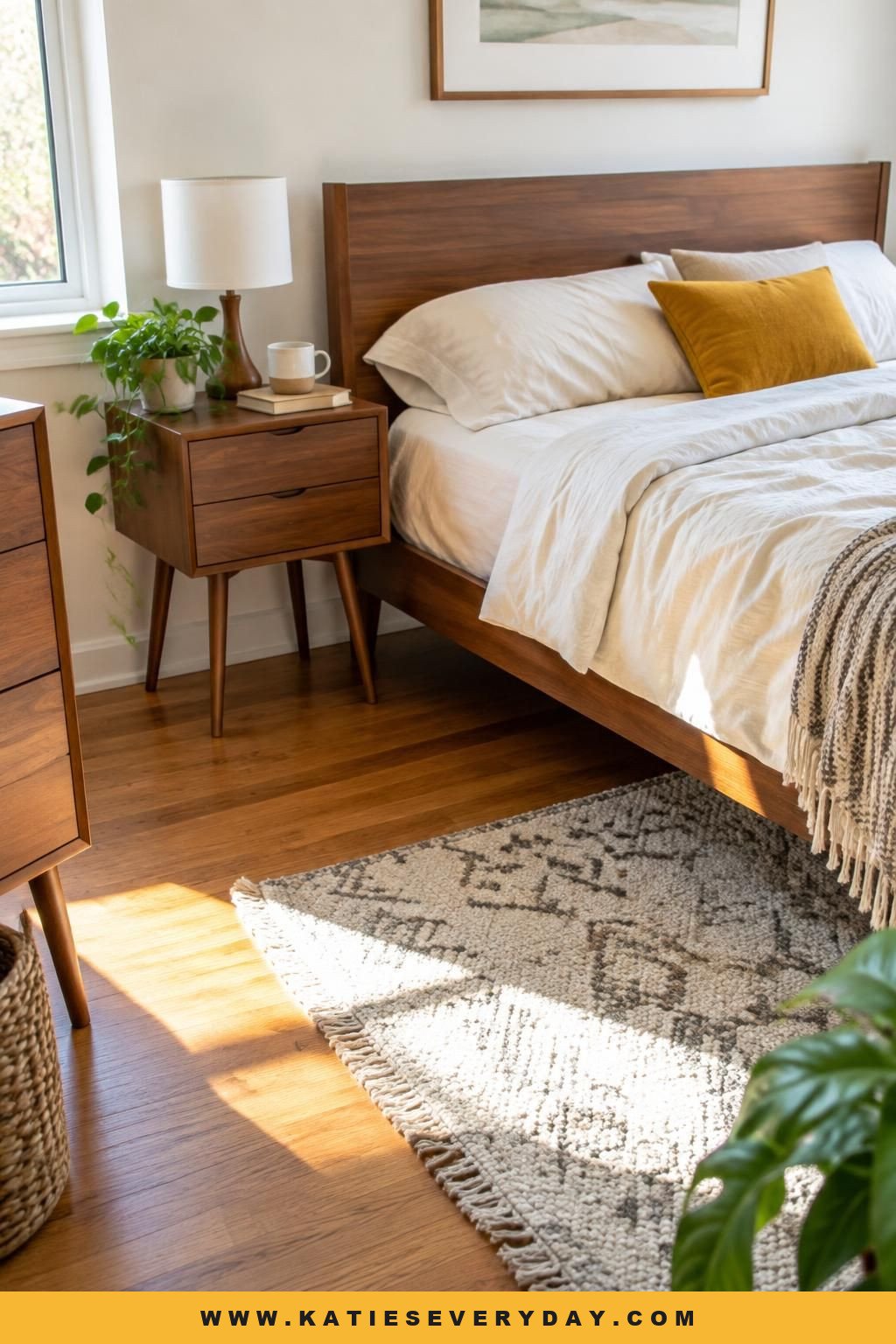
Unlike contemporary design, mid-century modern draws on forms associated with the mid-20th century. A room full of retro-inspired pieces can feel themed, so balance them with simple bedding or contemporary art.
5. Scandinavian
Scandinavian style puts function, simplicity, and light finishes first. Use light or natural wood, pale colors, simple furniture, and minimal window treatments. A basket, shelf, or storage bench can keep everyday items organized while adding a visible natural-material detail.
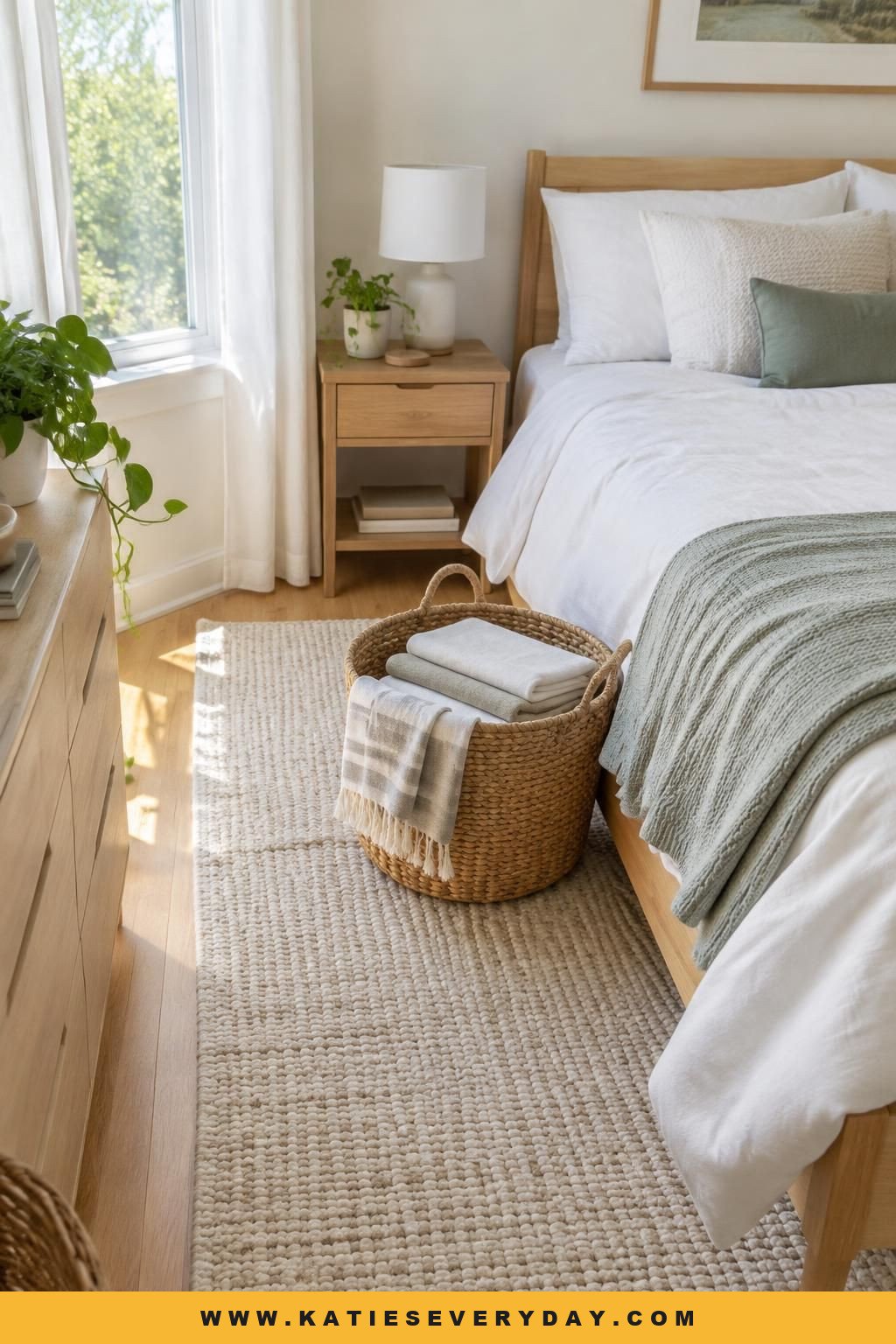
To keep your room from feeling flat, add texture through bedding or a rug. And don’t mistake simplicity for an empty space: practical storage and tactile layers can preserve the pared-back look without leaving the room stark.
6. Japandi
Japandi blends Japanese-inspired minimalism with Scandinavian warmth. Look for low, simple furniture, natural wood, and fabrics such as linen, cotton, or wool. Warm neutrals with a muted green or earthy accent suit the palette; a simple wood bed with textured bedding adds depth without crowding the room.

Compared with Scandinavian style, Japandi brings more emphasis to low-profile forms and a limited mix of natural materials. Too few furnishings or layers can make your room feel bare, so add texture rather than lots of small accessories.
7. Farmhouse
Farmhouse style pairs worn finishes and familiar furniture with relaxed textiles. Weathered or painted wood, cotton or linen bedding, and a light, earthy palette establish the look. Add a quilt, subtle checks, or ticking stripes; a wrought-iron bed is another defining option.
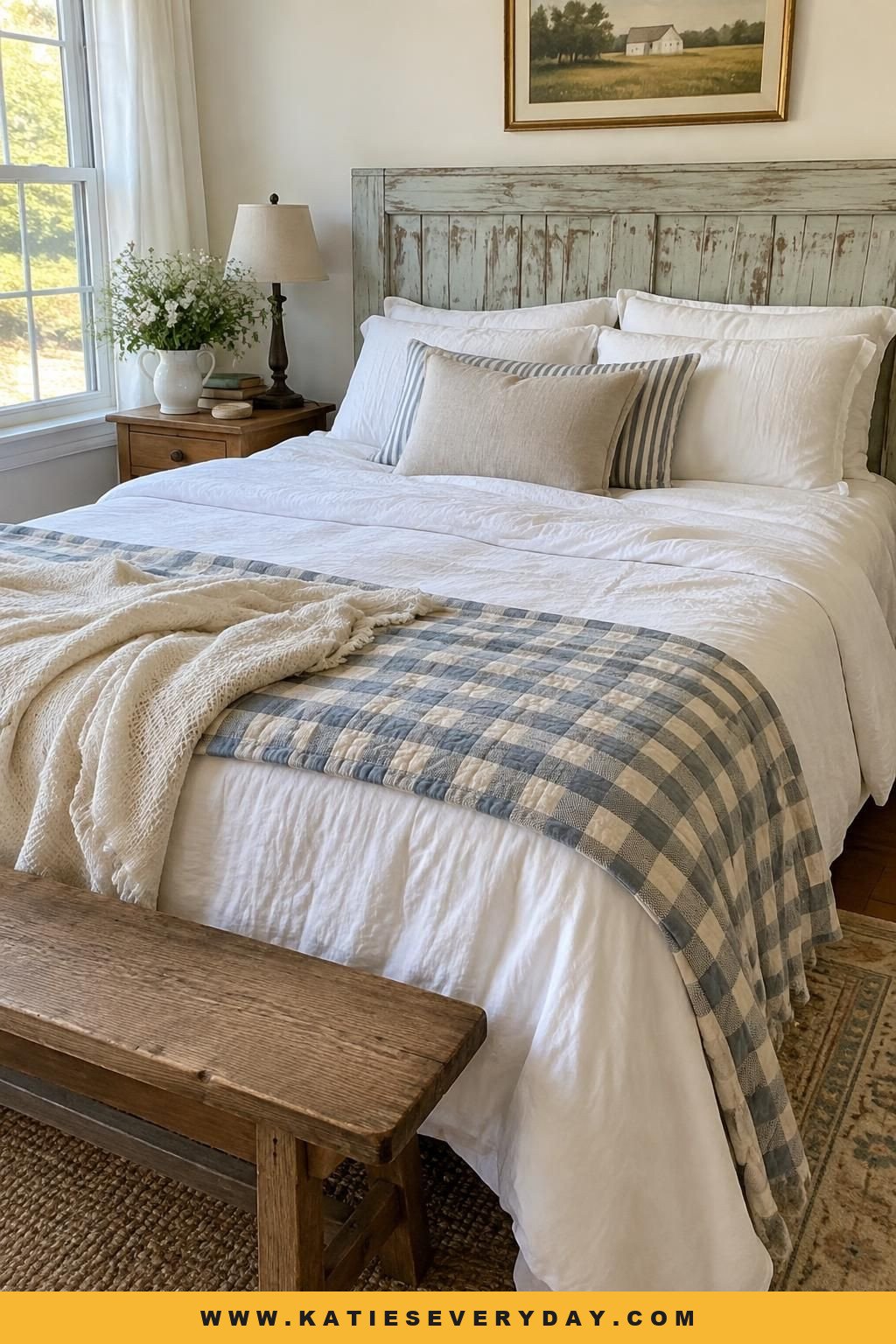
Farmhouse and coastal rooms can both use pale colors and natural materials, but farmhouse leans toward country patterns and weathered wood. Too many distressed pieces, rustic signs, or repeated motifs can make your room feel themed rather than personal.
8. Coastal
Coastal style combines airy colors, relaxed bedding, and natural textures. Blue and white are familiar choices, but muted green, gray, and sea-glass shades work too. Try jute, raffia, or sisal in a rug or other woven detail; a painted or upholstered bed can bring in a contrasting texture.
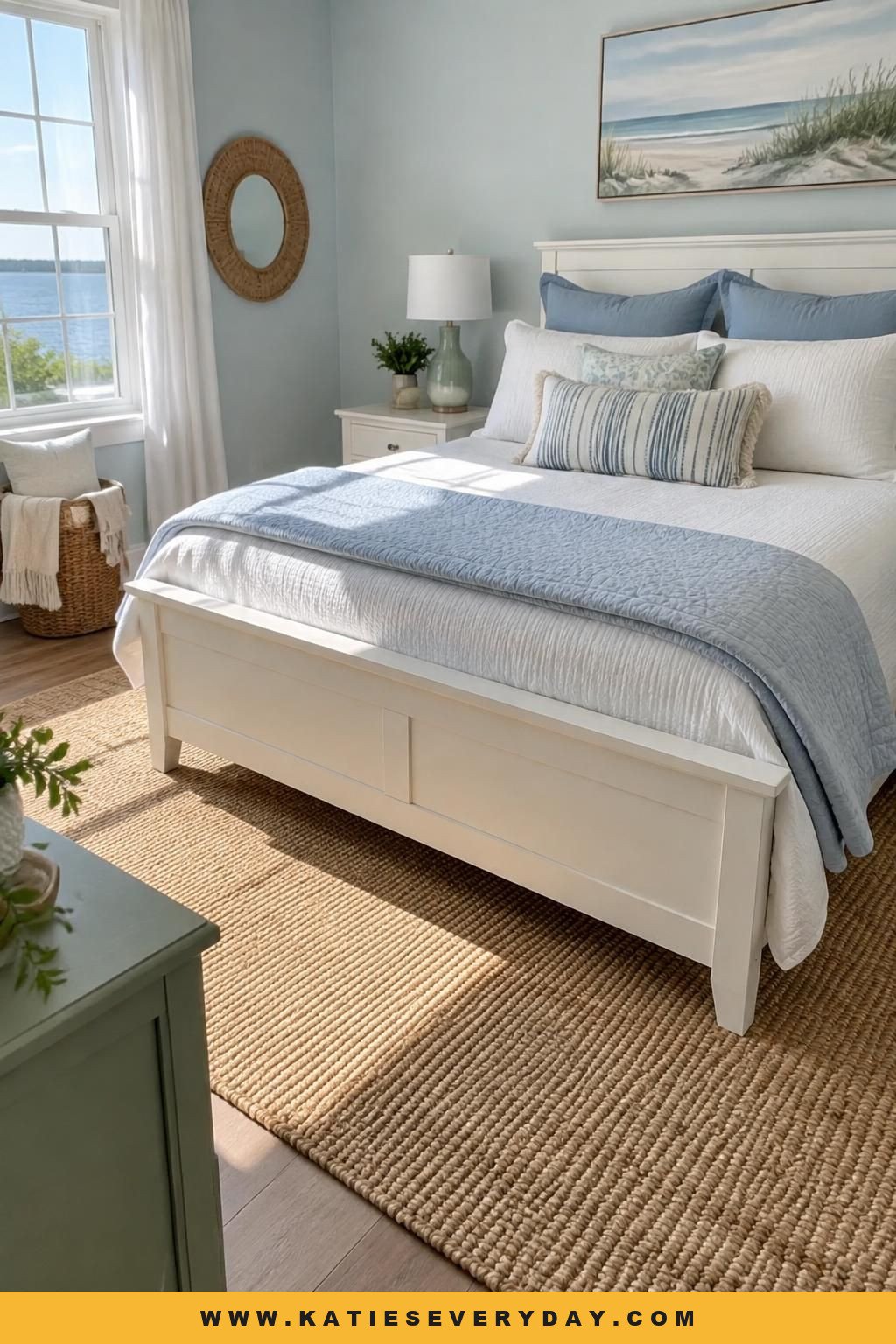
Coastal and farmhouse styles can overlap, but coastal emphasizes airy color and woven texture, while farmhouse favors worn wood and country patterns. Skip a room full of shells or knot accessories. A few natural-material details are enough to suggest the look.
9. Bohemian
Bohemian style layers textiles, patterns, colors, and collected objects. Woven or handmade-looking materials and personal accessories add variety; repeat one or two colors to connect the layers. Build around pieces you already love rather than buying a matching “boho” set.
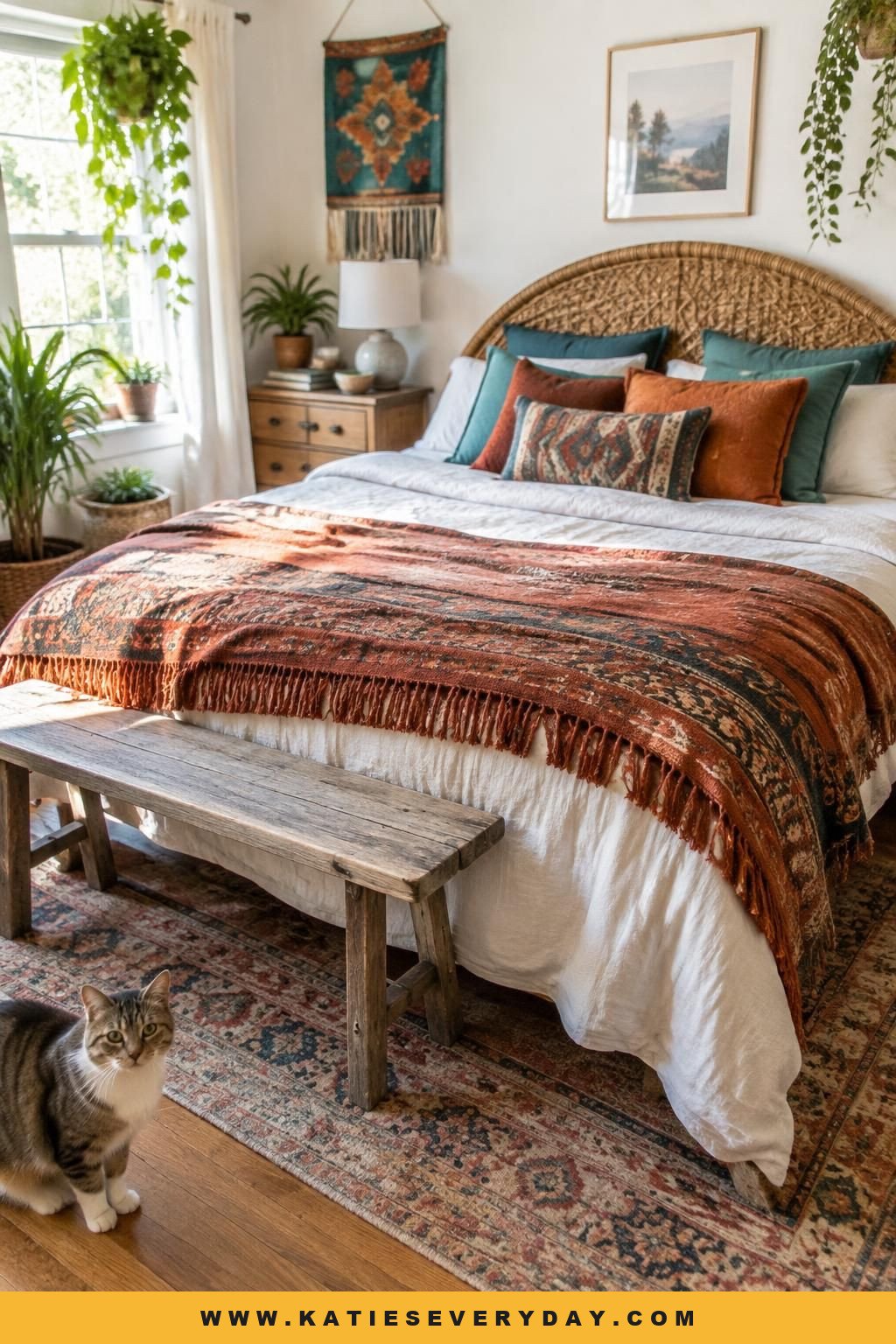
Too many rugs, pillows, plants, and accessories can overwhelm your room, especially if it’s small. Leave clear surfaces and walking space, and let a few chosen textiles carry the look.
Keep Exploring More Ideas
 21 Modern Simple Bedroom Design Ideas for a Calm, Pulled-Together Room
 17 Indian Bedroom Design Ideas That Balance Tradition and Modern Style
 13 Bedroom Ideas for Couples That Feel Personal to Both
 12 Bedroom Layout Ideas for a More Usable Room
 19 Small Bedroom Ideas That Make Every Inch Work
 11 Bedroom Aesthetic Ideas With Colors and Details to Copy
 14 Minimalist Bedroom Ideas That Feel Warm, Not Empty
 17 Bedroom Back Wall Ideas That Make the Bed the Focal Point
 19 Small Living Room Ideas That Make Every Inch Work
 13 Compact One- and Two-Bedroom House Plans to Compare
 19 Simple and Modern Bedroom Ceiling Designs to Consider
 17 Black and White Living Room Ideas With Balanced Contrast
See more Bedroom Ideas →