
If your minimalist bedroom feels cold or empty, adding more decor isn’t the only fix. Warmth can come from a restrained palette, tactile materials, layered light, and a few useful or meaningful pieces—not from filling every surface. These 14 ideas show what to change first, from wall color and bedding to lighting and personal details, while noting where each choice may not suit your room.
1. Choose a warm, limited palette
Pair warm white or cream walls with oatmeal, sand, or taupe bedding, then add one accent such as olive or rust. Repeating a few related hues helps your minimalist bedroom design feel considered rather than stark. For example, echo olive from a small artwork detail in one pillow instead of introducing several new colors. Check paint or fabric samples in your room’s natural light before committing; a warm palette doesn’t have to mean beige everywhere.

2. Pick soft white over clinical white
For a bright, clean look, try a warm-leaning white on the walls and pair it with cream textiles and natural wood. Compare paint samples beside your bedding and flooring, since the surrounding finishes affect how a white looks. A soft white won’t suit every room or light condition, so test it before choosing.

3. Use one warm wood anchor
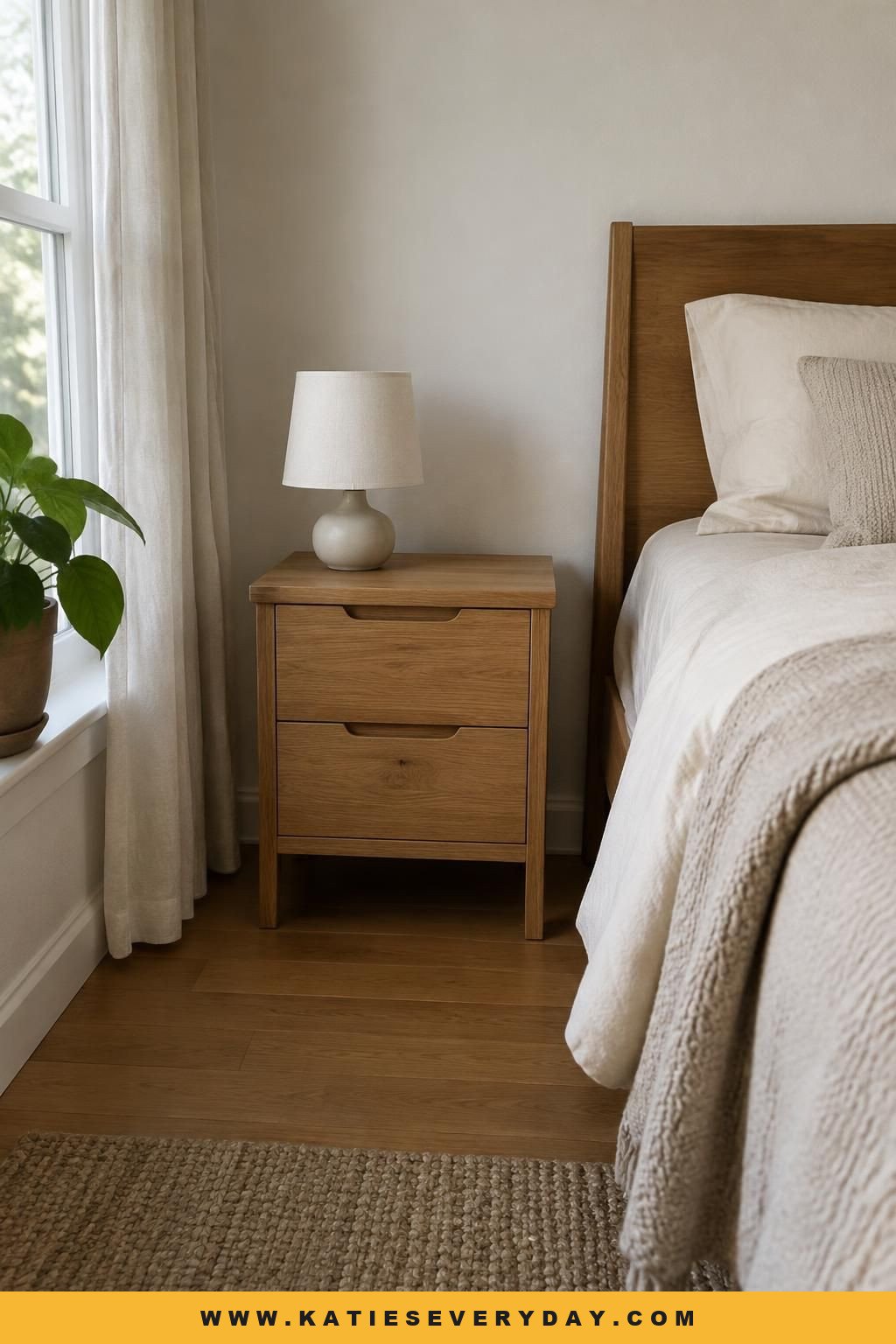
Choose one noticeable wood element—a bed frame, headboard, or nightstand—in oak, maple, or another warm-toned finish. Keep other large surfaces quiet so the visible grain adds contrast without competing patterns. A simple oak nightstand, for example, can sit against plain walls and cream bedding. Don’t buy a bulky piece just to fill empty floor space; the wood should serve a purpose or have a clear visual role.
4. Layer texture, not prints, on the bed
Keep your sheets, duvet, and pillows in a narrow color family, but vary their feel: smooth cotton sheets, a subtly textured duvet, and a nubby throw make the bed look less flat. Fold the throw across the foot of the bed for one clear band of texture instead of piling on cushions. Extra layers mean more laundry, so skip them if you prefer minimal bedding or easy care.
5. Put one rug where your feet land
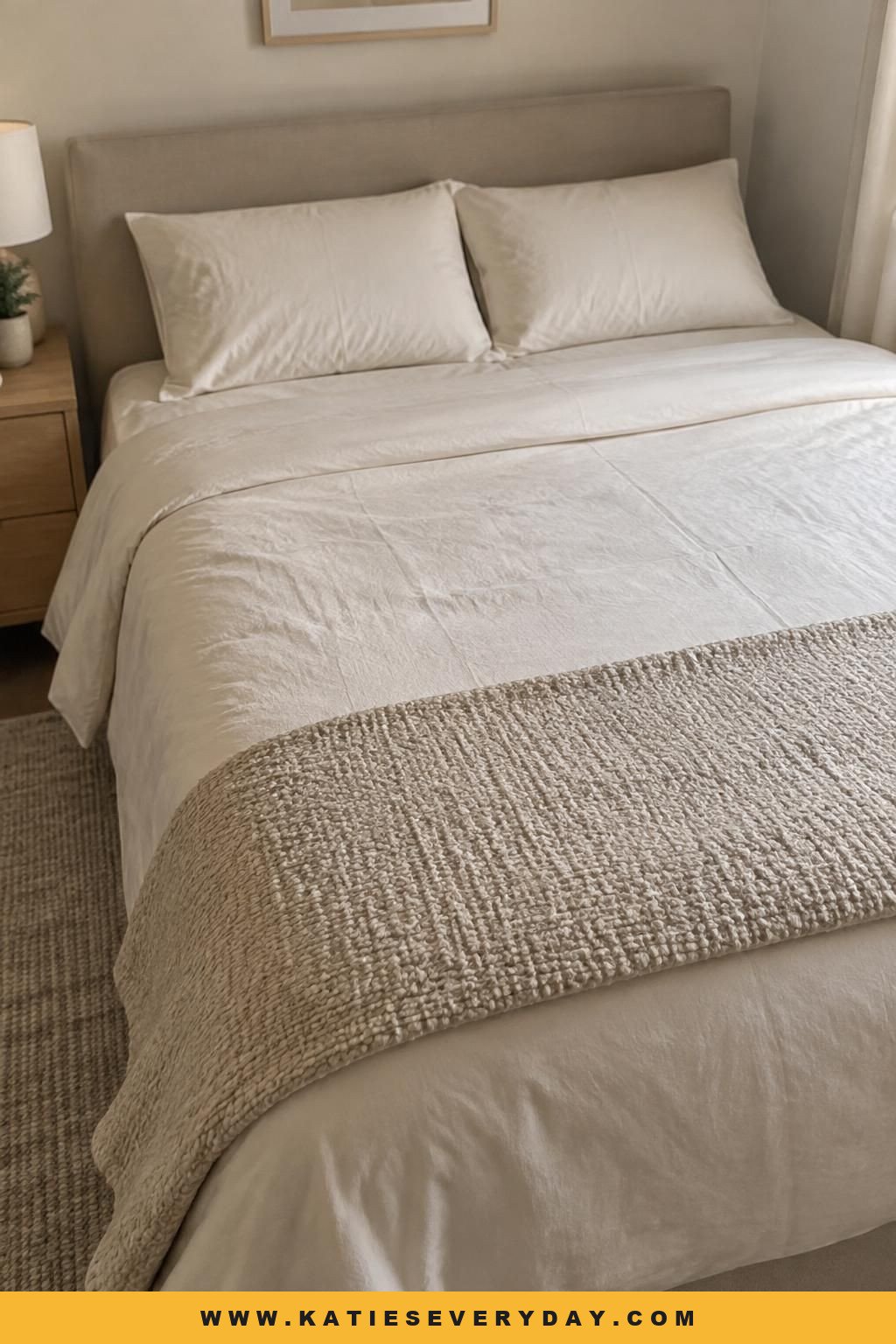
A single soft, quiet rug can warm up bare flooring without scattering small decorative accents around the room. Place it where you step out of bed and check that it reaches the landing area. Before buying, consider door clearance, cleaning, and whether the rug will stay flat. If it bunches or blocks movement, it may be more trouble than comfort.
6. Give the bed wall one tactile feature
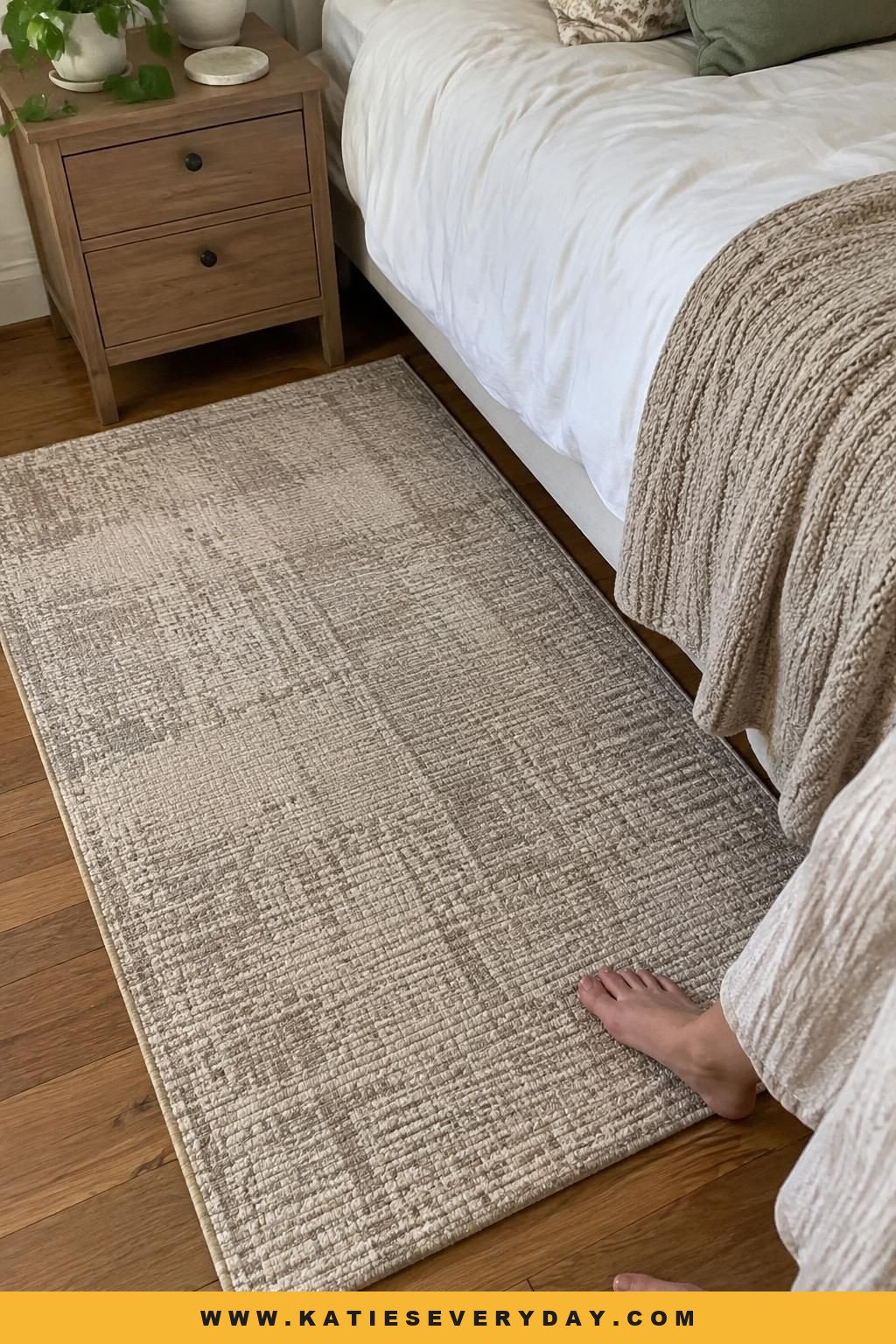
Add one treatment behind the bed—upholstery, wood slats, or a textured wall finish—and keep the other walls restrained. This gives the bed a focal point without a cluster of small decorations. An upholstered headboard, for example, can add texture against plain walls and smooth bedding. Keep bedside surfaces simple so the wall remains the main feature. Wallpaper and paneling can be costly or difficult to reverse, so consider the installation before choosing a permanent finish.

7. Add a bedside light alongside general lighting
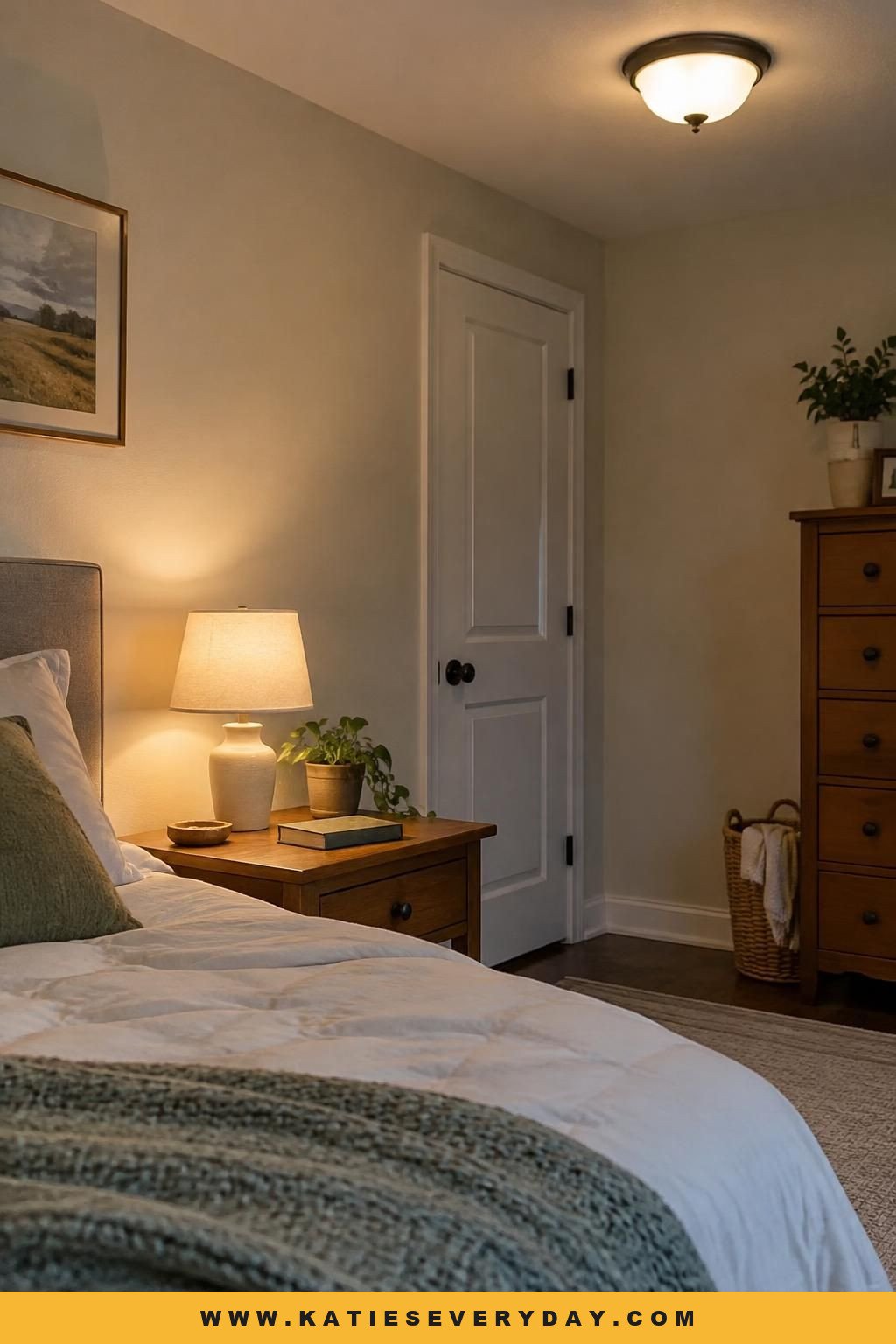
Pair the room’s general light with a bedside source, such as a table lamp or sconce. That gives you options for reading, winding down, or moving around instead of relying on a single bright overhead light. Position a reading lamp so it lights the page rather than shining directly into your eyes. A designer quoted by Homes & Gardens suggests warm-white lighting in the 2700–3000K range, but that’s a suggestion, not a rule. Your wiring, bedside layout, and reading habits may affect what works.
8. Choose a simple ceiling fixture you can dim
If your ceiling light feels purely functional, choose an understated fixture, such as a frosted globe, and add a dimmer if your electrical setup allows it. A simple fixture can become a deliberate focal point, while adjustable brightness lets you soften the general light in the evening. Echo its metal finish in one small element, such as a lamp base. A statement fixture may overwhelm a low ceiling or very small room, so check its scale first.

9. Add one curve to soften straight lines
Pair a rectangular bed or nightstand with one rounded element, such as a curved lamp or round mirror. The change in shape adds variety without introducing another color or a collection of decorative objects. For example, a round mirror above a simple dresser can break up a room where every piece has straight edges. Choose just one curved form, and skip anything that takes up useful bedside space.

10. Use one controlled accent color on the bed
Keep walls and large furnishings calm, then add a muted accent through one duvet, throw, or bolster. Rust, deep green, or burgundy can give the bed a focal point without turning the whole room into a color project. You can pull the accent from art or an object you already own. Strong colors are personal, and a dark accent may feel too dominant in a dim room, so try it in a smaller textile before committing to a large one.
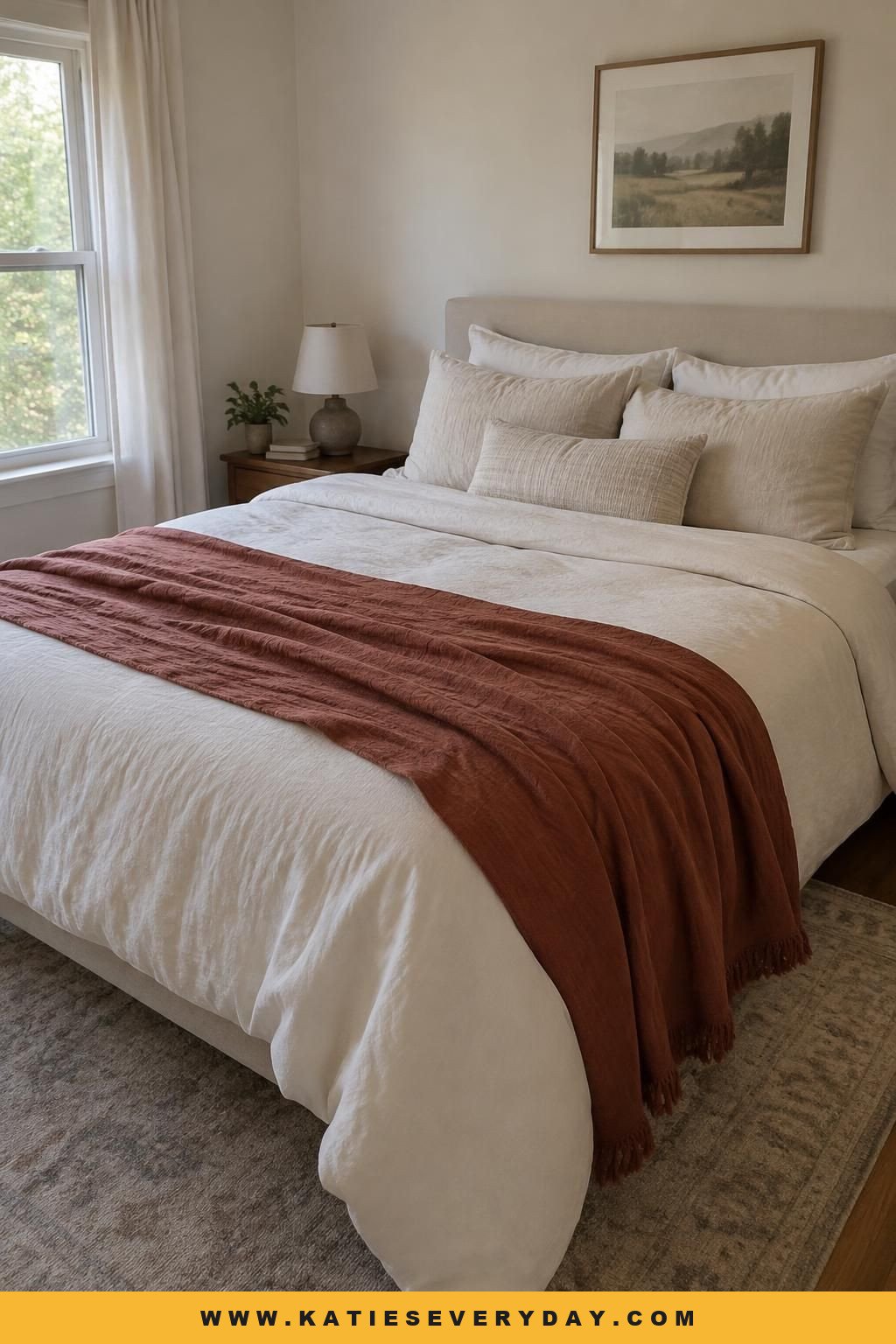
11. Frame the window with quiet curtains
Simple curtains in a soft neutral or muted tone can make a bare window feel more finished without adding a busy print. Choose a fabric texture that relates to your bedding, and keep the color close to the wall or textiles for a low-contrast look. Measure the window and available wall space before choosing a length. Floor-length drapes may not suit every layout or cleaning preference.
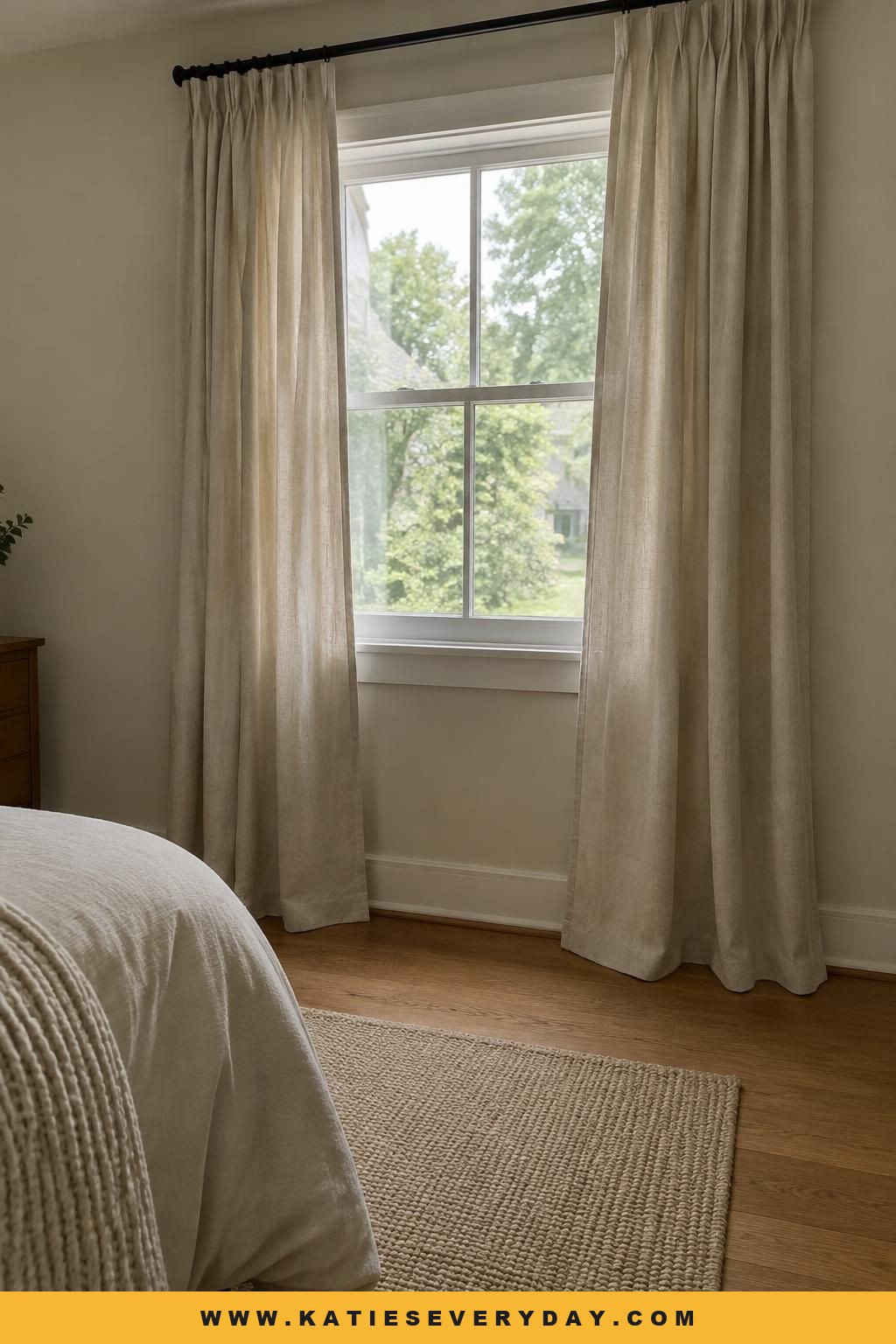
12. Hang one well-scaled piece of art
Choose a single artwork for above the bed or dresser, using a color that already appears in the room. One considered piece can make a clean minimalist bedroom feel personal without filling the wall with unrelated frames. For example, choose art with a small rust detail if your throw is rust-colored. Blank wall space doesn’t have to be filled; leave it bare if the room already feels balanced.

13. Add one plant or botanical detail
A single plant, branch, or restrained floral arrangement can add an organic shape and a small note of natural color. Place it where it won’t interfere with a walkway or how you use the bedside area. A branch in a simple vase on a dresser is one option. Choose a plant based on the available light and the care you’re willing to give it; dried or faux greenery may suit you better if you’d rather avoid ongoing care.

14. Keep one useful or meaningful piece
Minimalism doesn’t require you to discard a dresser, chair, or treasured object that serves a real purpose. Keep the piece, then clear the surrounding visual clutter so it has room to stand out. You might leave a dresser in place and display only one meaningful object on top. A chair can make sense if you use it, but if it becomes a clothes pile, it isn’t helping the room function. Edit around what you need rather than copying a staged room that may not fit your life.

Keep Exploring More Ideas
 13 Bedroom Ideas for Couples That Feel Personal to Both
 17 Bedroom Back Wall Ideas That Make the Bed the Focal Point
 19 Small Bedroom Ideas That Make Every Inch Work
 11 Bedroom Aesthetic Ideas With Colors and Details to Copy
 12 Bedroom Layout Ideas for a More Usable Room
 17 Indian Bedroom Design Ideas That Balance Tradition and Modern Style
 9 Bedroom Design Styles and the Details That Define Them
 21 Modern Simple Bedroom Design Ideas for a Calm, Pulled-Together Room
 19 Small Living Room Ideas That Make Every Inch Work
 13 Compact One- and Two-Bedroom House Plans to Compare
 19 Simple and Modern Bedroom Ceiling Designs to Consider
 17 Black and White Living Room Ideas With Balanced Contrast
See more Bedroom Ideas →